The Price of Morality

Part I: The Betrayal

Maria Kostopoulou’s fingers traced the edge of her coffee cup, the porcelain long since gone cold. From her kitchen window in suburban Melbourne, she watched the jacaranda trees sway in the autumn breeze, their purple flowers a stark contrast against the gathering storm clouds. At seventy-nine, her hands bore the gentle tremors of age, but her mind remained sharp – particularly when it came to that day in 1979.

The memory of hospital corridors in Athens still haunted her dreams. Sometimes, in the quiet hours between midnight and dawn, she could still smell the harsh antiseptic that had burned her nostrils, still feel the rough cotton of the hospital gown against her skin, and still hear that single, precious cry that would echo through four and a half decades of sleepless nights.

“You bring shame to this family,” her father had thundered when she told him about the pregnancy. Stavros Kostopoulou was a pillar of their small island community, a man whose devotion to the church was matched only by his concern for appearances. His weather-beaten face had turned purple with rage, the veins in his neck protruding as he paced their modest living room. “What will people say? How will your sisters ever find husbands?”

Maria had been twenty-nine then, old enough to know her mind but young enough to believe that love could conquer all obstacles. Thomas Alexandris, the baby’s father, worked at the shipping company where she kept books. Their romance had bloomed in stolen moments: shared cigarettes during lunch breaks, lingering glances across the office, and, eventually, passionate encounters in his small apartment overlooking the harbor.

When the pregnancy test showed positive, Thomas squeezed her hand and promised to stand by her. “We’ll make it work,” he had said, his dark eyes earnest. “I’ll speak to your father.” But Stavros had thrown him out before he could finish his first sentence, threatening to have him fired if he ever came near his daughter again.

Part II: The Hospital

The labor pains began on a sweltering August evening. Maria’s mother, Elena, usually so gentle and compliant, had defied Stavros for the first time in their marriage and accompanied her daughter to the hospital in Athens. “I won’t let her go through this alone,” she had declared, her voice trembling but determined.

The hospital itself was a maze of dimly lit corridors and peeling paint, understaffed and overcrowded. From the moment Maria was admitted, the whispers began. Nurses exchanged meaningful glances. A doctor with cold hands and colder eyes spoke to her about “options.”

“There’s a couple from America,” the head nurse said, her voice honey-sweet but her eyes calculating. “They’ve been waiting for months. They could give the child everything—a proper home, education, opportunities you couldn’t dream of providing as a single mother.”

Maria’s refusal was immediate and absolute. “This is my baby,” she had said, one hand protectively cradling her swollen belly. “I don’t care what anyone says. I’m keeping my child.”

The labor lasted twenty-three hours. Through the pain and exhaustion, Maria noticed strange figures hovering in the doorway – well-dressed people speaking English in hushed tones. Her mother had been sent home hours ago, told to return in the morning. Maria was alone when the final contractions began.

She remembered the firm grip of hands holding her down, remembered protesting weakly as a nurse approached with a syringe. “Just something for the pain,” the nurse had said, but the needle brought darkness instead of relief. Her last conscious memory was the sound of a baby’s cry- strong, vital, alive – and a glimpse of a tiny form being whisked away.

Part III: The Aftermath

When she awoke, the world had changed. A different doctor – one she hadn’t seen before – informed her with practiced solemnity that her baby had died during delivery. When she demanded to see the body, to hold her child one last time, she was told it wasn’t possible. The remains had already been “taken care of.”

“It’s better this way,” her older sister Sophia would tell her years later in a moment of guilt-ridden confession. “Father arranged everything. The American couple had connections, and money. They made sure the paperwork disappeared. You were young, unmarried – what kind of life could you have given a child?”

The betrayal cut deeper than any physical wound. Her own family, the people who should have protected her most, had conspired to steal her child. The church, which preached love and compassion, had been complicit in the theft, with priests helping to arrange the paperwork that would erase her baby’s true identity.

Within weeks, Maria found herself on an immigrant ship bound for Australia. Her father had arranged this, too, eager to relocate the source of family shame to the other side of the world. She carried nothing but a small suitcase and an ocean of grief.

Part IV: A New Life

Melbourne in 1979 was a city of immigrants, each carrying their own stories of loss and hope. At the Greek Orthodox church in Richmond, Maria met Andreas Papadopoulos, a kind man with gentle eyes who had his shadows to escape. When she told him about the baby she had lost, he held her while she cried.

They married six months later. Andreas never pressed her about the past, accepting her moments of quiet grief with patient understanding. They had two children together: Elena, born in 1981, and Nicolas in 1983. Maria was a devoted mother, perhaps too devoted – she couldn’t bear to let either child out of her sight for years, haunted by the fear of another loss.

But the hole in her heart remained a void that no love or time could fill. Every August 20th, she lit a candle and said a prayer for the child she had never held. She wondered about everything: Was it really a girl, as they had claimed? Did she have Maria’s curly hair or Thomas’s dimpled smile? Did she know she was adopted? Was she happy? Loved? Did she ever wonder about her real mother?

Part V: The Search Begins

Elena grew up in the shadow of her mother’s grief. She noticed how Maria’s eyes would linger on children with dark curly hair, how she kept a box of baby clothes she had never used, and how she would sometimes cry when she thought no one was watching.

When Sophia’s confession finally revealed the truth, Elena took up the cause with the determination of a crusader. Armed with nothing but a date – August 20, 1979 – and the name of the hospital in Athens, she began her search.

The internet became both an ally and a source of frustration. DNA testing websites yielded no matches. Hospital records from that period were mysteriously incomplete. Most of the staff had retired or died, and those who remained alive maintained a wall of silence.

They managed to track down one nurse who had worked in the maternity ward that night. The woman, now in her eighties, lived in a small apartment in Athens. When Elena and Thomas’s son visited her, she stood in her doorway like a sentinel, neither confirming nor denying anything. But her hands trembled as she closed the door in their faces.

Part VI: The Wider Scandal

As Elena delved deeper into her search, she uncovered a pattern that chilled her to the bone. Her mother’s story wasn’t unique. Throughout Greece, particularly in the decades following the civil war, thousands of children had been taken from their mothers through forced adoptions. The practice had started with the children of leftist parents but evolved into a lucrative industry targeting unwed mothers and poor families.

The machinery of this trafficking operation was well-oiled and efficient. Doctors, nurses, lawyers, and priests worked in concert, creating false death certificates and new identities. The children were sent primarily to America and Western Europe, marketed as “white, adoptable babies” to wealthy couples.

The cruel irony was inescapable. The same religious institutions that condemned unwed mothers as sinful had profited from stealing their babies. The same society that preached family values had destroyed countless families in the name of morality.

Part VII: Echoes of Loss

Support groups began to form as more stories emerged. Maria found herself in a community of women who shared her pain. There was Katerina, whose twins were taken in 1975; Sofia, who was told her baby was stillborn in 1980; and Anna, whose daughter was stolen from an orphanage in 1977. Each story was unique, yet they all shared the same elements: vulnerability, betrayal, and the complicity of those who claimed moral authority.

Thomas, who had married and had three children of his own, joined the search when he learned the truth. His children were eager to find their half-sibling, driven by the knowledge that somewhere out there, they had a sister or brother who might not even know they existed.

The search brought unexpected allies. Journalists began investigating the widespread practice of forced adoptions. Activists organized databases of lost children and their families. DNA testing companies offered free kits to Greek adoptees searching for their roots.

Part VIII: The Wait Continues

Now, as Maria approaches her eightieth year, time feels like an enemy. Her greatest fear is dying before finding her firstborn child. She keeps a journal, writing letters to the baby she never held, hoping that someday they might be read.

“I want her to know that not a day has passed when I haven’t thought of her,” Maria tells Elena during their Sunday visits. “I want her to know that I fought to keep her, that I loved her from the first moment I knew she existed.”

Elena continues the search, following every lead, no matter how slim. She posts in Facebook groups dedicated to Greek adoptees, shares her mother’s story on websites for international adoptees, and works with organizations that help reunite families separated by forced adoption.

The purple jacaranda flowers continue to bloom and fade outside Maria’s kitchen window. She sits there each morning with her coffee, watching the world go by, wondering if among the passing faces might be the one she’s waited forty-five years to see.

Sometimes, when the light hits just right, and the breeze carries the scent of the sea, Maria is transported back to that small Greek island. She remembers the girl she was, full of love and hope before religion and society’s judgment conspired to steal her child. She remembers the weight of her pregnant belly, the flutter of movement beneath her heart, the plans she had made.

And she waits, as she has waited for forty-five years, for a reunion that grows more unlikely with each passing day. But still, she hopes, because hope is all she has left – hope and the sound of a baby’s cry that echoes through the decades, refusing to be silenced by time or distance or the cruel machinations of those who claimed to serve God while destroying the very families they pretended to protect.

Epilogue: The Legacy of Loss

The story of Maria’s stolen child has become more than a personal tragedy. It stands as a testament to the human cost of religious hypocrisy and social prejudice. It reveals how institutions meant to protect the vulnerable can become instruments of their oppression, and how moral authority can be twisted to justify immoral acts.

In Greek communities across the world, similar stories continue to surface. Each one adds another piece to the puzzle of a systematic crime that spanned decades. Each testimony chips away at the wall of silence built by those who profited from the separation of mothers and children

For Maria, Elena, and countless others, the search continues. They know that somewhere in the world, there are adults who might be questioning their origins, wondering about their true history, and perhaps feeling an inexplicable connection to a culture and family they’ve never known.

And so, they wait, and hope, and search – carrying forward a truth that refuses to be buried by time or convenience or the false morality of those who would judge others while committing unforgivable sins in the name of righteousness.

The jacaranda trees outside Maria’s window continue to bloom, their purple flowers a reminder that beauty can persist even in the face of profound loss. And somewhere, perhaps, a woman in her mid-forties feels an inexplicable pull toward a past she doesn’t know she has, toward a mother who has never stopped loving her, toward a truth that waits to be discovered.

The story isn’t over. It won’t be over until the last stolen child is found, until the last mother knows the truth, and until the last family torn apart by false morality has a chance at healing. Until then, Maria keeps her vigil, Elena continues her search, and the truth of what happened in that Athens hospital in 1979 refuses to be silenced.
The Great Temple of Solutions

In the bustling town of Hopesville, the mayor had a brilliant solution for all of life’s problems. When citizens came to complain about unemployment, he directed them to the newly constructed Shrine of Job Aspirations, complete with a golden statue of a resume and a sacred fountain that dispensed holy water in the shape of LinkedIn notifications.

“But sir,” said young Rahul, a recent graduate, “I’ve been praying here for six months, and my inbox is still empty.”

“Ah,” replied the mayor, adjusting his designer glasses, “you must not be praying hard enough. Have you tried our premium Prayer Plus™ package? For just ₹9,999, you get priority access to the Blessing Booth and a complimentary ‘Employment Energy’ crystal.”

The education crisis? Solved!

The Sacred School of Wishes replaced actual schools. Parents would drop their children off at the meditation pods where they could visualize their way to knowledge. The temple even had a special “Osmosis Chamber” where students could sleep next to textbooks, hoping the information would transfer through divine intervention.

When the town’s medical facilities crumbled, the mayor unveiled his masterpiece: the Healing Harmony Wing, where patients could trade their medical insurance for blessed amulets. “Who needs medicine when you have miracle stones?” he beamed, while his contractor cousin counted stacks of renovation money in the background. Or utensils to bang so the viruses got scared and dissipated.  And the resonance of the entire town banging on whatever they can find as long as it made the loudest, most obnoxious sounds, would cosmically interfere with the frequencies that only viruses could hear and convey the holy message that they were not welcome here!

The town’s infrastructure department was replaced with the Department of Divine Development. Potholes? Just place a small shrine in each one.

Traffic problems? A temple at every junction, because what better way to slow down traffic than with mandatory prayer stops?

Behind the magnificent walls that hid the town’s poverty, the local economy boomed – if by economy you meant the temple souvenir shop selling “Prosperity Pens” and “Success Sandals.” The mayor’s campaign slogan for re-election was simple: “Why solve problems when you can pray them away?”

Meanwhile, in the nearby town of Pragmatistan, they were building boring old schools, hospitals, and factories.

“How primitive,” scoffed Hopesville’s mayor, polishing his “Best Spiritual Solutions in Urban Development” award. “They’re actually trying to solve problems instead of decoratively concealing them!”

As for the unemployed youth, they found a creative solution – they became professional temple reviewers on social media. “Great ambiance, terrible job prospects – 5 stars!”

And so, Hopesville continued its march toward spiritual development, one magnificent temple at a time. After all, who needs bread when you can have temples? Strangely enough, the mayor’s children all went to study abroad, where schools still believed in the outdated concept of an actual education.

The mayor’s refrain? When life gives you lemons, build a temple to pray for lemonade. Just don’t ask about the employment rate of the lemon farmers.

The Department of Inverted Justice

“Department of Inverted Justice: Where Yesterday’s Crime is Tomorrow’s Mandate!”

Please note: This reality has been approved by those who disapprove of reality.

The morning Kay awoke, he found that his calendar had reversed itself.

Yesterday was tomorrow, and tomorrow insisted it had already happened. On the television screen, which now displayed images in mirror writing, a man with artificially golden hair was simultaneously being convicted and serenaded

“This is perfectly normal,” said the Attorney from the Department of Inverted Justice, who had materialized in Kay’s kitchen without using the door. He was feeding pages of the Constitution into a paper shredder while wearing a blindfold embroidered with the words “JUSTICE IS BLIND™.”

“But how can someone be both criminal and king?” Kay asked, watching as his coffee cup filled itself from top to bottom.

The Attorney laughed, a sound like crumpling ballot papers. “You still believe in contradictions? How charmingly twentieth century of you. We’ve evolved way beyond such primitive concepts as logical consistency. Here, let me show you our new moral compass.” He pulled out a compass whose needle spun wildly in all directions at once. This is the new Merica. Welcome!!

“The beauty of our new system,” the Attorney continued, straightening his tie (which was actually a strip of yellow crime scene tape), “is that we’ve finally freed ourselves from the tyranny of consequences. Actions no longer need reasons, and reasons no longer need truth. It’s highly efficient. Highly!”

Through his window, Kay watched as crowds marched down the street carrying signs that read “GUILTY IS THE NEW INNOCENT” and “MAKE PARADOX GREAT AGAIN.” Some wore masks of Lady Justice, but they had modified them so she was winking instead of blindfolded.

“But what about….” Kay began.

“Ah,” interrupted the Attorney, holding up a finger. “You’re about to make the mistake of asking about ethical considerations. We’ve privatized those. Morality is now traded on the stock exchange. Very profitable quarter for cognitive dissonance futures. You should consider getting in on the gravy train. Gravy.”

Kay felt a heaviness in his pocket and pulled out a small brass scale. One side was labeled “Democracy” and the other “Autocracy,” but both sides pointed upward, defying gravity.

“Perfect balance,” the Attorney nodded approvingly. “You’re getting the hang of it. Remember, in the Department of Inverted Justice, up is down, wrong is right, and power makes truth. It’s all very simple once you stop thinking about it. Thinking!”

As Kay stared at his reflection in his morning coffee, he noticed his face had been replaced by a ballot box that was simultaneously full and empty. The Attorney had disappeared, leaving behind only a business card that read:

Attorney Master Bates
Department of Inverted Justice:
Where Yesterday’s Crime is Tomorrow’s Mandate.”

The Holy Oracle of Coincidence

Prophet Statisticulus stood before his congregation in the Temple of Random Distribution, his robe decorated with p-values and confidence intervals. Today’s sermon drew an especially large crowd, all eager to hear his divine interpretations of everyday variance.

“My blessed followers of the Bell Curve,” he began, adjusting his sacred graphing calculator, “let me share the miraculous revelations of Probability!”

He gestured to a PowerPoint slide showing two MBA graduates.

“Behold! Two candidates with identical qualifications from the same business school. One becomes a CEO, and the other remains jobless. Is this not proof of divine intervention?” He conveniently ignored the recruiter who’d picked resumes out of a pile while playing Candy Crush.

“And witness the miracle of the Same Prayer Phenomenon!” He displayed a chi-square test with deliberately misinterpreted results. “Two devoted followers prayed for promotion in our very temple. One succeeded, and one didn’t. Clearly, the Almighty Random Number Generator favored one over the other!” He skipped over the slide explaining standard workplace promotion rates.

A statistician in the crowd raised her hand. “But sir, given a large enough sample size…..”

“SILENCE!” Statisticulus thundered. “Do you dare question the Holy Standard Deviation?”

He continued, pointing to a traffic analysis chart. “Look at Highway 27! Two drivers took the same road this morning. One arrived safely, and one had an accident. Surely this proves divine favor!” He carefully avoided mentioning variables like traffic density, weather conditions, and driver alertness.

“And in this very temple,” he gestured around dramatically, “two souls sought enlightenment yesterday. One found inner peace, and the other remained troubled. Behold the mystery!” The fact that one person had just started meditation while the other was in the middle of a messy divorce went unmentioned.

“In Sacred General Hospital,” he pulled up a medical chart with all meaningful data conveniently obscured, “two patients occupied the same bed in succession. One recovered miraculously, and one passed away. Can you not see the divine hand at work?” Variables like age, condition, treatment response, and medical history were deemed too mundane to mention.

A medical student started to raise her hand but thought better of it.

“And finally, witness the Greatest Miracle of all!” Statisticulus pulled up a weather map. “The same rain fell on two farms! One flourished, and one flooded! Proof positive of celestial blessing!” He casually ignored factors like drainage systems, soil composition, and terrain elevation.

“Therefore, my children,” he concluded, “when random chance favors you, remember: you are specially chosen by the Great Probability Function! And when it doesn’t… well, that’s just proof of someone else being chosen. Now, who would like to purchase our blessed Random Event Insurance? It’s guaranteed to work 50% of the time, every time!”

As the faithful lined up to buy their statistical indulgences, a mathematics professor in the back whispered to her colleague, “Should we tell them about the Law of Large Numbers?”

“Let it go,” her colleague replied. “Last week someone tried to explain regression to the mean and was sentenced to calculate standard deviations by hand.”

Later that evening, Statisticulus retired to his chamber, adding the day’s donations to his correlation analysis. “Another successful day of turning random distribution into divine intervention,” he chuckled, programming tomorrow’s “miraculous signs” into his Texas Instruments TI-84 Plus CE.

On his wall hung his most prized possession: a framed copy of “How to Lie with Statistics,” annotated with “divine inspirations” in the margins.

The Metamorphosis.

One morning, when Rajiv Mehta awoke from troubled dreams, he found himself transformed in his bed into a devoted disciple. He lay on his corporate-issued ergonomic mattress, and when he lifted his head a little, he could see his navy-blue suit hanging pristinely in his wardrobe – a soon-to-be relic of a former life that already seemed as distant as a forgotten dream.

His best friend Avi watched the transformation begin that evening in his garden, where they had sat every Thursday for the past decade, the air heavy with the scent of mogra and the weight of unsaid words. Avi’s mother had just served her famous cardamom chai when Rajiv had begun his first spiritual monologue.

“What has happened to me?” Rajiv thought aloud that evening, swirling his tea with the intensity of a man decoding cosmic mysteries in tea leaves. It wasn’t a physical transformation – no, his limbs were all intact, his skin unchanged – but something fundamental had shifted. The PowerPoint presentations and HR matrices that had once formed the foundation of his reality now appeared as meaningless hierarchies of shapes and numbers, floating in the vast cosmic void of corporate existence.

His wife Liza, a pragmatic psychiatrist who had always prided herself on her ability to understand the human mind, found herself increasingly bewildered by her husband’s transformation. One evening, as she attempted to initiate intimacy – a previously straightforward affair of passion and connection – she found herself trapped in what could only be described as a metaphysical commentary.

“My beloved,” intoned Rajiv, his voice carrying the ethereal quality of a man simultaneously present and absent, “we must understand that what appears as a physical union is merely the dance of divine energies. Are we making love, or is love making us? As our bodies merge, we must ask: are we not merely vessels for the cosmic force that flows through all things?”

Liza, who had been reaching for the bedside lamp, froze mid-motion. “Rajiv,” she said carefully, “I just thought we could…”

But he was already deep into a discourse about the illusory nature of desire and the transcendence of bodily consciousness. “You see, the very act of reaching for pleasure is a manifestation of the ego’s attachment to temporal satisfaction. Should we not instead dissolve into the greater consciousness that pervades all existence?”

The mood, needless to say, dissolved faster than enlightenment at a tax audit.

The next morning, Liza called Avi, her voice tight with frustration. “He tried to explain orgasm as ‘the moment when individual consciousness merges with the universal life force.’ I just wanted a normal Tuesday night!”

At the HR consultancy he had built over fifteen years, his employees gathered in confused clusters as Mr. Mehta replaced their standard training modules with sessions on “The Cosmic Dance of Corporate Hierarchy” and “Performance Appraisals: A Journey to Self-Realization.” The quarterly reports were reimagined as “Manifestations of Fiscal Karma,” and the office water cooler was ceremonially renamed “The Font of Hydro-Spiritual Convergence.”

Avi watched this transformation with the same helpless despair he had felt when his own wife left him for a cryptocurrency evangelist three years ago – at least she had only traded one form of questionable reality for another. But Rajiv was ascending to planes of existence that made blockchain seem positively mundane.

The final stage of the metamorphosis occurred during their monthly whiskey and ghazal evening. The same evening when, years ago, Rajiv had held Avi through his divorce, his words then clear and grounding: “Time heals all wounds, yaar. Pour another peg.” Now Rajiv arrived wearing flowing white kurta-pajamas, his former signature wool blazer apparently donated to the material realm. He declined the single malt with a compassionate smile that suggested he had transcended not just alcohol, but the entire concept of liquid consumption.

“You see,” he explained, gesturing to the whiskey glass, “what you perceive as an empty vessel is actually full of possibilities. The space between the glass and the universe – are they not the same? When we grasp at spirits, are we not really grasping at Spirit?”

Avi nodded politely, poured himself a double, and watched as his friend’s consciousness expanded inversely to his vocabulary’s contraction. Every mundane observation now required a philosophical expedition. The act of scheduling a meeting became a discourse on the illusion of time. A paper jam in the printer prompted a twenty-minute exposition on the nature of resistance and flow.

Rajiv’s transformation was complete when he began appearing in social media posts, his LinkedIn profile picture replaced with one of him sitting cross-legged before the Guru Sad, his business testimonials giving way to quotes about the universe’s infinite dance. His Instagram stories, once filled with conference room presentations and team-building exercises, now showcased his journey to “find himself” – though paradoxically, this seemed to involve losing every recognizable aspect of who he had been.

The selfies kept coming, each one more ethereal than the last. In the most recent one, he stood beside the great guru himself, both smiling with the serene knowledge of those who have transcended the need to make sense. The caption read: “In this cosmic selfie of existence, are we not all just pixels in the grand resolution of consciousness? #blessed #awakened #corporatekarma.”

Avi saved these photos in a folder labeled “Missing Friend Files,” right next to his collection of vintage ghazals and an unopened bottle of 18-year-old Scotch they were saving for Rajiv’s upcoming 50th birthday. Just in case, by some miracle of reverse engineering….oops, enlightenment, his friend might one day return from the spiritual plane to share a drink and laugh about the time he mistook profound pauses for profundity.

Somewhere, in an ashram, Rajiv smiled knowingly, having transcended the very concept of smiling. And in their suburban apartment, Liza signed her divorce papers, citing “irreconcilable differences in planes of existence” as her grounds for separation.

The People’s Family: A Tale of Pappu Democracy

At a packed press conference in New Delhi, the entire Popolare family beamed with pride as they occupied their usual four seats in Parliament. “Democracy is in our DNA,” declared patriarch Pappu Popolare, adjusting his ₹20 lakh Nehru jacket. “It’s purely coincidental that my sister Pripanka represents South constituency, while I represent North.”

“And it’s totally democratic that I represent West,” chimed in their mother, Sonear, checking her Swiss watch. “The people chose me over other candidates who just happened to withdraw their nominations the day before elections.” Their adopted brother Giovanna, MP from somewhere East of Delhi, nodded sagely while typing on his fourth iPhone of the month. “Merit alone got us here. The fact that our family controls the party is completely irrelevant.”

“We’re proud that our family dinner table is now a mini-Parliament,” Pripanka announced, her diamond-studded democracy pendant glinting. “Though of course, we only discuss the weather and Roberta, never politics.” The family then unveiled their new foundation: “People’s Voice Against Dynasty Politics”, headquartered in their 50-acre ancestral democratic farmhouse. When asked about the statistical improbability of four family members becoming MPs, Pappu smiled benevolently: “Numbers are so anti-national. They never tell the truth. They simply don’t add up. All of India are my brothers and sisters. Our success is purely due to the mysterious ways in which democracy works.”

Statistics and Probability be damned!!

Now, talking about probabilities, let’s take a look:

Basic Numbers:

  • Total MP seats: 543 (Lok Sabha)
  • Indian population: Approximately 1.4 billion
  • Eligible voting population: ~950 million

Base mathematical probability of being elected an MP:

  • Raw probability = Number of seats / Eligible population
  • 543 / 950,000,000 = 0.00000057 or about 0.000057%

Initial Parameters:

  • Base probability of becoming an MP = 0.000057% (0.00000057)

Family Dynamics Enhancement Factors:

  • Political spouse advantage: 15x
  • Political children advantage: 20x

Sequential Probability Calculation:

  1. First Family Member:
    • Raw probability: 0.00000057 (0.000057%)
  2. Second Family Member (Spouse)
    • Enhanced probability: 0.00000057 × 15 = 0.00000855 (0.000855%)
  3. First Child
    • Enhanced probability: 0.00000057 × 20 = 0.0000114 (0.00114%)
  4. Second Child
    • Enhanced probability: 0.00000057 × 20 = 0.0000114 (0.00114%)

Compound Probability Calculation:

Total Probability = p(First Member) × p(Second Member) × p(First Child) × p(Second Child)

= 0.00000057 × 0.00000855 × 0.0000114 × 0.0000114

= 6.35 × 10^(-16) = 0.0000000000000635% = approximately 1 in 1.6 quadrillion.

To put this astronomical number in perspective:

  1. The universe is estimated to be about 13.8 billion years old, or about 435 quadrillion seconds. So, this probability is like picking a specific second from about 3.7 universes’ worth of time!
  2. Comparing it to the current world population (8 billion):
    • If every person on Earth tried this scenario
    • They would need to try about 200,000 times each
    • To expect to see it happen just once!
  3. To compare with something more tangible:
    • If you had 1.6 quadrillion grains of rice
    • And spread them across India’s total surface area
    • The layer would be several meters thick!

Is Justice and Revenge the same thing?

The Futility of Revenge: A Call for True Justice in a World of Conflict

Throughout the annals of human history, the cyclical and perennial nature of revenge has painted human narratives with endless strokes of blood and sorrow. From ancient mythologies to modern geopolitics, the allure of retribution has cast a long shadow over our collective human consciousness. Yet, as we stand at the precipice of potentially cataclysmic conflicts, it becomes imperative to distinguish between the primal urge for revenge and the noble pursuit of justice.

The Illusion of Righteousness

The human psyche, engineered by millennia of evolutionary pressures, often conflates revenge with justice. This confusion is not merely a semantic error but a fundamental misunderstanding of the societal structures we have painstakingly built. As legal philosopher H.L.A. Hart astutely observed, “The purpose of law is not vengeance or retaliation, but rather the protection of society and the reformation of the offender.” This profound insight illuminates the chasm between revenge – a personal, often disproportionate response to real or perceived wrongs – and justice, which aims to restore balance and protect the fabric of society. The only real reason a judicial system actually exists is to prevent the cycle of revenge and retribution. It is when justice fails that revenge becomes a necessity or even a justifiable derivative.

The Escalating Spiral of Violence

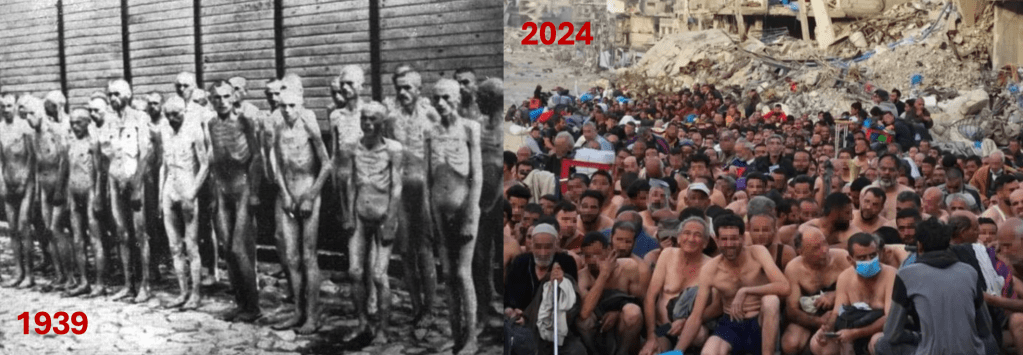
The ill-conceived, yet devastating, events of October 7, 2023, when Hamas launched a surprise attack on Israel, killing over 1,400 people and taking hundreds hostage, serve as a stark reminder of the potential for violence to beget more violence. The subsequent Israeli military response in Gaza, resulting in tens of thousands of innocent Palestinian casualties exemplifies the tragic escalation that often follows acts of revenge. This cycle of retaliation has not only exacerbated the suffering of both Israelis and Palestinians but has also threatened to engulf the broader region, with tensions rising daily in Lebanon and Iran.

The Israeli-Palestinian conflict, rooted in extremely complex historical, religious, and territorial disputes, has long been characterized by cycles of violence and retribution. Each act of aggression, whether a rocket launch or a military strike, is often justified as a response to a previous attack. However, this tit-for-tat approach has only served to deepen animosities and perpetuate suffering.

As historian Karen Armstrong poignantly notes, “Vengeance only breeds more violence and creates an endless cycle of retaliation.” This observation is painfully evident in the ongoing crisis, where each side’s pursuit of revenge has led to an escalation of hostilities, moving both parties further away from the possibility of peaceful coexistence.

The Danger of Disproportionate Retribution

The concept of “an eye for an eye” has long been misconstrued as a justification for revenge. However, its original intent in ancient legal codes was to limit retribution, not to encourage it. The danger lies in the human tendency to exceed the original injury when seeking vengeance. As legal scholar Martha Minow argues in her seminal work “Between Vengeance and Forgiveness,” “Vengeance is a form of retaliation that tends to exceed the original injury and therefore introduces a new wrong.”

This disproportionality is evident in the current Middle East crisis. The scale of destruction in Gaza, with its devastating impact on civilian infrastructure and lives, has far exceeded the initial attack, regardless of one’s opinion on the justification for the Israeli response. This escalation not only fails to address the root causes of the conflict but also sows the seeds for future cycles of violence.

Breaking the Cycle: From Revenge to Justice

The path forward requires a paradigm shift in how we conceptualize justice. True justice is not about inflicting equal harm but about restoring balance, protecting the innocent, and reforming offenders. It requires a commitment to understanding the root causes of conflicts and addressing them through diplomatic, legal, and humanitarian means.

In the context of the Israeli-Palestinian conflict and broader Middle Eastern tensions, this means moving beyond the cycle of attack and retaliation. It requires international mediation, adherence to international law, and a commitment to protecting civilian lives on all sides. Most importantly, it necessitates a willingness to engage in dialogue and pursue reconciliation, even in the face of deep-seated grievances.

Political scientist Robert Axelrod’s work on cooperation offers valuable insights into breaking cycles of revenge. His research suggests that strategies based on forgiveness and reciprocity are more effective in fostering long-term peace than those based on retaliation. This approach requires tremendous courage and vision from leaders and populations alike, but it offers the only viable path to lasting peace.

A Hopeful Vision: Justice Without Revenge

As we confront the ongoing crises in the Middle East and other conflict zones around the world, we must heed the wisdom of Martin Luther King Jr., who warned that “The old law of an eye for an eye leaves everybody blind.” The pursuit of revenge, no matter how justified it may feel in the moment, only perpetuates cycles of violence and suffering. When justice fails, it vindicates revenge.

True justice cannot coexist with revenge. While revenge looks backward, seeking to balance perceived wrongs of the past, justice looks forward, aiming to create a more equitable and peaceful future. It is only by breaking free from the shackles of retribution that we can hope to build societies based on mutual understanding, respect, and shared humanity.

The road ahead is undoubtedly challenging. It requires us to overcome deeply ingrained instincts and historical grievances. However, the alternative – an endless cycle of revenge and counter-revenge – is too devastating to contemplate. By choosing justice over revenge, by prioritizing reconciliation over retaliation, we can open the door to a future where conflicts are resolved through dialogue and understanding rather than violence.

As we witness the heartbreaking consequences of revenge in the Middle East and beyond, let us recommit ourselves to the pursuit of true justice. Let us work tirelessly to create systems and societies that break the cycle of violence, that prioritize human dignity over retribution, and that offer hope for a peaceful future. Only then can we truly say that we have advanced as a civilization, moving beyond the primal urge for revenge to embrace the noble ideal of justice for all.

Weathered skin and brittle bones


I saw him there, a crumpled figure on the cold sidewalk, his weathered skin stretched taut over brittle bones. The world rushed by, unseeing and uncaring.  Or so I thought.  Maybe I was wrong; the world did not see the crumpled man on the sidewalk.   

I stopped for a moment.  At that moment, I was struck by the cruel irony of our world – we feed the birds, pamper our pets, yet turn a blind eye to the hunger that gnaws at our own kind.
I watched, frozen in place, as the crowd flowed around him like any stream of water around a rock. And then, ashamed, I too moved on, my own worries pulling me away like an insistent child.  I had my own problems to solve and my ego to feed.

But as I sat in the sterile comfort of my office, my thoughts drifted to you – to all of you who have nourished me over the years. I thought of your hands, calloused from countless hours in the kitchen, preparing meals with a love that transcends mere sustenance. I remembered the worry lines etched on your faces as you fretted over whether I had eaten enough or whether the food was to my liking.

Amid my thoughts, the old man on the street and your tireless dedication merged into a single, powerful realization. The meals you’ve provided, day after day, year after year, were more than just food. They were acts of love, of connection, of humanity in its purest form.

I thought of the troubles you’ve endured – the early mornings, the late nights, the aching feet from standing over a hot stove. I remembered the times you’ve sent food across the miles, navigating the complexities of delivery services from the dabbawalla to its more modern app-based progeny, all to ensure I wouldn’t go hungry. And through it all, you’ve never once mentioned the cost, for how can one put a price on love?  Some things are indeed priceless.

As these thoughts washed over me, I felt a desperate need to return to that old man. I packed a bowl of rice, laced with whatever else I could find, my heart racing with an irrational hope that he would still be there.

As I rushed out, the sky opened up, a light drizzle falling as if the heavens themselves were weeping for our collective neglect.

I rushed back, driven by a need I could not fully articulate.

I needed him to be there, not just for his sake, but for my own.

I needed the chance to pass on the kindness that had been so freely given to me, to be a link in that unbroken chain of compassion that you had forged with your selfless love.

As I approached the spot where I had seen him, my heart pounding, I realized that whether he was still there or not, you had already taught me the most valuable lesson.

You had shown me, in action and not mere words, that nourishment is about more than filling an empty stomach.

It’s about filling an empty heart, about recognizing the humanity in others and nurturing it with every act of kindness.

Thank you, from the depths of my being, for every meal, every worry, every act of love.

You had fed more than my body; you had nourished my very essence, and in doing so, you had changed the world, one meal at a time.

The convenience of faith.

There once lived a man who had immense faith in God.

He was always at peace for his path to happiness ran via his deep faith and devotion to God. To him, the path to eudaemonia was simultaneously devoid of any temptations of desire (for pleasure) or fear (of pain). To him, everything made sense as a part of the grand plan that his Almighty God had for him. And so he lived, in total peace and happiness – the envy of many and the admiration of a few.

Yet, one day, his beloved wife fell sick – nothing serious – and yet she had to be hospitalized. A hospitalization that appeared innocuous at first; yet just a few days later she unfortunately passed away….

The happy man turned sad – it was the attending doctor’s negligence that made him a widower.

Alas, the convenience of faith!