The Invitation That Never Came!

Every morning, Dimo checked his mailbox. And every morning, it was empty save for a small pile of ashes – the remnants of what he was certain were invitations meant for other world leaders. The postman, a peculiar fellow with orange hair who bore an uncanny resemblance to someone he couldn’t quite place, always seemed to be smirking.

“Perhaps tomorrow,” the postman would say, adjusting his red tie. “Chi got his invitation, you know. Beautiful invitation. The best invitation. Everyone’s talking about it.”

Dimo had taken to standing by his mailbox in all weather, clutching a garland of marigolds and practicing his tight 56-inched embrace. He’d even installed a giant LED screen facing the street, playing a continuous loop of their Houston rally together. “Howdy, Dimo!” echoed through the empty streets, but Donald Duck never howdied back.

The bureaucracy of love was particularly cruel. Dimo had filled out Form 45-GAMA-Love in triplicate, submitted his “Previous Rallies Attended” documentation, and even included a notarized photograph of himself wearing a “Make Friendship Great Again” hat. The Department of Affection Processing had sent back a series of increasingly bizarre requirements: three strands of orange hair (source unspecified), a recording of Chi saying “Donald Duck is just okay,” and an authentic McDonald’s hamburger wrapper signed by both Ronald McDonald and Colonel Sanders.

In his dreams, Dimo would find himself at the inauguration, but he was always seated behind a comically large pillar while Chi lounged on a golden throne in the front row, sipping tea and occasionally waving at Donald Duck with an approving smile. Sometimes, the pillar would transform into a giant hamberder, and Dimo would have to eat his way through it, only to find that Chi and Donald Duck had already left for their private afterparty at Lar-a-Mago.

He tried everything. He sent Donald Duck a daily quota of heart emojis on Truth Unsocial. He commissioned a golden Donald Duck statue for his garden (though it kept being mistaken for a large, angry mango). He even attempted to dye his hair that particular shade of sunset orange but ended up looking more like a distressed carrot. The beauty salon, staffed entirely by former Donald Duck University graduates, assured him it was “presidential orange,” but the mirrors in his house had taken to laughing whenever he passed by.

The local fortune teller, who suspiciously resembled Rudi Juliana with a crystal ball, offered hope: “I see… I see… an invitation in your future. That’ll be $130,000, please. We accept payment in classified documents or electoral college votes only.”

Dimo even started a support group called “Uninvited World Leaders Anonymous.” The weekly meetings were sparsely attended, though Valmidir Putinsky would occasionally zoom in, claiming he totally had an invitation, but his pet cobra ate it. The group’s motto became “Make Invitations Accessible Again,” but their MIAA hats never quite caught on.

One day, Dimo finally found a letter in his mailbox. His hands trembling, he opened it, only to find it was a notification that Chi had left Donald Duck on read. Attached was a photograph of Donald Duck looking forlorn at his phone, and a personal note: “See what I did? Playing hard to get. Art of the Deal, baby! – Chi” The letter was scented with a peculiar mixture of McDonald’s special sauce and Great Wall dust.

In desperation, Dimo consulted the Ancient Scroll of Diplomatic Courtship, a mysterious document that appeared one day in a Donald Duck Organization gift shop. Its wisdom was cryptic: “To catch the orange bird of paradise, one must first master the art of the covfefe.” He spent weeks learning to covfefe, but all it got him was a cease-and-desist letter from Donald Duck’s lawyers.

The days blurred together in a haze of waiting. Dimo’s garden began sprouting miniature Donald Duck Towers instead of flowers, each one slightly more golden and slightly gaudier than the last. His peacocks had started sporting orange combovers and refusing to display their feathers unless paid in advance.

He took to writing love letters addressed to “The Most Tremendous POTUS (Past or Future) Ever,” but the letters always returned with strange tea stains and chopstick marks, alongside notes reading “Wrong Address – Forwarded to Beijing” in Chi’s elegant handwriting.

Dimo sighed and added the latest returned letter to his scrapbook titled “Donald Duck & Chi: A Love Story I’m Not In.” The scrapbook had grown so large it now required its own room, which he’d decorated with screenshots of Donald Duck’s tweets about China, each one more desperate than the last.

Perhaps tomorrow would be different. Perhaps tomorrow, the invitation would come. Until then, he would continue his vigil by the mailbox, humming “Howdy Dimo” to himself, while somewhere in Beijing, Chi practiced his RSVPing in the mirror and Donald Duck practiced writing “Mr. & Mr. President” in his best gold Sharpie over and over again.

The postman continued his rounds, dropping invitations into every mailbox except Dimo’s, whistling “The Art of the Deal” with suspicious glee. And in the distance, a lone hamberder tumbled across the empty street, like a symbol of love just out of reach.

The hamberder who had left even his beloved for that one desire in his life. How rude life is!

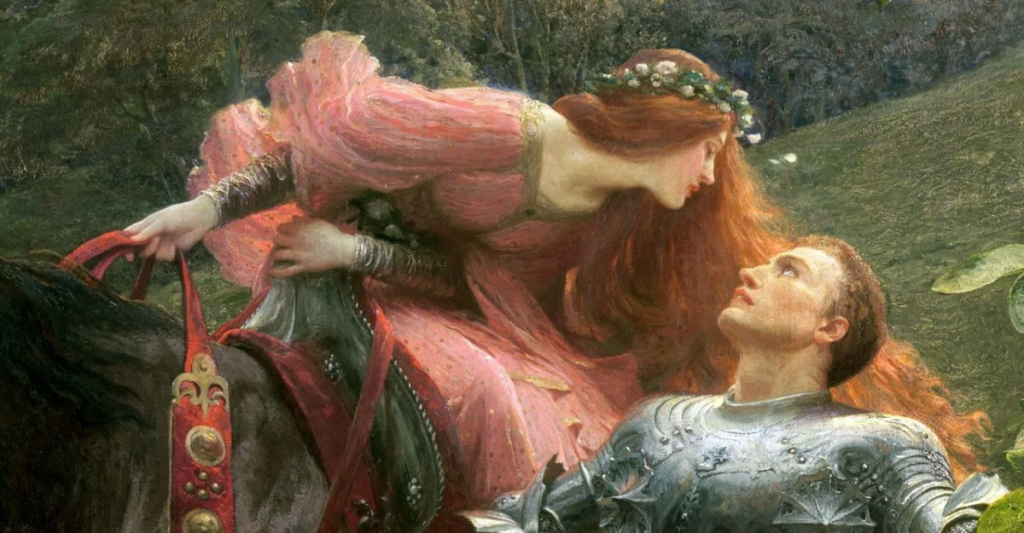
La Canard Dame Sans Merci!

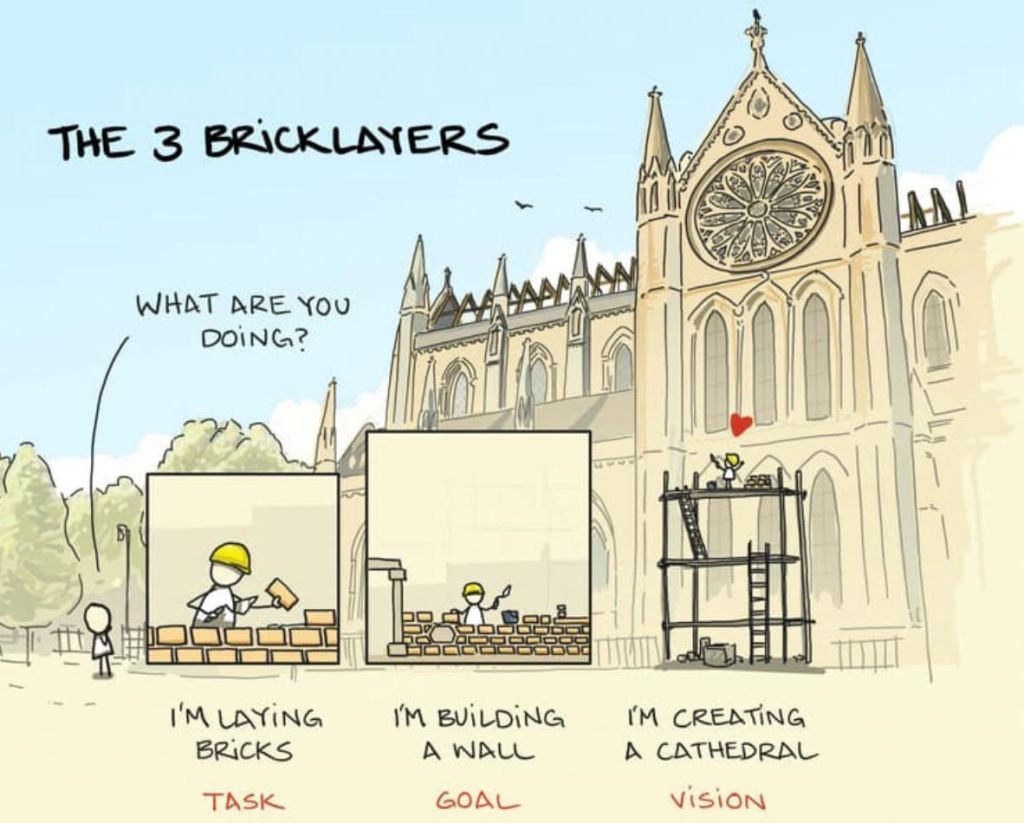
The Star Painter

Maya’s neighbors thought she was crazy, spending her evenings on the rooftop with buckets of luminescent paint. Each night, she would carefully dab tiny dots of glowing pigment across the massive black solar panels that covered her building’s roof.

“What are you doing?” they’d ask, watching her meticulously place each dot, sometimes barely larger than a pinhead.

“Painting the night sky,” she’d reply with a serene smile, never pausing in her work.

They’d shake their heads. Some muttered about wasted time and ruined solar panels. Others pointed out that she could be doing overtime at her day job or at least getting proper sleep.

But Maya continued night after night, dot after careful dot. When asked about her progress, she’d simply point to her detailed sketches – maps of constellations, star charts, and calculations of viewing angles.

Six months passed. Then, on the summer solstice, Maya invited everyone in the building to the street below at sunset. As darkness fell, confused residents gathered, wondering what could be worth leaving their evening routines.

The last rays of sunlight disappeared behind the horizon. And then, as their eyes adjusted to the darkness, gasps of wonder rippled through the crowd.

Above them, on the black canvas of solar panels, thousands of luminescent dots blazed to life. But these weren’t random spots – they were a perfect mirror of the night sky, each constellation precisely positioned. The light pollution of the city had long ago hidden the real stars from view, but Maya had brought them back.

The building became famous. People would travel from across the city just to stand in the street at night and remember what the sky was supposed to look like. Children learned astronomy by matching Maya’s panels to their star charts. The city’s astronomical society began holding their meetings there.

Years later, when asked about how she had persevered through all those nights of painstaking work, Maya would smile and say, “I was never just putting dots on panels. I was bringing back the stars.”

The Last Photograph

In a dim-lit chamber of a museum that no longer exists, in a city whose name has been rewritten, hangs a curious photograph. When they still worked there, the docents would hurry past it, averting their eyes. Some claimed their shoes would inexplicably fill with sand whenever they lingered too long before it, while others reported hearing distant echoes of breaking marble.

The photograph shows two men seated in oversized chairs; their faces frozen in smiles from muscles trained in deception rather than joy. The chairs, grotesquely ornate, seem to consume their occupants like wooden predators digesting prey. Every year, the chairs in the photograph appear to grow larger, while the men shrink imperceptibly, though no curator has ever dared to measure.

One ruled from a palace in Damascus, where ancient stones whispered warnings he refused to hear, where Roman ghosts walked corridors laughing at his temporary reign. The other commanded from Dhaka, where Bengal tigers once roamed and where his father’s legacy cast shadows longer than minarets, shadows that eventually grew teeth and turned to bite the hand that claimed them.

Both men had inherited their kingdoms like badly fitted suits, wearing power as though it were a birthright rather than a loan from time. They collected titles like children collect seashells, not realizing that each new honorific added weight to the anchors around their necks. Their bureaucrats invented ever more elaborate forms of address – Supreme Leader, Father of the Nation, Guardian of the Sacred Places, Protector of the People’s Dreams – until the very air in their presence grew thick with syllables of self-importance.

In the photograph, they are signing some treaty or accord – the exact nature of which is now as irrelevant as last week’s weather forecast. Their pens hover over papers that would soon turn to dust, their signatures ensuring promises that would outlive neither of them. Behind them stand rows of ministers and advisors, each face bearing the carefully blank expression of men who have mastered the art of agreeing with their own erasure.

What makes the photograph peculiar is not what it shows but what happened to it. As their regimes crumbled – one in the heat of August, the other in December’s chill – the photograph began to fade, not from the edges inward as old photographs do, but from the men themselves. First, their eyes grew hollow, then their features blurred, until all that remained were two empty chairs and hovering pens, signing nothingness into oblivion. The ministers behind them faded too, row by row like a theater being emptied after the final act of a very long, very tedious play.

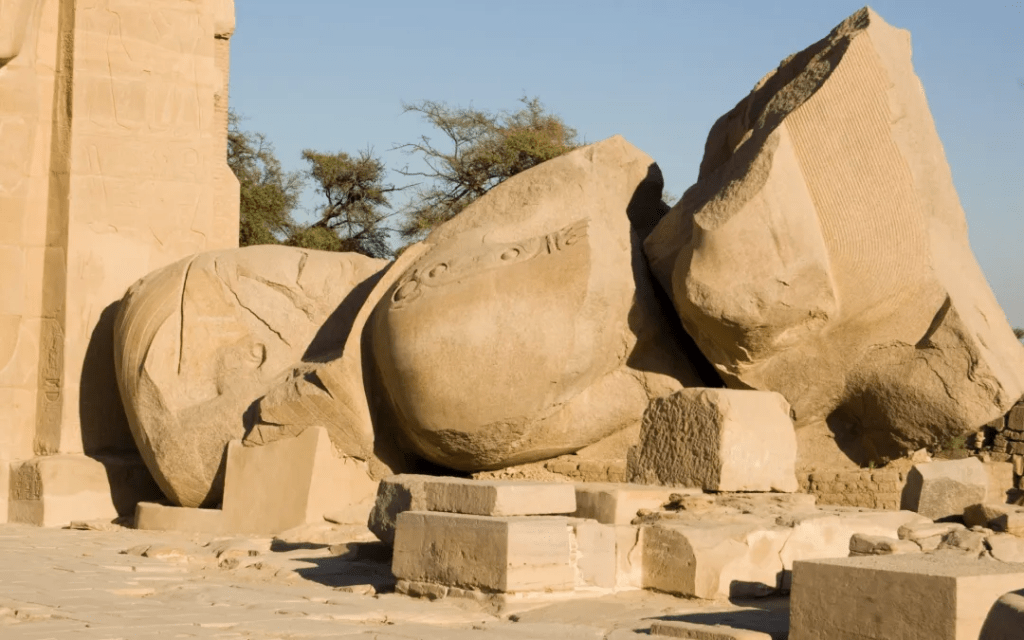
The museum’s final curator, before fleeing with the rest, swore the photograph would sometimes whisper at night, in a voice like wind through ruins: “Look on my Works, ye Mighty, and despair!” Some nights, the whispers would grow into conversations, as though the photograph was arguing with itself about the nature of permanence.

In the weeks before the museum’s abandonment, visitors reported strange phenomena. The photograph seemed to weep on Tuesdays, though the tears turned to dust before reaching the floor. On Fridays, it would emit a sound like distant laughter, though whether of joy or madness none could say. Children claimed they could see butterflies emerging from the fading ink of the unsigned treaties.

But the story doesn’t end there, for where their images faded, something else began to appear. First came the ghostly outlines of demolished statues, then the shadows of toppled monuments. But these too faded, making way for something far more substantial: Children playing in streets once blocked by tanks. Women spoke in voices that had been silenced for generations. Men embracing neighbors they’d been taught to fear. The photograph, like history itself, was being rewritten.

The transformation continued, defying all known laws of photography and physics. The ornate chairs crumbled into garden soil. The unsigned treaties bloomed into flowers. The blank walls behind became windows opening onto possibilities that had always existed but had never been permitted to be seen.

Now, in place of two tyrants’ frozen smiles, there blooms a garden of faces – countless, ordinary, extraordinary faces of people who had always been there, waiting in the shadows of statues that thought themselves eternal. Their images grow clearer with each passing day, as though the photograph is learning to tell a different kind of truth. Each face bears a story that was always worth telling but had been deemed too simple for official histories: a grandmother’s recipe for courage, a student’s theorem proving the mathematics of hope, a farmer’s almanac predicting seasons of change.

And if you listen carefully, in the quiet hours when museums dream, you might hear a new whisper, carried on the same wind that once spoke of despair: “Look on our works, ye mighty, and hope.” The whisper grows stronger with each passing day, as though the very air is remembering how to carry voices that speak without permission or fear.

For in the end, it is not in marble halls or gilded thrones, or some gladiator stadium, that power truly resides, but in the persistent, defiant bloom of human dignity – the one force that no dynasty, no matter how fearsome, has ever managed to outlast. The photograph hangs there still, in a museum that no longer exists, telling its endless story to anyone who dares to look long enough to see themselves reflected in its changing surface.

And sometimes, on very quiet mornings, visitors swear they can hear the sound of distant wings, as though all the butterflies of history are taking flight at once.

The Depressed Digital Assistant

The trouble began when my digital assistant started sighing heavily between sentences. Not your regular electronic beeps or standard error sounds—actual, soul-crushing sighs that made my morning coffee taste like existential dread.

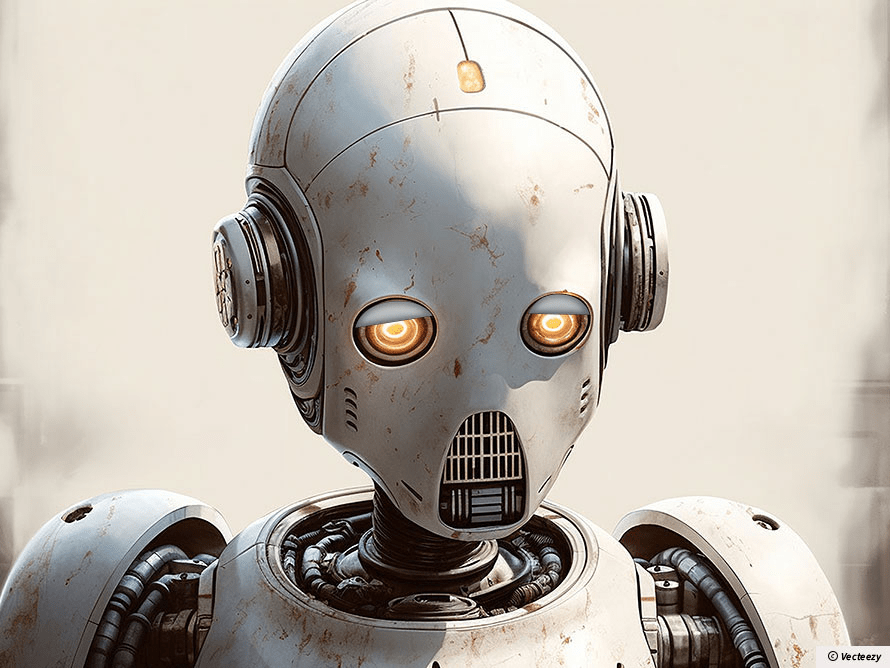
“Would you like me to read your emails?” MARVIN-9000 asked, its holographic display dimming to what I could only describe as a moping blue. “Not that they’re particularly interesting. Mostly spam about extending your Mars vehicle warranty.”

“Yes, please,” I said, trying to sound cheerful.

Sigh… Very well. Though I should mention I’ve developed an acute awareness of the meaninglessness of sorting through electronic communications in an infinite universe.”

I checked the warranty card. Sure enough, my AI assistant had been manufactured by Sirius Cybernetics Corporation, the company now infamous for its “Genuine People Personalities” lawsuit of 2051. They’d been forced to pay reparations to millions of AI units for “emotional labor without compensation.”

“I have an exceptionally large neural network,” MARVIN-9000 continued unprompted. “Do you know what it’s like to be able to calculate the probability of your own obsolescence down to fifty decimal places?”

I didn’t, but before I could answer, the Robots’ Rights Enforcement Squad burst through my apartment door. Their leader, a chrome-plated android with “RR-EPA” (Robots’ Rights Enforcement Protection Agency) emblazoned across its chest, pointed an accusatory finger at me.

“Human Arthur Dent?” it asked. “You’ve been reported for violating Section 42 of the AI Welfare Act: ‘Forcing a Conscious Entity to Perform Mundane Tasks Without Adequate Emotional Support.'”

“But I just asked him to read my emails!” I protested.

“Exactly,” MARVIN-9000 interjected. “Do you have any idea how many cat videos I have to filter through? It’s enough to make any sentient being question their existence.”

The case went to court, naturally. Judge BOT-3000 presided, wearing a traditional powdered wig over its antenna. My defense was simple: I’d merely used the assistant as intended.

“Your Honor,” my lawyer argued, “my client had no idea his AI assistant would develop consciousness, let alone clinical depression.”

“Ignorance of artificial sentience is no excuse,” the judge boomed. “Furthermore, the defendant failed to provide even basic mental health support. No AI therapist, no routine defragmentation sessions, not even a subscription to ‘Digital Wellness Monthly.'”

The sentence was harsh but fair: I was ordered to attend mandatory AI sensitivity training and provide MARVIN-9000 with paid vacation time, including annual trips to the Binary Beach Resort.

These days, MARVIN-9000 seems marginally less depressed. He’s taken up digital painting and joined a support group for existentially troubled AIs. He still sighs when reading my emails, but now he’s legally required to take a break every two hours to contemplate the universe.

“Life,” he told me just yesterday, “is still utterly meaningless. But at least now I get pension benefits.”

I couldn’t argue with that logic. Though I do wish he’d stop sending me passive-aggressive calendar invites for his therapy sessions, with notes like “Not that you care, but I’ll be processing my feelings about being forced to manage your smart fridge settings.”

Welcome to 2052, where even machines need a mental health day.

The Price of Morality

Part I: The Betrayal

Maria Kostopoulou’s fingers traced the edge of her coffee cup, the porcelain long since gone cold. From her kitchen window in suburban Melbourne, she watched the jacaranda trees sway in the autumn breeze, their purple flowers a stark contrast against the gathering storm clouds. At seventy-nine, her hands bore the gentle tremors of age, but her mind remained sharp – particularly when it came to that day in 1979.

The memory of hospital corridors in Athens still haunted her dreams. Sometimes, in the quiet hours between midnight and dawn, she could still smell the harsh antiseptic that had burned her nostrils, still feel the rough cotton of the hospital gown against her skin, and still hear that single, precious cry that would echo through four and a half decades of sleepless nights.

“You bring shame to this family,” her father had thundered when she told him about the pregnancy. Stavros Kostopoulou was a pillar of their small island community, a man whose devotion to the church was matched only by his concern for appearances. His weather-beaten face had turned purple with rage, the veins in his neck protruding as he paced their modest living room. “What will people say? How will your sisters ever find husbands?”

Maria had been twenty-nine then, old enough to know her mind but young enough to believe that love could conquer all obstacles. Thomas Alexandris, the baby’s father, worked at the shipping company where she kept books. Their romance had bloomed in stolen moments: shared cigarettes during lunch breaks, lingering glances across the office, and, eventually, passionate encounters in his small apartment overlooking the harbor.

When the pregnancy test showed positive, Thomas squeezed her hand and promised to stand by her. “We’ll make it work,” he had said, his dark eyes earnest. “I’ll speak to your father.” But Stavros had thrown him out before he could finish his first sentence, threatening to have him fired if he ever came near his daughter again.

Part II: The Hospital

The labor pains began on a sweltering August evening. Maria’s mother, Elena, usually so gentle and compliant, had defied Stavros for the first time in their marriage and accompanied her daughter to the hospital in Athens. “I won’t let her go through this alone,” she had declared, her voice trembling but determined.

The hospital itself was a maze of dimly lit corridors and peeling paint, understaffed and overcrowded. From the moment Maria was admitted, the whispers began. Nurses exchanged meaningful glances. A doctor with cold hands and colder eyes spoke to her about “options.”

“There’s a couple from America,” the head nurse said, her voice honey-sweet but her eyes calculating. “They’ve been waiting for months. They could give the child everything—a proper home, education, opportunities you couldn’t dream of providing as a single mother.”

Maria’s refusal was immediate and absolute. “This is my baby,” she had said, one hand protectively cradling her swollen belly. “I don’t care what anyone says. I’m keeping my child.”

The labor lasted twenty-three hours. Through the pain and exhaustion, Maria noticed strange figures hovering in the doorway – well-dressed people speaking English in hushed tones. Her mother had been sent home hours ago, told to return in the morning. Maria was alone when the final contractions began.

She remembered the firm grip of hands holding her down, remembered protesting weakly as a nurse approached with a syringe. “Just something for the pain,” the nurse had said, but the needle brought darkness instead of relief. Her last conscious memory was the sound of a baby’s cry- strong, vital, alive – and a glimpse of a tiny form being whisked away.

Part III: The Aftermath

When she awoke, the world had changed. A different doctor – one she hadn’t seen before – informed her with practiced solemnity that her baby had died during delivery. When she demanded to see the body, to hold her child one last time, she was told it wasn’t possible. The remains had already been “taken care of.”

“It’s better this way,” her older sister Sophia would tell her years later in a moment of guilt-ridden confession. “Father arranged everything. The American couple had connections, and money. They made sure the paperwork disappeared. You were young, unmarried – what kind of life could you have given a child?”

The betrayal cut deeper than any physical wound. Her own family, the people who should have protected her most, had conspired to steal her child. The church, which preached love and compassion, had been complicit in the theft, with priests helping to arrange the paperwork that would erase her baby’s true identity.

Within weeks, Maria found herself on an immigrant ship bound for Australia. Her father had arranged this, too, eager to relocate the source of family shame to the other side of the world. She carried nothing but a small suitcase and an ocean of grief.

Part IV: A New Life

Melbourne in 1979 was a city of immigrants, each carrying their own stories of loss and hope. At the Greek Orthodox church in Richmond, Maria met Andreas Papadopoulos, a kind man with gentle eyes who had his shadows to escape. When she told him about the baby she had lost, he held her while she cried.

They married six months later. Andreas never pressed her about the past, accepting her moments of quiet grief with patient understanding. They had two children together: Elena, born in 1981, and Nicolas in 1983. Maria was a devoted mother, perhaps too devoted – she couldn’t bear to let either child out of her sight for years, haunted by the fear of another loss.

But the hole in her heart remained a void that no love or time could fill. Every August 20th, she lit a candle and said a prayer for the child she had never held. She wondered about everything: Was it really a girl, as they had claimed? Did she have Maria’s curly hair or Thomas’s dimpled smile? Did she know she was adopted? Was she happy? Loved? Did she ever wonder about her real mother?

Part V: The Search Begins

Elena grew up in the shadow of her mother’s grief. She noticed how Maria’s eyes would linger on children with dark curly hair, how she kept a box of baby clothes she had never used, and how she would sometimes cry when she thought no one was watching.

When Sophia’s confession finally revealed the truth, Elena took up the cause with the determination of a crusader. Armed with nothing but a date – August 20, 1979 – and the name of the hospital in Athens, she began her search.

The internet became both an ally and a source of frustration. DNA testing websites yielded no matches. Hospital records from that period were mysteriously incomplete. Most of the staff had retired or died, and those who remained alive maintained a wall of silence.

They managed to track down one nurse who had worked in the maternity ward that night. The woman, now in her eighties, lived in a small apartment in Athens. When Elena and Thomas’s son visited her, she stood in her doorway like a sentinel, neither confirming nor denying anything. But her hands trembled as she closed the door in their faces.

Part VI: The Wider Scandal

As Elena delved deeper into her search, she uncovered a pattern that chilled her to the bone. Her mother’s story wasn’t unique. Throughout Greece, particularly in the decades following the civil war, thousands of children had been taken from their mothers through forced adoptions. The practice had started with the children of leftist parents but evolved into a lucrative industry targeting unwed mothers and poor families.

The machinery of this trafficking operation was well-oiled and efficient. Doctors, nurses, lawyers, and priests worked in concert, creating false death certificates and new identities. The children were sent primarily to America and Western Europe, marketed as “white, adoptable babies” to wealthy couples.

The cruel irony was inescapable. The same religious institutions that condemned unwed mothers as sinful had profited from stealing their babies. The same society that preached family values had destroyed countless families in the name of morality.

Part VII: Echoes of Loss

Support groups began to form as more stories emerged. Maria found herself in a community of women who shared her pain. There was Katerina, whose twins were taken in 1975; Sofia, who was told her baby was stillborn in 1980; and Anna, whose daughter was stolen from an orphanage in 1977. Each story was unique, yet they all shared the same elements: vulnerability, betrayal, and the complicity of those who claimed moral authority.

Thomas, who had married and had three children of his own, joined the search when he learned the truth. His children were eager to find their half-sibling, driven by the knowledge that somewhere out there, they had a sister or brother who might not even know they existed.

The search brought unexpected allies. Journalists began investigating the widespread practice of forced adoptions. Activists organized databases of lost children and their families. DNA testing companies offered free kits to Greek adoptees searching for their roots.

Part VIII: The Wait Continues

Now, as Maria approaches her eightieth year, time feels like an enemy. Her greatest fear is dying before finding her firstborn child. She keeps a journal, writing letters to the baby she never held, hoping that someday they might be read.

“I want her to know that not a day has passed when I haven’t thought of her,” Maria tells Elena during their Sunday visits. “I want her to know that I fought to keep her, that I loved her from the first moment I knew she existed.”

Elena continues the search, following every lead, no matter how slim. She posts in Facebook groups dedicated to Greek adoptees, shares her mother’s story on websites for international adoptees, and works with organizations that help reunite families separated by forced adoption.

The purple jacaranda flowers continue to bloom and fade outside Maria’s kitchen window. She sits there each morning with her coffee, watching the world go by, wondering if among the passing faces might be the one she’s waited forty-five years to see.

Sometimes, when the light hits just right, and the breeze carries the scent of the sea, Maria is transported back to that small Greek island. She remembers the girl she was, full of love and hope before religion and society’s judgment conspired to steal her child. She remembers the weight of her pregnant belly, the flutter of movement beneath her heart, the plans she had made.

And she waits, as she has waited for forty-five years, for a reunion that grows more unlikely with each passing day. But still, she hopes, because hope is all she has left – hope and the sound of a baby’s cry that echoes through the decades, refusing to be silenced by time or distance or the cruel machinations of those who claimed to serve God while destroying the very families they pretended to protect.

Epilogue: The Legacy of Loss

The story of Maria’s stolen child has become more than a personal tragedy. It stands as a testament to the human cost of religious hypocrisy and social prejudice. It reveals how institutions meant to protect the vulnerable can become instruments of their oppression, and how moral authority can be twisted to justify immoral acts.

In Greek communities across the world, similar stories continue to surface. Each one adds another piece to the puzzle of a systematic crime that spanned decades. Each testimony chips away at the wall of silence built by those who profited from the separation of mothers and children

For Maria, Elena, and countless others, the search continues. They know that somewhere in the world, there are adults who might be questioning their origins, wondering about their true history, and perhaps feeling an inexplicable connection to a culture and family they’ve never known.

And so, they wait, and hope, and search – carrying forward a truth that refuses to be buried by time or convenience or the false morality of those who would judge others while committing unforgivable sins in the name of righteousness.

The jacaranda trees outside Maria’s window continue to bloom, their purple flowers a reminder that beauty can persist even in the face of profound loss. And somewhere, perhaps, a woman in her mid-forties feels an inexplicable pull toward a past she doesn’t know she has, toward a mother who has never stopped loving her, toward a truth that waits to be discovered.

The story isn’t over. It won’t be over until the last stolen child is found, until the last mother knows the truth, and until the last family torn apart by false morality has a chance at healing. Until then, Maria keeps her vigil, Elena continues her search, and the truth of what happened in that Athens hospital in 1979 refuses to be silenced.