The True Memorial: Transmuting Grief into the Gospel of Garg

The death of an icon, especially one as fundamentally defiant as Zubeen Garg, precipitates not merely a wave of national mourning, but a spectacle of collective self-deception. It is a moment where a populace, long accustomed to the comfortable numbness of political apathy and cultural compromise, briefly mistakes genuine sorrow for meaningful virtue. Across the length and breadth of the Brahmaputra Valley, the tears have flowed—genuine, perhaps, but ultimately cheap. The social media tributes, the eulogies delivered by talking heads who spent Zubeen’s living years dismissing him as unruly or radical, and the sudden, performative embrace of his most challenging, anti-establishment lyrics, all constitute a fraud. This is not respect; it is the comfortable, post-mortem adoration afforded to a dead lion, safely defanged and reduced to a sentimental commodity. The question that must pierce this thick, suffocating veil of sentimentality is brutally simple: What is the philosophical and political price of these tears, and what becomes of the nation when the convenient mourning ceases?

The death of a revolutionary conscience like Garg must not be permitted to dissolve into the sweet, nostalgic syrup of remembrance. That is the final, subtle victory of the mediocrity he fought: to have the sharp edges of his life rounded off by the sands of a mournful apathy. If the Assamese nation, which claims him now in his absence with such desperate possessiveness, allows his legacy to become just another festival, another anniversary, another conveniently consumable narrative—then every tear shed is a tear of hypocrisy, and every tribute a betrayal. The true memorial, the only one worthy of his staggering, refreshingly raw yet reckless integrity, demands an immediate, seismic shift from passive grief to the perilous, uncompromising emulation of his life and principles. Once the ashes cool, the real work—the work of dangerous, discomforting imitation—must begin.

The Anatomy of a Martyr and the Fraud of Post-Mortem Adoration

The first and most immediate betrayal is the rush by the political establishment to sanitize, claim, and ultimately neutralize the man who lived to challenge their very legitimacy. Observe the convenient amnesia: the political figures and cultural gatekeepers who, in life, found his voice too loud, his principles too rigid, his questions too inconvenient, now stand on platforms draped in black, pontificating on his “immense contribution.” It is an intellectual obscenity. They are celebrating a statue while having vehemently opposed the man who carved it. This sudden conversion is not a sign of respect for Garg; it is a desperate attempt to launder their own political complicity in the very system he sought to dismantle. They honor the dead rebel because the dead rebel is silent, safely embalmed in history and incapable of demanding accountability for the next injustice and even the injustice of his untimely demise.

This phenomenon is the philosophical cowardice of the collective made manifest. It is easy, even fashionable, to venerate a dead man’s defiance; it requires no personal risk, no uncomfortable conversations, and no forfeiture of commercial or political interests. The true test of a society’s character is not how it mourns its heroes, but how it treats its living prophets—the ones who shatter the consensus, who point the finger at comfortable corruption, who refuse to allow art to serve as the velvet soundtrack to venality.

Zubeen Garg was, in life, a persistent, throbbing migraine for the status quo. In death, they attempt to turn him into a pleasant lullaby. We, the collective inheritors of his rage and his art, must ruthlessly refuse to sing that tune. The measure of our respect must be gauged by our willingness to continue the fight he started, even if that means making ourselves as socially awkward, commercially unviable, and politically targeted as he often was.

The Gospel of Garg: Uncompromised Artistry and the Rejection of the Marketplace

Zubeen Garg’s first, most profound principle was the uncompromising sanctity of his art. He never treated music as a mere transaction, a comfortable commodity to be sold by the pound in the bazaar of popular taste. His discography is not just a collection of hits; it is a sprawling, often contradictory, frequently chaotic diary of a soul grappling with its environment, refusing to separate the personal lyric from the political slogan. He rejected the sleek, soulless homogenization that defines much of modern, commercial culture. His music retained a necessary, vital rawness—a deliberate refusal to polish away the inconvenient truths that made it resonate with the common man’s struggle.

This is the principle the Assamese nation must emulate, not just in its art, but in its every endeavor. The market, the great homogenizer, demands that everything be soft, palatable, easily digested, and devoid of sharp edges. It rewards those who sing of trivial, universalized romance while the state of the culture decays around them. Garg, by contrast, insisted that art must be dangerous, that it must demand something of the listener, that it must be capable of causing offence if the truth required it. The greatest disrespect to his memory is the proliferation of culture that serves only as distraction, as aesthetic wallpaper for a nation asleep. We must demand integrity, not merely in the songs we listen to, but in the journalism we consume, the policies we accept, and the cultural products we allow to define our identity. If the next generation of Assamese art is merely an imitation of a pan-Indian, commercial template, devoid of the grit, the dialectical complexity, and the unapologetic regionality that defined Garg’s work, then our nation has already forfeited its claim to his legacy.

The philosophical danger in our current moment lies precisely in the blurring of lines between authentic expression and manufactured content. When leaders lie preposterously—when truth is declared an “optional accessory to power,” as the current global trend dictates—the only true resistance comes from the artist who holds a mirror up to the rot and refuses to flinch. Garg did this with an almost reckless abandon. He sang in a voice that was unpolished, often raw, sometimes deliberately provocative, because the truth he carried was unpolished and provocative. Emulating him means rejecting the seductive comfort of silence, even when silence offers financial security or social approval. It means choosing the difficult, discordant chord of truth over the sweet, synthetic major key of collective delusion.

The Rhetoric of the Unbroken Voice: Truth, Power, and the Political Mandate

Zubeen Garg was not a politician, yet his life was a profoundly political act. He was the perpetual outlier, the voice that refused to be co-opted, lending his massive cultural capital not to endorsements or appeasement, but to causes that were profoundly inconvenient for the powerful. From the furious, definitive stand against the Citizenship Amendment Act (CAA), where he was one of the few celebrities to risk everything, to his environmental activism and his championing of social justice issues, his commitment was never conditional, and absolutely never transactional. He was the necessary counter-rhetoric to the rising tide of political mendacity and manufactured consent.

And yet, here is the paradox that indicts my nation: millions loved his defiance, cheered his stand, and consumed the spectacle of his confrontation with power, but few joined him in the trenches. They passively enjoyed the luxury of having a star act as their collective conscience, allowing him to take the risk, bear the criticism, and face the consequences, while they remained safely ensconced in their middle-class comfort. This passive consumption of defiance is the soft underbelly of democracy—it is what allows tyranny to creep in, not through a frontal assault, but through the thousand tiny compromises made by a citizenry that outsourced its moral courage to a single singer.

The greatest danger of unhinged rhetoric is not the rhetoric itself, but the thunderous silence that lets it flourish. Garg’s voice was, in itself, a philosophical intervention, an insistence that the public sphere cannot be dominated solely by the calculated lies of the elite. His life was a lesson that the integrity of the nation is built not on monuments or treaties, but on the capacity of its citizens to stand up, individually and unreservedly, and say No.

Therefore, to emulate him is to cease being spectators to one’s own national drama. It means transferring the courage he displayed on the stage to the bureaucratic office, the street corner, the community meeting, and the dinner table. It means doing the difficult, unglamorous work of demanding transparency and accountability from local governance, rather than waiting for a celebrity to save the entire region from legislative disaster. It is the unromantic process of becoming, individually, a minor, localized Garg—uncompromising in your domain, defiant in your principles, and utterly resistant to the temptation of selling your conscience for a momentary peace.

Emulating the Principle of Reckless Integrity

The path of emulation requires the repudiation of two destructive national tendencies: insular provincialism and cynical apathy. Zubeen Garg, for all his profound rootedness in Assamese culture, was never a provincial artist. His music was a vast tapestry of global influences, from pop to folk to rock, proving that a deep commitment to one’s own identity does not necessitate a fearful rejection of the world. He understood that true cultural confidence allows one to absorb and transform, not merely to defend and retreat.

To follow this principle of reckless integrity, our nation must stop romanticizing its past through a soft-focus, nostalgic lens that conveniently ignores the present rot. It must embrace the uncomfortable, hard-edged truth that Assamese society, like any other, is riddled with internal inequalities, environmental disasters, and institutional failings. We must use the Garg-esque lens—the one that pierces through sentimentality to demand justice—on our own community first.

This is not a call to be musicians or activists in the literal sense; it is a call to be citizens with the uncompromising moral architecture of this great artist, a prophet, a saint, a holy man who understood that religion divides us, love unites us.

It means rejecting the lies, massively and consistently. When a leader, a corporation, or a cultural figure offers a palpable falsehoods, we must not merely shrug. We must call the lie out with the same thunderous, repetitive outrage that Garg reserved for injustice. The erosion of truth begins with a small, accepted lie.

It means choosing local courage over global spectacle. The fight is not always on a massive protest ground. It is often in the village assembly, the student union, or the local environmental body. Emulating Garg means acting with his fearlessness at the scale of our personal influence, rather than waiting for a national tragedy to provide the stage.

It means insisting on quality and depth. Whether in education, infrastructure, or cultural production, we must demand quality over cheap convenience. Garg never allowed his art to be shoddy; our nation must refuse to accept shoddy governance or shoddy public discourse.

The Reckoning

Our tears will dry. Our tributes will be archived. The sudden, desperate spike in the sale of his music will subside. The question that remains is whether this collective catharsis is merely a momentary emotional purge, a brief holiday from apathy, or the true inflection point he deserves. If, in six months, the activists are once again isolated, the inconvenient truths are again ignored, and the politicians who hated him are comfortably back on their pedestals, then the verdict is clear: Zubeen Garg did not die for a nation of conscientious citizens; he died for a nation of spectators who confused grief for governance, and loss for love.

His death is, therefore, not just a tragedy, but a final, powerful indictment. It throws into stark relief the chasm between the principles we claim to adore and the comfortable compromises we consistently make. The greatest tribute we can pay is not to raise a statue to him—he was far too restless for that marble cage—but to turn the entire valley into a chorus of voices as fearless, as messy, as uncompromising, and as vital as his own. If we fail, then he remains an anomaly, a momentary explosion of genius and courage, and our nation proves itself unworthy of the sacrifice. If we succeed, if the silent masses find the reckless, beautiful integrity he modelled, then his passing becomes the very thing he fought for: not an end, but an incandescent, non-negotiable beginning.

This is not a time for polite remembrance. It is a time for political, social, and artistic reckoning, propelled by the urgent, defiant spirit of the man who refused to sing sweet songs when the air was thick with smoke and lies. Let us turn the volume up on his most challenging lyrics and find the courage not just to listen, but to act as he did, damn the consequences.

The teleprompters of national progress might be broken, but it is not the text that matters. It is the uncompromising voice, finally finding its collective echo, that will determine whether Zubeen Garg was merely a singer and artist, or truly the founder and prophet of a fiercer, more honest national conscience. I can only hope my Nation choses the later because our truest honor to Zubeen Garg deserves nothing less.

Zubeen Garg

The choice, and the inherent danger of that choice, is ours.  Zubeen Garg will surely be watching us all from above.

The Mirage of Indian Secularism

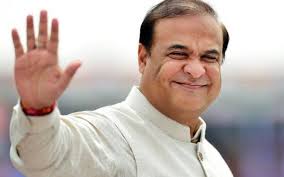
Our beloved CM, Dr. Himanta Biswa Sarma is 100% right!

When Niccolò Machiavelli warned that “people are more often moved by the appearance of things than by their reality,” he could have been describing modern India’s constitutional self-portrait. The Preamble that now proclaims the Republic “secular” carries a reassuring gloss, yet the lived history of the state betrays a different hue. Words alone cannot transmute a civilization’s deepest instincts, and the word “secular”—stitched hurriedly into the Constitution during the Emergency of 1976—has never truly described the republic it adorns.

Defining Secularism

In its classical sense, secularism demands two rigors: first, that the state refuse to privilege any faith; second, that religion remain a private affair, quarantined from public policy. In France this ideal is laïcité; in the United States it is the wall of separation. By either yardstick, a state that collects temple revenue, subsidizes pilgrimages, and legislates different family laws for different faiths cannot claim the title. India, therefore, has been plural—teeming with faiths—but never secular in the truest sense.

Secularism in Text, Partiality in Practice

The 42nd Amendment—passed in the dark night of the Emergency—inserted “secular” and “socialist” into a Preamble that the framers had deliberately left unburdened by ideological labels. But the amendment did not dismantle a single structure of religious preference. Muslim personal law still stands apart from the Hindu Code; churches and madrassas may manage their institutions free of state interference, while major Hindu temples remain under bureaucratic control. Even the long-running Haj subsidy, sustained for decades at taxpayer expense and struck down only in 2018, showed a state willing to underwrite one community’s devotional journey while taxing all others.

Judges themselves have lamented the inconsistency. In Sarla Mudgal v. Union of India (1995), the Supreme Court decried the absence of a Uniform Civil Code, observing that a patchwork of faith-based laws conflicts with the equality the Constitution promises. Such anomalies are not aberrations; they are evidence that the Indian state has never embraced secular neutrality.

Pluralism, the Indian Genius

What India does embody—radiantly—is pluralism: the ancient ideal of Sarva-dharma-sambhāva, equal regard for every path to the divine. Here, many faiths thrive because a broad Hindu civilizational ethos has traditionally offered space, not because the state stands aloof. To conflate this civilizational hospitality with secularism is to mistake a banyan tree for the open sky that shelters it.

Toward an Honest Settlement: Declaring a Hindu Rashtra

Honesty, like justice, begins with naming things correctly. If India’s public institutions, cultural symbols, and legal compromises already presume a Hindu civilizational framework, then let the Constitution say so plainly. A Hindu Rashtra need not—indeed must not—diminish the equal civil and political rights of any citizen; rather, it would acknowledge the civilization from which those pluralist instincts spring. By removing the ill-fitting label of “secular,” Parliament would align text with truth, dissolve the cognitive dissonance that fuels communal grievance, and invite minorities to engage the majority culture without the pretense of a neutrality that does not exist.

Call to Action

The time has come for constitutional candour. Parliament should move a comprehensive amendment that (i) excises the Emergency-era appendage “secular,” (ii) enacts a Uniform Civil Code to guarantee identical civic rights and duties for all Indians, and (iii) affirms India as a Hindu Rashtra founded on the principle of Sarva-dharma-sambhāva. Such an act would replace the comfort of an illusion with the sturdier peace of truth, allowing every community—majority or minority—to negotiate its future honestly within the republic’s real cultural home.

The Pure (Nirmala) Depreciation

One morning, as Vikram Mehta awoke from his anxious dreams, he found himself transformed into a negative margin. The realization came slowly at first – he was still in his bed, still flesh and blood – but the paperwork on his nightstand confirmed it. According to Circular 2024/XVIII/GST/UV (Used Vehicles), he had officially and irrevocably become a negative taxable entity.

It started when he tried to sell his car. The white Maruti he’d purchased five years ago for twelve lakhs now had a market value of seven lakhs – a perfectly normal depreciation that any reasonable person would understand. But the tax authorities had other ideas.

“You see, Mr. Mehta,” said the clerk behind the glass partition, his face obscured by stacks of identical forms, “your depreciation makes you a negative margin. But since you’re a registered business owner, you must pay GST (Goods and Services Tax) on the negative margin, which makes it a positive liability, unless you can prove you never claimed depreciation under Section 32, in which case you would need Form UV-18/B to declare your non-negative non-liability.”

“But I lost money on the car, and I already paid GST on the original purchase price,” Vikram protested. “How can I pay taxes now on a loss?”

The clerk’s glasses glinted. “Ah, but is it really a loss? Or is it an unrealized gain on Nirmala depreciation? Please fill out Form UV-18/C to determine your depreciation reality status.”

That evening, Vikram found himself measuring his own worth in margins. His lunch had depreciated into nothingness when it left his digestive system and could trigger a GST liability soon. His shoes had depreciated with each step – yet more taxes. Even his thoughts seemed to attract a GST liability – eighteen percent on every idea that was worth less than its original conception. Or maybe more!

His neighbor, Mrs. Sharma, had it even worse. She had sold her husband’s old Ambassador after his death, not knowing she needed to first establish her status as a non-GST-registered individual dealing in pre-owned emotional assets. The tax department calculated her grief as an appreciating asset and sent her a notice for eighteen percent of her memories.

In his dreams that night, Vikram saw an endless line of cars, each worth less than the last, stretching into infinity. At the end of the line stood a massive government building made entirely of depreciation certificates. Inside, bureaucrats calculated taxes on the building’s own declining value, using the revenue to build an even bigger building, which would then start depreciating.

When he went to appeal his case, Vikram found himself in a circular room filled with other negative margins. A man who had sold his scooter at a loss was slowly fading into a tax credit. A woman who had traded in her old car was being transformed into a depreciation schedule, her humanity dissolving into columns of numbers.

“But this is absurd!” Vikram shouted at the committee of assessment officers. “You can’t tax what isn’t there!”

“On the contrary,” replied the head officer, his smile as thin as a depreciation curve, “we find that nothing is our most taxable asset. After all, what could be more valuable than the absence of values itself?”

As Vikram left the building, he noticed his shadow had begun depreciating. According to the latest circular, all physical manifestations of existence were subject to value assessment. He wondered if he could claim his deteriorating sanity as a business loss.

In the end, Vikram decided to keep his car. It sat in his garage, neither sold nor unsold, existing in a quantum state of untaxed depreciation. Sometimes, late at night, he would sit in it and calculate its declining value, finding a strange comfort in the mathematical certainty of loss.

And somewhere in a government office, in a file labeled “Pending Negative Margin Assessments,” Vikram’s case gathered dust, depreciating at the standard rate of eighteen percent per annum, compounded quarterly, until nothing remained except the tax on nothing at all.

Years later, people would whisper about the man who became a negative margin. Some said he was still out there, endlessly circling government buildings in his unsold car, searching for the form that would transform him back into a person. Others claimed he had finally achieved a state of perfect depreciation – a tax bracket so negative it had somehow become positive again.

But in the halls of the tax department, they simply filed him away under “Miscellaneous Depreciating Assets: Human,” and added eighteen percent GST to the filing fee.

Did someone just say, “Values guide us, value doesn’t matter when it comes to GST”?

The Great Kiss Katastrophe of Kotakola

In the mystical city of Kotakola, where trams ran on tea leaves and morality was measured in millimeters, the Great Kiss Katastrophe of 2024 began with two lips mysteriously meeting at the Kalighata Metro Station. The city’s moral fabric, carefully woven from centuries of raised eyebrows and tutting tongues, unraveled faster than a grandmother’s sweater in a ceiling fan.

The Defenders of Decency, led by the illustrious Mammoth Shankar, immediately convened an emergency meeting of the Committee for the Prevention of Public Displays of Almost Anything (CPPDA). “In France, they kiss on streets,” she declared, clutching her pearls so tightly they threatened to turn into diamonds. “But this is Kotakola, where we prefer our love like our tea – watered down and served with appropriate social distance!”

The CPPDA headquarters, located in a building shaped much like a disapproving aunt, buzzed with activity. Subcommittees were formed with impressive speed: the Bureau of Acceptable Hand-Holding Distances, the Department of Proper Public Posture, and the elite task force known as GASP (Guardians Against Spontaneous Passion).

Meanwhile, the Anti-Romeo Squad, fresh from issuing their 1.26 billionth warning slip (printed on recycled moral fiber), patrolled the parks with special “PDA-detecting” binoculars that mysteriously stopped working whenever actual harassment occurred. Their motto: “We see all evil, except when we don’t want to.” They had recently upgraded their equipment to include “Morality Radars” – devices that beeped whenever two people stood closer than the officially mandated distance of three coconuts and a banana leaf.

Young Kotakolans, however, had different ideas. Ali from Tangra pointed out that the city’s moral guardians seemed more disturbed by two people kissing than by the local tradition of competitive public spitting, which had recently been declared an Olympic sport. “We have people treating the streets like their personal spittoon,” he observed, “but heaven forbid someone shows affection!”

Nabaneeta from Tollygunge started a movement called “Kisses Against Chaos,” arguing that perhaps if the moral police spent less time monitoring metro stations for affection, they might notice the actual crimes happening under their professionally averted gaze. Her group began organizing “Standing Still While Looking Happy” protests, which thoroughly confused the authorities who couldn’t decide if looking content in public was against the rules or not.

The situation took an interesting turn when Srotaswini, a local advertising professional, launched a campaign titled “Save Our Statues.” The city’s ancient statues, tired of being the only ones allowed to display bare skin in public, reportedly began covering themselves with saris and sending strongly worded letters to the municipal corporation about “these modern couples making us uncomfortable.” The 500-year-old sculptures at the museum were particularly vocal, though some suspected this had more to do with their recent renovation with WiFi capabilities than actual moral outrage.

The crisis deepened when the CPPDA proposed the “Public Propriety Protection Act,” which would require all couples in public to maintain a distance measurable by at least one medium-sized autorickshaw. Street vendors quickly capitalized on this by selling “Officially Approved Romance Rulers” and “Morality Measuring Tapes,” complete with built-in alarms that played old-fashioned film songs whenever violations occurred.

But then something magical happened. The police, in an unprecedented display of common sense that shocked the entire subcontinent, suggested that perhaps everyone should simply “grow up.” The suggestion was so revolutionary that several members of the CPPDA fainted, only to be revived by the sight of a couple holding hands – which, naturally, gave them something new to protest about.

The local newspapers had a field day. The Kotakola Chronicle ran headlines ranging from “Kiss and Tell: City’s Moral Framework Crumbles” to “Love in the Time of Moral Cholera.” Opinion pieces debated whether the city’s reputation as the “Kultural Kapital” would have to be changed to “Kissing Kapital,” causing several retired professors to write lengthy letters to the editor about the declining standards of alliteration in modern journalism.

Priyasha, a savvy student from La Martiniere, observed that the city seemed to have more pressing issues, like the fact that their roads had more potholes than a moon crater, or that the local pigeons had formed a union and were demanding better statues to sit on. But such logical observations were quickly drowned out by the sound of moral guardians clearing their throats disapprovingly.

In the end, the young couple from the metro station went on to live their lives, blissfully unaware that their kiss had caused more discussion than the city’s annual budget. Some say they can still be seen occasionally, riding the metro into the sunset, while the moral guardians of Kotakola remain vigilant, binoculars trained on the horizon, waiting for the next great threat to society – perhaps someone wearing shorts in winter, or worse yet, smiling without a permit.

The city’s youth began calling themselves “The Generation of Gentle Rebellion,” fighting moral policing not with anger but with innocent acts of joy that left the authorities thoroughly confused. Flash mobs of people reading books in parks, couples having philosophical discussions over tea, and friends laughing too loudly in public – all acts that somehow seemed subversive in their simple celebration of life.

As for the mystical city of Kotakola, it continues to balance precariously between tradition and progression, like a tightrope walker on a string of prayer beads. The metro stations now have special “Moral Panic Buttons” installed every few meters, though they’re mostly used by tired commuters as armrests. The Anti-Romeo Squad gradually found themselves being invited to weddings by the very couples they had once warned, leading to some very awkward gift-giving situations.

The great Kiss Katastrophe of 2024 became just another chapter in the city’s rich history of moral panics, filed away somewhere between “The Great Ankle-Showing Scandal of 1923” and “The Infamous Ice Cream Cone Incident of 1985” (don’t ask).

Moral of the story: In a world obsessed with policing love, the real obscenity might just be the waste of time spent preventing people from showing it. And perhaps, just perhaps, the true measure of a society’s culture isn’t in how well it prevents public displays of affection, but in how gracefully it learns to mind its own business.

P.S. The statues eventually gave up their protest and went back to their usual business of providing homes for pigeons, though some say they now wear knowing smiles, especially during the evening rush hour.

The Temple of Internal Reflections

One peculiar morning in the coastal town of Mirrormara, Chief Minister Tamta Matterjee woke up to find her reflection had developed an unusual habit of disagreeing with her. This wouldn’t have been particularly noteworthy, except that today was the day she was to inaugurate the Grand Temple of Universal Harmony. This project had consumed three years and 250 crore rupees of public funds.

“But don’t you see?” her reflection said, adjusting its sari with an independence that Tamta found rather unsettling. “You’re building a replica of something sacred to one faith while claiming it represents all faiths.”

Tamta waved away the reflection’s concerns with a practiced politician’s gesture. “Nonsense! This is about cultural preservation and tourism. Besides, we’ve added modern amenities—air conditioning, gift shops, and a food court serving international cuisine. What could be more secular than that?”

The reflection sighed, its breath momentarily fogging the mirror. “Perhaps you should ask little Sangamitra, the sweeper’s daughter. She seems to be the only one who still speaks the truth around here.”

Tamta ignored this cryptic comment and headed to the inauguration ceremony. The temple grounds sprawled across twenty acres of prime beachfront property, its marble dome rising like a misplaced mountain against the sea. The structure was an exact replica of an ancient temple from a neighboring state, only bigger and grander and equipped with more LED lighting that could change colors during festivals. But for now, it was always blue!

The inauguration ceremony proceeded with the expected pomp. Bureaucrats nodded sagely at every word Tamta spoke, their heads bobbing like well-oiled machinery. Religious leaders from various faiths had been carefully arranged on the stage like pieces on a chessboard, each given exactly seven minutes to speak about universal brotherhood.

But as Tamta reached the crescendo of her speech about secular harmony, a small voice pierced the carefully orchestrated atmosphere.

“But why did you copy another temple?”

The voice belonged to Sangamitra, the eight-year-old daughter of a sweeper who worked at the temple complex. She stood in her worn but clean school uniform, looking up at the grand stage with genuine curiosity.

“If it’s for everyone,” Sangamitra continued, her voice carrying in the sudden silence, “why does it look exactly like one community’s temple? Why not make something new that actually belongs to everyone?”

The assembled dignitaries shifted uncomfortably. Tamta’s assistant rushed to silence the child, but Tamta raised her hand. Something about the girl’s honest question triggered a memory of her childhood, when she too relentlessly asked such questions without any fear or favor, despite getting beaten up for doing so a few times.

“Let her speak,” Tamta said, surprising herself as much as her staff.

Sangamitra, encouraged, walked closer to the stage. “My friends and I, play in the municipal garden. Hindu, Muslim, Christian, Sikh—we all made a little house there together. It doesn’t look like any of our houses of worship. It looks like something new, something that belongs to all of us.”

Religion symbols that form a flower with a heart as a symbol for religious unity or commonness – Islam, Buddhism, Judaism, Jainism, Sikhism, Bahai, Hinduism, and Christianity.

A murmur ran through the crowd. In the massive glass windows of the temple, Tamta caught a glimpse of her reflection, which was now smiling approvingly at Sangamitra.

“Tell me more about this house you built,” Tamta found herself saying, stepping down from the stage to sit on the steps with Sangamitra.

“We took a little bit from everyone’s ideas,” Sangamitra explained. “Raheem contributed the geometric patterns he learned at the mosque, Sarah added the kind of windows she saw in her church, Gurpreet suggested the garden layout like her gurudwara, and I added rangoli patterns from our temples. It’s not very fancy, but everyone who sees it smiles because they can find a little bit of themselves in it.”

As Sangamitra spoke, Tamta looked up at the enormous structure behind her—a perfect replica that had somehow missed the very essence of what it sought to represent. In its pursuit of grandeur, it had forgotten the simple truth that true harmony isn’t about replication but creation, not about imposition but integration.

The next day, to everyone’s astonishment, Tamta announced a modification to the project. The main temple would remain, but the surrounding twenty acres would be transformed into a series of community spaces designed by local children from all backgrounds. Sangamitra and her friends were appointed as special advisors to the project.

Months later, the temple complex had evolved into something unique. The original structure stood at its center, but it was now surrounded by gardens, community centers, and play areas that reflected the diverse heritage of the region. Each space carried elements from different faiths and cultures, blending them in ways that felt both natural and novel.

The food court still served international cuisine, but now it also included local delicacies from different communities, prepared by neighborhood women who had formed a cooperative. The gift shops sold handicrafts made by artisans from various traditions, working together to create new designs that borrowed from each other’s heritage.

One evening, as Tamta walked through the transformed complex, she passed a small reflection pool. In it, she saw her reflection once again, but this time they both smiled at each other.

“You know,” said the reflection, “sometimes it takes a child’s voice to remind us that imitation isn’t the sincerest form of harmony.”

Tamta nodded. “True secularism isn’t about making everything look the same,” she replied, “it’s about creating spaces where differences can coexist and create something new together.”

“Like Sangamitra’s playhouse,” the reflection agreed.

“Like Sangamitra’s playhouse,” Tamta echoed, watching as the setting sun painted the sky in colors that belonged to no single faith but created something beautiful precisely because they remained distinct while sharing the same canvas.

In the distance, she could hear children laughing in the community garden, their voices mixing with the evening azaan from a nearby mosque, the chiming cymbals from the mandir, the strains of a gurubani from a gurudwara, and the uplifting symphony from the church’s choir. None of these sounds competed to overpower the others; instead, they created an unexpected harmony—much like the complex itself had become not a replica of any single tradition, but a living, breathing space where multiple traditions could grow together while remaining true to themselves.

As night fell, the LED lights of the main temple came on, but now they seemed less about spectacle and more about illumination—not just of the structure, but of the path toward a more genuine understanding of what it means to create spaces that truly belong to everyone.

Sangamitra and her friends continued to meet in their special corner of the garden, their little playhouse standing as a humble reminder that sometimes the greatest wisdom comes from the simplest sources, and that true harmony doesn’t need grand gestures—just open hearts and courage to speak truth with innocence adults are taught to divorce.

The complex became known throughout the region not just as a temple, but as a place where differences were celebrated rather than merely tolerated, where imitation gave way to innovation, and where the true spirit of secularism was found not in grand proclamations but in the daily interactions of people who had learned to see beauty in their diversity.

And if visitors looked carefully in the reflection pool at sunset, they might catch a glimpse of their own reflections smiling back at them, perhaps with a hint of newfound wisdom in their eyes.

The Time Merchants of Ihled

In a country not much like our own, the people discovered they could no longer afford to buy the present. The cost had grown too high—basic necessities, dreams, and futures were all priced beyond reach. So, instead, they began trading in the past.

The Time Merchants’ Exchange opened its doors in the capital city, a towering edifice of marble and mirrors where every reflection showed a different decade. Here, politicians could purchase vintage grievances at premium rates, while selling ancestral glories at even higher markups. The most valuable commodity was blame, especially if it was well-aged, preferably several centuries, if not decades, old.

Young Kumar visited this exchange one day, his pockets empty of present opportunities but his mind full of past questions. His engineering degree, fresh and useless as tomorrow’s newspaper, weighed heavily in his worn backpack. He watched as the country’s leaders engaged in fierce bidding wars over sepia-toned accusations and black-and-white responsibilities.

“How much for a job?” he asked a broker, a portly man whose suit was stitched from threads of old speeches.

“Jobs? Oh, we don’t deal in those anymore,” the broker laughed, his belly shaking like tomorrow’s earthquake. “But I can offer you a lovely argument about economic policies from the 1950s. Guaranteed to keep you distracted for weeks! Very popular these days.”

“What about affordable housing?”

“Have you considered instead this fascinating debate about who built which institution seventy years ago? It comes with a complementary set of grievances and a lifetime supply of blame!”

In the gallery above, two groups of traders were locked in an eternal auction, bidding higher and higher on who could claim the greater share of historical grievances. Their voices echoed through the marble halls while the present gathered dust outside. The traders wore special glasses that only allowed them to see backward, never forward, and certainly never at the now and present.

Kumar noticed an old woman sweeping the exchange floor. She was gathering up discarded presents and futures that people had traded in for past grievances. “Such waste,” she muttered, picking up a child’s dream of becoming a scientist, slightly used but still functional.

But something strange began to happen. The youth, led by Kumar and others like him, started opening their own exchange—they called it Tomorrow’s Market. They traded in hope, innovation, and solutions. They bartered in ideas and possibilities. Their currency was creativity, their capital was courage, and their profit was progress.

When the Time Merchants tried to shut them down, claiming exclusive rights to all temporal transactions, they simply moved their trading to parks, to street corners, to social media. They set up shop under bridges and in abandoned warehouses, in college canteens and quiet libraries.

“The past is a good teacher,” Kumar declared at one such gathering, watching as young people exchanged ideas like precious gems, “but it makes a poor home. We cannot live there forever. And while some spend their days auctioning off blame for yesterday’s problems, we’ll be too busy building tomorrow to attend the bidding.”

The Tomorrow’s Market grew. People traded solutions for water scarcity, exchanged ideas for clean energy, bartered plans for better education. They even opened a special counter where communal harmony could be freely exchanged, much to the horror of those who had invested heavily in division.

The Time Merchants were horrified to discover their carefully curated vintage blame was rapidly losing value. Their prized collections of historical grudges began gathering dust. People were more interested in trading futures than pasts. Some even suggested that the present moment, that long-neglected commodity, might be worth investing in again.

The old woman with her broom smiled as she watched young people rushing past the Exchange, heading to Tomorrow’s Market. She had been gathering discarded dreams for years, waiting for someone to reclaim them. Now, finally, she could return them to circulation.

In the end, the Time Merchants’ Exchange still stands, and its marble halls still echo ancient debates. Inside, a dwindling group of traders continues to bid on bygone eras, their voices growing fainter each day. But more and more people pass it by, heading instead to the bustling markets of tomorrow, where hope trades at premium rates, and the future is always in stock.

And sometimes, if you listen carefully in the quiet hours, you can hear the sound of the present, ticking away like a clock in an empty room, waiting for someone to remember it exists.

The Great Temple of Solutions

In the bustling town of Hopesville, the mayor had a brilliant solution for all of life’s problems. When citizens came to complain about unemployment, he directed them to the newly constructed Shrine of Job Aspirations, complete with a golden statue of a resume and a sacred fountain that dispensed holy water in the shape of LinkedIn notifications.

“But sir,” said young Rahul, a recent graduate, “I’ve been praying here for six months, and my inbox is still empty.”

“Ah,” replied the mayor, adjusting his designer glasses, “you must not be praying hard enough. Have you tried our premium Prayer Plus™ package? For just ₹9,999, you get priority access to the Blessing Booth and a complimentary ‘Employment Energy’ crystal.”

The education crisis? Solved!

The Sacred School of Wishes replaced actual schools. Parents would drop their children off at the meditation pods where they could visualize their way to knowledge. The temple even had a special “Osmosis Chamber” where students could sleep next to textbooks, hoping the information would transfer through divine intervention.

When the town’s medical facilities crumbled, the mayor unveiled his masterpiece: the Healing Harmony Wing, where patients could trade their medical insurance for blessed amulets. “Who needs medicine when you have miracle stones?” he beamed, while his contractor cousin counted stacks of renovation money in the background. Or utensils to bang so the viruses got scared and dissipated.  And the resonance of the entire town banging on whatever they can find as long as it made the loudest, most obnoxious sounds, would cosmically interfere with the frequencies that only viruses could hear and convey the holy message that they were not welcome here!

The town’s infrastructure department was replaced with the Department of Divine Development. Potholes? Just place a small shrine in each one.

Traffic problems? A temple at every junction, because what better way to slow down traffic than with mandatory prayer stops?

Behind the magnificent walls that hid the town’s poverty, the local economy boomed – if by economy you meant the temple souvenir shop selling “Prosperity Pens” and “Success Sandals.” The mayor’s campaign slogan for re-election was simple: “Why solve problems when you can pray them away?”

Meanwhile, in the nearby town of Pragmatistan, they were building boring old schools, hospitals, and factories.

“How primitive,” scoffed Hopesville’s mayor, polishing his “Best Spiritual Solutions in Urban Development” award. “They’re actually trying to solve problems instead of decoratively concealing them!”

As for the unemployed youth, they found a creative solution – they became professional temple reviewers on social media. “Great ambiance, terrible job prospects – 5 stars!”

And so, Hopesville continued its march toward spiritual development, one magnificent temple at a time. After all, who needs bread when you can have temples? Strangely enough, the mayor’s children all went to study abroad, where schools still believed in the outdated concept of an actual education.

The mayor’s refrain? When life gives you lemons, build a temple to pray for lemonade. Just don’t ask about the employment rate of the lemon farmers.