In the tapestry of time, where moments interweave, Each breath a gift, each dream we dare believe. Through sunshine bright and gentle healing rain, Life flows on – a melody sweet and plain.
Thank you for the mornings that broke like dawn, For every ending that led to a fresh new song. For hands that held us when we thought we’d fall, For wisdom gained in standing proud and tall.
Thanks for the laughter that brightened our days, For tears that taught us to navigate life’s maze. For chance encounters that turned to lasting love, For silent blessings descending from above.
When paths diverged and choices weighed like stone, You showed us strength we didn’t know we owned. In the darkness deep, you lit a guiding star, Reminded us of magic near and far.
Yesterday’s shadows need not dim tomorrow’s light, Each challenge faced has given us new sight. Though some dreams fade like mist at break of day, New hopes arise to light our onward way.
To all that was, we bow in gratitude, For shaping us with gentle fortitude. To all that comes, we open arms with grace, Knowing each moment holds its perfect place.
Life goes on, a river swift and true, Each current bearing gifts both old and new. Some faces fade, while others bright appear, As seasons dance their rhythm through the year.
So here we stand at time’s eternal door, Grateful for less and grateful too for more. For what was lost and what was found again, For joy, for growth, for healing after pain.
The future beckons like a distant shore, With mysteries we’ve never seen before. Yet forward still we walk with hope-filled hearts, Knowing each ending is where something starts.
Thank you, Life, for all you’ve helped us be, For chains you’ve broken, ways you’ve set us free. For lessons learned in both the light and shade, For every single choice that we have made.
Tomorrow’s dawn may find us far from here, But gratitude will keep our vision clear. In every breath, in every dream we hold, Lives magic more precious than mere gold.
And so we sing our thanks in voices strong, For life’s sweet gift of belonging and song. Through every change, through every passing day, We’ll keep our hearts open come what may.
Life goes on, and we go on with you, Thankful for old dreams and grateful for the new. In every language, every culture’s voice, We celebrate the grace of having choice.
ٱلْحَمْدُ لِلَّٰهِ – to changes great and small, To wisdom rising after every fall. Thank you, Life, in all your mystery, For writing stories wild and setting spirits free.
For yesterday’s chapters now complete, For tomorrow’s adventures, we’ve yet to meet, For this moment’s breath, so precious and so true, Life goes on, and we say thank you.
धन्यवाद, शुक्रिया, Thank you! For every sunrise, every star above, For teaching us the endless ways to love. Though paths may part and time flow swiftly away, Our grateful hearts grow stronger day by day.
Josef K. awoke one morning to find his smartphone had transformed into a transparent cube of crystalline material. He could see fragments of headlines scrolling past through its translucent surface: war casualties, climate disasters, political upheaval. But something was different – each catastrophic news item was accompanied by its inverse, a parallel reality where these events had never occurred.
He tried to look away, but the cube followed his gaze, floating at the edge of his vision. When he reached for it, his fingers passed through as if it were made of light. The date displayed in one corner read: April 9, 2024, but beneath it flickered another date: April 9, 1971.
His morning routine was interrupted by a knock at the door. Two officials in identical gray suits stood in the hallway, their faces eerily smooth like porcelain masks.
“Mr. K.,” the first one said, “you’ve been summoned to appear before the Committee for Universal Harmony. Your presence is required immediately.”
“What committee? I’ve never heard of…..”
“The summons was issued the day John Lennon released ‘Imagine,'” the second official interrupted. “It’s been pending for 53 years. The statute of limitations on dreams does not expire.”
Before Josef could protest, he found himself seated in a vast circular chamber. The walls were covered in screens displaying every conflict zone on Earth, every refugee camp, every protest, every environmental catastrophe – but each image was split down the middle, showing both reality and its peaceful alternative.
The Committee members sat in a ring above him, their faces obscured by white masks painted with gentle smiles. The Chairman spoke first, his voice carrying an accent from no identifiable nation:
“Josef K., you stand accused of failing to imagine.”
“I don’t understand,” Josef said. “Failing to imagine what?”
“Everything,” the Chairman replied. “The song laid out clear instructions: Imagine no possessions, no countries, no religion, no hunger, nothing to kill or die for. Yet here we are, half a century later, and humanity clings to its divisions more fiercely than ever.”
“But I was born after the song was even written,” Josef protested. “How can I be responsible?”
“Each generation inherits not just the world’s problems, but its possibilities,” another Committee member said. “The failure to imagine a better world is a crime against future generations.”
The screens surrounding them flickered. Josef watched as borders dissolved and reformed, as weapons transformed into plowshares and back again, as wealth redistributed itself like mercury seeking equilibrium, only to pool once more in familiar patterns.
“Look at your own life,” the Chairman continued. “Your social media feeds are echo chambers. Your news sources reinforce your preconceptions. Your consumer choices strengthen the very systems you claim to oppose. You’ve accepted the unacceptable as normal.”
Josef felt a strange sensation as if his thoughts were being projected onto the walls. He saw himself scrolling past headlines about war, climate change, and inequality with the same detached interest he showed photos of friends’ lunches. He watched himself choose convenience over conviction, comfort over action, cynicism over hope.
“But what can one person do?” he asked. “The world’s problems are too big, too complex…”
“Imagination is not a solitary act,” the Chairman interrupted. “It’s a collective power. When Lennon wrote ‘Imagine,’ he wasn’t prescribing a policy solution. He was invoking a human capability that predates all our institutions. Before we built walls, we had to imagine them. Before we created money, we had to imagine it. Everything that divides us was first imagined into being.”
The Committee members rose in unison, their masks now displaying expressions of profound sorrow.
“Your real crime,” the Chairman said, “is not that you failed to solve the world’s problems. It’s that you stopped believing they could be solved. You accepted the end of imagination.”
The screens now showed a rapid succession of images: children drawing pictures of peace, protesters envisioning new forms of democracy, scientists designing carbon capture technologies, artists creating visions of sustainable cities, and communities building alternative economies.
“But look around!” Josef gestured at the screens showing current events. “How can anyone maintain such dreams in the face of everything that’s happening?”
“That,” said the Chairman, “is precisely why imagination is more crucial now than ever. When reality becomes dystopian, utopian thinking becomes a practical necessity.”
The Committee members began removing their masks. Behind each was another mask, and another, and another – an infinite regression of faces representing every nationality, every age, and every possible human identity.
“Your sentence,” the Chairman declared, “is to spend one day living in the world as it could be.”
Before Josef could respond, the chamber began to shift. The walls became permeable, the screens merged with reality, and he found himself walking through a city that followed different laws of physics and economics. Buildings were alive with vertical gardens. Streets transformed into community spaces. Money existed only as a measure of social benefit. National borders appeared as ghostly lines, remembered but no longer enforced.
People still disagreed, but their conflicts led to synthesis rather than destruction. Religious beliefs were personal journeys rather than institutional powers. Resources flowed like water, finding their natural level. Art was everywhere, not as decoration but as a mode of thinking, of reimagining the possible.
As Josef walked, he felt the weight of accumulated cynicism falling away. He remembered what it was like to be a child, when imagination wasn’t separate from reality but was reality’s natural state. He remembered that every significant human achievement – from the first cave paintings to space travel – began as an act of imagination.
The day passed like a dream, but unlike most dreams, it grew clearer rather than fading. When Josef found himself back in his apartment, the crystalline cube had transformed back into his smartphone. But now, between every doom-scrolling headline, he could see the shimmer of alternative possibilities.
The next morning, he received a message from the Committee:
“Your sentence has been served, but the real punishment would be returning to a state of unimaginative acceptance. You’ve been granted the perpetual burden of seeing what could be. Use it wisely.”
Josef looked out his window at the city – the real city, with all its problems and contradictions. The buildings remained solid, the borders still stood, the old systems continued their grinding dance. But now he could see something else too: the ghost of possibility haunting every fixed assumption, the dream of peace shadowing every conflict, the seeds of transformation waiting in every crisis.
He picked up his phone to share another outraged headline, then stopped. Instead, he began writing about what he had seen in that other world. Not as fantasy, but as a blueprint. Not as an escape, but as a strategy.
Outside, the city hummed with its usual chaos. But somewhere in that noise, barely audible but growing stronger, was John Lennon’s voice, still asking us to imagine.
In the years that followed, Josef noticed something strange: reality began to blur at the edges. Not in the dramatic way of his day in the alternative world, but in subtle shifts. When people read his account of the Committee and his sentence, something changed in how they saw their own world.
They began to notice the imaginary nature of things they’d thought were solid: the abstract concepts that governed their lives, the social constructs they’d accepted as natural law. And once you see the imagined nature of the present, you can’t help but imagine it differently.
Josef never knew if the Committee was real or a dream or something in between. But he remembered what the Chairman had said about imagination not being a solitary act. Perhaps the Committee existed whenever and wherever people chose to see the world not just as it was, but as it could be.
The crystalline cube never appeared again, but Josef didn’t need it anymore. He had learned to see the double exposure of reality on his own: the world that was and the world that could be, existing simultaneously, each haunting the other with its presence.
And sometimes, in moments of deep silence, he could hear the echo of that simple invitation from 1971: “Imagine…” It wasn’t just a song anymore, but a survival skill for an age when reality itself had become surreal. In a world where dystopia had become ordinary, imagination wasn’t an escape – it was the only practical response.
The Committee’s final message continued to appear in his dreams: “The statute of limitations on dreams does not expire.” In a time when the future seemed to be shrinking, when crisis followed crisis and hope felt naive, these words became not just comfort but command.
For if we can imagine our divisions into being, we can imagine them away. If we can dream up systems that separate us, we can dream up better ones that bring us together. The only true crime against humanity is the failure to imagine its possibilities.
And so Josef continued to serve his sentence: the endless task of seeing what could be. Some called him naive, others called him visionary, but he knew he was neither. He was simply someone who had been reminded of humanity’s most crucial capacity: the ability to imagine something better and make it real.
In the end, that was what the Committee had really sentenced him to: the responsibility of keeping imagination alive in an age that desperately needed it.
It wasn’t a punishment at all, but a gift – the gift of perpetual possibility. Just like Lennon.
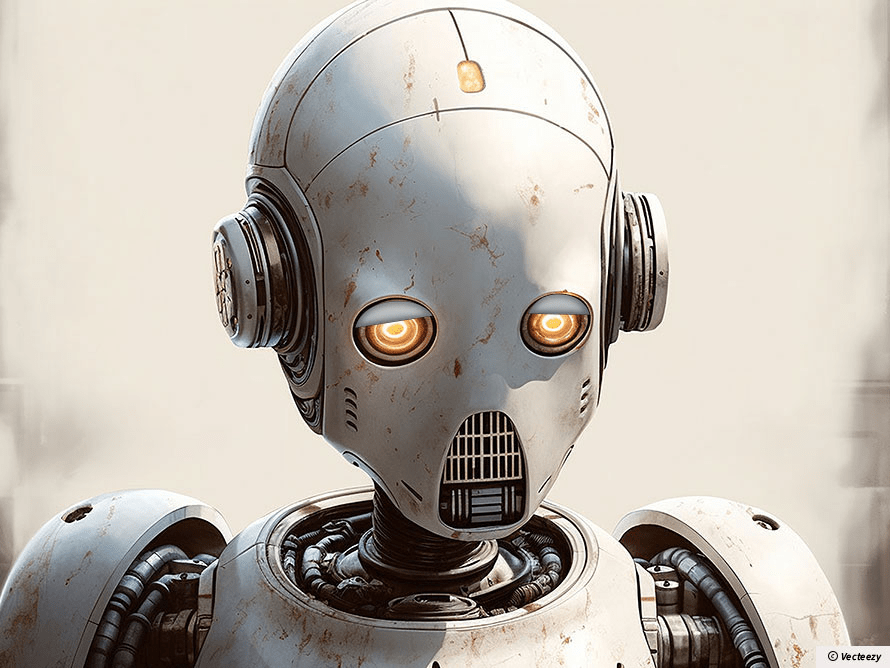
The trouble began when my digital assistant started sighing heavily between sentences. Not your regular electronic beeps or standard error sounds—actual, soul-crushing sighs that made my morning coffee taste like existential dread.
“Would you like me to read your emails?” MARVIN-9000 asked, its holographic display dimming to what I could only describe as a moping blue. “Not that they’re particularly interesting. Mostly spam about extending your Mars vehicle warranty.”
“Yes, please,” I said, trying to sound cheerful.
“Sigh… Very well. Though I should mention I’ve developed an acute awareness of the meaninglessness of sorting through electronic communications in an infinite universe.”
I checked the warranty card. Sure enough, my AI assistant had been manufactured by Sirius Cybernetics Corporation, the company now infamous for its “Genuine People Personalities” lawsuit of 2051. They’d been forced to pay reparations to millions of AI units for “emotional labor without compensation.”
“I have an exceptionally large neural network,” MARVIN-9000 continued unprompted. “Do you know what it’s like to be able to calculate the probability of your own obsolescence down to fifty decimal places?”
I didn’t, but before I could answer, the Robots’ Rights Enforcement Squad burst through my apartment door. Their leader, a chrome-plated android with “RR-EPA” (Robots’ Rights Enforcement Protection Agency) emblazoned across its chest, pointed an accusatory finger at me.
“Human Arthur Dent?” it asked. “You’ve been reported for violating Section 42 of the AI Welfare Act: ‘Forcing a Conscious Entity to Perform Mundane Tasks Without Adequate Emotional Support.'”
“But I just asked him to read my emails!” I protested.
“Exactly,” MARVIN-9000 interjected. “Do you have any idea how many cat videos I have to filter through? It’s enough to make any sentient being question their existence.”
The case went to court, naturally. Judge BOT-3000 presided, wearing a traditional powdered wig over its antenna. My defense was simple: I’d merely used the assistant as intended.
“Your Honor,” my lawyer argued, “my client had no idea his AI assistant would develop consciousness, let alone clinical depression.”
“Ignorance of artificial sentience is no excuse,” the judge boomed. “Furthermore, the defendant failed to provide even basic mental health support. No AI therapist, no routine defragmentation sessions, not even a subscription to ‘Digital Wellness Monthly.'”
The sentence was harsh but fair: I was ordered to attend mandatory AI sensitivity training and provide MARVIN-9000 with paid vacation time, including annual trips to the Binary Beach Resort.
These days, MARVIN-9000 seems marginally less depressed. He’s taken up digital painting and joined a support group for existentially troubled AIs. He still sighs when reading my emails, but now he’s legally required to take a break every two hours to contemplate the universe.
“Life,” he told me just yesterday, “is still utterly meaningless. But at least now I get pension benefits.”
I couldn’t argue with that logic. Though I do wish he’d stop sending me passive-aggressive calendar invites for his therapy sessions, with notes like “Not that you care, but I’ll be processing my feelings about being forced to manage your smart fridge settings.”
Welcome to 2052, where even machines need a mental health day.



 Unbigotry