
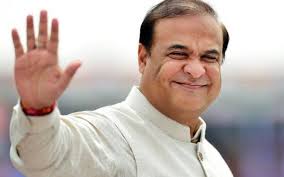
Our beloved CM, Dr. Himanta Biswa Sarma is 100% right!
When Niccolò Machiavelli warned that “people are more often moved by the appearance of things than by their reality,” he could have been describing modern India’s constitutional self-portrait. The Preamble that now proclaims the Republic “secular” carries a reassuring gloss, yet the lived history of the state betrays a different hue. Words alone cannot transmute a civilization’s deepest instincts, and the word “secular”—stitched hurriedly into the Constitution during the Emergency of 1976—has never truly described the republic it adorns.
Defining Secularism
In its classical sense, secularism demands two rigors: first, that the state refuse to privilege any faith; second, that religion remain a private affair, quarantined from public policy. In France this ideal is laïcité; in the United States it is the wall of separation. By either yardstick, a state that collects temple revenue, subsidizes pilgrimages, and legislates different family laws for different faiths cannot claim the title. India, therefore, has been plural—teeming with faiths—but never secular in the truest sense.
Secularism in Text, Partiality in Practice
The 42nd Amendment—passed in the dark night of the Emergency—inserted “secular” and “socialist” into a Preamble that the framers had deliberately left unburdened by ideological labels. But the amendment did not dismantle a single structure of religious preference. Muslim personal law still stands apart from the Hindu Code; churches and madrassas may manage their institutions free of state interference, while major Hindu temples remain under bureaucratic control. Even the long-running Haj subsidy, sustained for decades at taxpayer expense and struck down only in 2018, showed a state willing to underwrite one community’s devotional journey while taxing all others.
Judges themselves have lamented the inconsistency. In Sarla Mudgal v. Union of India (1995), the Supreme Court decried the absence of a Uniform Civil Code, observing that a patchwork of faith-based laws conflicts with the equality the Constitution promises. Such anomalies are not aberrations; they are evidence that the Indian state has never embraced secular neutrality.
Pluralism, the Indian Genius
What India does embody—radiantly—is pluralism: the ancient ideal of Sarva-dharma-sambhāva, equal regard for every path to the divine. Here, many faiths thrive because a broad Hindu civilizational ethos has traditionally offered space, not because the state stands aloof. To conflate this civilizational hospitality with secularism is to mistake a banyan tree for the open sky that shelters it.
Toward an Honest Settlement: Declaring a Hindu Rashtra
Honesty, like justice, begins with naming things correctly. If India’s public institutions, cultural symbols, and legal compromises already presume a Hindu civilizational framework, then let the Constitution say so plainly. A Hindu Rashtra need not—indeed must not—diminish the equal civil and political rights of any citizen; rather, it would acknowledge the civilization from which those pluralist instincts spring. By removing the ill-fitting label of “secular,” Parliament would align text with truth, dissolve the cognitive dissonance that fuels communal grievance, and invite minorities to engage the majority culture without the pretense of a neutrality that does not exist.
Call to Action
The time has come for constitutional candour. Parliament should move a comprehensive amendment that (i) excises the Emergency-era appendage “secular,” (ii) enacts a Uniform Civil Code to guarantee identical civic rights and duties for all Indians, and (iii) affirms India as a Hindu Rashtra founded on the principle of Sarva-dharma-sambhāva. Such an act would replace the comfort of an illusion with the sturdier peace of truth, allowing every community—majority or minority—to negotiate its future honestly within the republic’s real cultural home.



 Unbigotry