The True Memorial: Transmuting Grief into the Gospel of Garg

The death of an icon, especially one as fundamentally defiant as Zubeen Garg, precipitates not merely a wave of national mourning, but a spectacle of collective self-deception. It is a moment where a populace, long accustomed to the comfortable numbness of political apathy and cultural compromise, briefly mistakes genuine sorrow for meaningful virtue. Across the length and breadth of the Brahmaputra Valley, the tears have flowed—genuine, perhaps, but ultimately cheap. The social media tributes, the eulogies delivered by talking heads who spent Zubeen’s living years dismissing him as unruly or radical, and the sudden, performative embrace of his most challenging, anti-establishment lyrics, all constitute a fraud. This is not respect; it is the comfortable, post-mortem adoration afforded to a dead lion, safely defanged and reduced to a sentimental commodity. The question that must pierce this thick, suffocating veil of sentimentality is brutally simple: What is the philosophical and political price of these tears, and what becomes of the nation when the convenient mourning ceases?

The death of a revolutionary conscience like Garg must not be permitted to dissolve into the sweet, nostalgic syrup of remembrance. That is the final, subtle victory of the mediocrity he fought: to have the sharp edges of his life rounded off by the sands of a mournful apathy. If the Assamese nation, which claims him now in his absence with such desperate possessiveness, allows his legacy to become just another festival, another anniversary, another conveniently consumable narrative—then every tear shed is a tear of hypocrisy, and every tribute a betrayal. The true memorial, the only one worthy of his staggering, refreshingly raw yet reckless integrity, demands an immediate, seismic shift from passive grief to the perilous, uncompromising emulation of his life and principles. Once the ashes cool, the real work—the work of dangerous, discomforting imitation—must begin.

The Anatomy of a Martyr and the Fraud of Post-Mortem Adoration

The first and most immediate betrayal is the rush by the political establishment to sanitize, claim, and ultimately neutralize the man who lived to challenge their very legitimacy. Observe the convenient amnesia: the political figures and cultural gatekeepers who, in life, found his voice too loud, his principles too rigid, his questions too inconvenient, now stand on platforms draped in black, pontificating on his “immense contribution.” It is an intellectual obscenity. They are celebrating a statue while having vehemently opposed the man who carved it. This sudden conversion is not a sign of respect for Garg; it is a desperate attempt to launder their own political complicity in the very system he sought to dismantle. They honor the dead rebel because the dead rebel is silent, safely embalmed in history and incapable of demanding accountability for the next injustice and even the injustice of his untimely demise.

This phenomenon is the philosophical cowardice of the collective made manifest. It is easy, even fashionable, to venerate a dead man’s defiance; it requires no personal risk, no uncomfortable conversations, and no forfeiture of commercial or political interests. The true test of a society’s character is not how it mourns its heroes, but how it treats its living prophets—the ones who shatter the consensus, who point the finger at comfortable corruption, who refuse to allow art to serve as the velvet soundtrack to venality.

Zubeen Garg was, in life, a persistent, throbbing migraine for the status quo. In death, they attempt to turn him into a pleasant lullaby. We, the collective inheritors of his rage and his art, must ruthlessly refuse to sing that tune. The measure of our respect must be gauged by our willingness to continue the fight he started, even if that means making ourselves as socially awkward, commercially unviable, and politically targeted as he often was.

The Gospel of Garg: Uncompromised Artistry and the Rejection of the Marketplace

Zubeen Garg’s first, most profound principle was the uncompromising sanctity of his art. He never treated music as a mere transaction, a comfortable commodity to be sold by the pound in the bazaar of popular taste. His discography is not just a collection of hits; it is a sprawling, often contradictory, frequently chaotic diary of a soul grappling with its environment, refusing to separate the personal lyric from the political slogan. He rejected the sleek, soulless homogenization that defines much of modern, commercial culture. His music retained a necessary, vital rawness—a deliberate refusal to polish away the inconvenient truths that made it resonate with the common man’s struggle.

This is the principle the Assamese nation must emulate, not just in its art, but in its every endeavor. The market, the great homogenizer, demands that everything be soft, palatable, easily digested, and devoid of sharp edges. It rewards those who sing of trivial, universalized romance while the state of the culture decays around them. Garg, by contrast, insisted that art must be dangerous, that it must demand something of the listener, that it must be capable of causing offence if the truth required it. The greatest disrespect to his memory is the proliferation of culture that serves only as distraction, as aesthetic wallpaper for a nation asleep. We must demand integrity, not merely in the songs we listen to, but in the journalism we consume, the policies we accept, and the cultural products we allow to define our identity. If the next generation of Assamese art is merely an imitation of a pan-Indian, commercial template, devoid of the grit, the dialectical complexity, and the unapologetic regionality that defined Garg’s work, then our nation has already forfeited its claim to his legacy.

The philosophical danger in our current moment lies precisely in the blurring of lines between authentic expression and manufactured content. When leaders lie preposterously—when truth is declared an “optional accessory to power,” as the current global trend dictates—the only true resistance comes from the artist who holds a mirror up to the rot and refuses to flinch. Garg did this with an almost reckless abandon. He sang in a voice that was unpolished, often raw, sometimes deliberately provocative, because the truth he carried was unpolished and provocative. Emulating him means rejecting the seductive comfort of silence, even when silence offers financial security or social approval. It means choosing the difficult, discordant chord of truth over the sweet, synthetic major key of collective delusion.

The Rhetoric of the Unbroken Voice: Truth, Power, and the Political Mandate

Zubeen Garg was not a politician, yet his life was a profoundly political act. He was the perpetual outlier, the voice that refused to be co-opted, lending his massive cultural capital not to endorsements or appeasement, but to causes that were profoundly inconvenient for the powerful. From the furious, definitive stand against the Citizenship Amendment Act (CAA), where he was one of the few celebrities to risk everything, to his environmental activism and his championing of social justice issues, his commitment was never conditional, and absolutely never transactional. He was the necessary counter-rhetoric to the rising tide of political mendacity and manufactured consent.

And yet, here is the paradox that indicts my nation: millions loved his defiance, cheered his stand, and consumed the spectacle of his confrontation with power, but few joined him in the trenches. They passively enjoyed the luxury of having a star act as their collective conscience, allowing him to take the risk, bear the criticism, and face the consequences, while they remained safely ensconced in their middle-class comfort. This passive consumption of defiance is the soft underbelly of democracy—it is what allows tyranny to creep in, not through a frontal assault, but through the thousand tiny compromises made by a citizenry that outsourced its moral courage to a single singer.

The greatest danger of unhinged rhetoric is not the rhetoric itself, but the thunderous silence that lets it flourish. Garg’s voice was, in itself, a philosophical intervention, an insistence that the public sphere cannot be dominated solely by the calculated lies of the elite. His life was a lesson that the integrity of the nation is built not on monuments or treaties, but on the capacity of its citizens to stand up, individually and unreservedly, and say No.

Therefore, to emulate him is to cease being spectators to one’s own national drama. It means transferring the courage he displayed on the stage to the bureaucratic office, the street corner, the community meeting, and the dinner table. It means doing the difficult, unglamorous work of demanding transparency and accountability from local governance, rather than waiting for a celebrity to save the entire region from legislative disaster. It is the unromantic process of becoming, individually, a minor, localized Garg—uncompromising in your domain, defiant in your principles, and utterly resistant to the temptation of selling your conscience for a momentary peace.

Emulating the Principle of Reckless Integrity

The path of emulation requires the repudiation of two destructive national tendencies: insular provincialism and cynical apathy. Zubeen Garg, for all his profound rootedness in Assamese culture, was never a provincial artist. His music was a vast tapestry of global influences, from pop to folk to rock, proving that a deep commitment to one’s own identity does not necessitate a fearful rejection of the world. He understood that true cultural confidence allows one to absorb and transform, not merely to defend and retreat.

To follow this principle of reckless integrity, our nation must stop romanticizing its past through a soft-focus, nostalgic lens that conveniently ignores the present rot. It must embrace the uncomfortable, hard-edged truth that Assamese society, like any other, is riddled with internal inequalities, environmental disasters, and institutional failings. We must use the Garg-esque lens—the one that pierces through sentimentality to demand justice—on our own community first.

This is not a call to be musicians or activists in the literal sense; it is a call to be citizens with the uncompromising moral architecture of this great artist, a prophet, a saint, a holy man who understood that religion divides us, love unites us.

It means rejecting the lies, massively and consistently. When a leader, a corporation, or a cultural figure offers a palpable falsehoods, we must not merely shrug. We must call the lie out with the same thunderous, repetitive outrage that Garg reserved for injustice. The erosion of truth begins with a small, accepted lie.

It means choosing local courage over global spectacle. The fight is not always on a massive protest ground. It is often in the village assembly, the student union, or the local environmental body. Emulating Garg means acting with his fearlessness at the scale of our personal influence, rather than waiting for a national tragedy to provide the stage.

It means insisting on quality and depth. Whether in education, infrastructure, or cultural production, we must demand quality over cheap convenience. Garg never allowed his art to be shoddy; our nation must refuse to accept shoddy governance or shoddy public discourse.

The Reckoning

Our tears will dry. Our tributes will be archived. The sudden, desperate spike in the sale of his music will subside. The question that remains is whether this collective catharsis is merely a momentary emotional purge, a brief holiday from apathy, or the true inflection point he deserves. If, in six months, the activists are once again isolated, the inconvenient truths are again ignored, and the politicians who hated him are comfortably back on their pedestals, then the verdict is clear: Zubeen Garg did not die for a nation of conscientious citizens; he died for a nation of spectators who confused grief for governance, and loss for love.

His death is, therefore, not just a tragedy, but a final, powerful indictment. It throws into stark relief the chasm between the principles we claim to adore and the comfortable compromises we consistently make. The greatest tribute we can pay is not to raise a statue to him—he was far too restless for that marble cage—but to turn the entire valley into a chorus of voices as fearless, as messy, as uncompromising, and as vital as his own. If we fail, then he remains an anomaly, a momentary explosion of genius and courage, and our nation proves itself unworthy of the sacrifice. If we succeed, if the silent masses find the reckless, beautiful integrity he modelled, then his passing becomes the very thing he fought for: not an end, but an incandescent, non-negotiable beginning.

This is not a time for polite remembrance. It is a time for political, social, and artistic reckoning, propelled by the urgent, defiant spirit of the man who refused to sing sweet songs when the air was thick with smoke and lies. Let us turn the volume up on his most challenging lyrics and find the courage not just to listen, but to act as he did, damn the consequences.

The teleprompters of national progress might be broken, but it is not the text that matters. It is the uncompromising voice, finally finding its collective echo, that will determine whether Zubeen Garg was merely a singer and artist, or truly the founder and prophet of a fiercer, more honest national conscience. I can only hope my Nation choses the later because our truest honor to Zubeen Garg deserves nothing less.

Zubeen Garg

The choice, and the inherent danger of that choice, is ours.  Zubeen Garg will surely be watching us all from above.
The Value of Comedy in a Democratic Society.

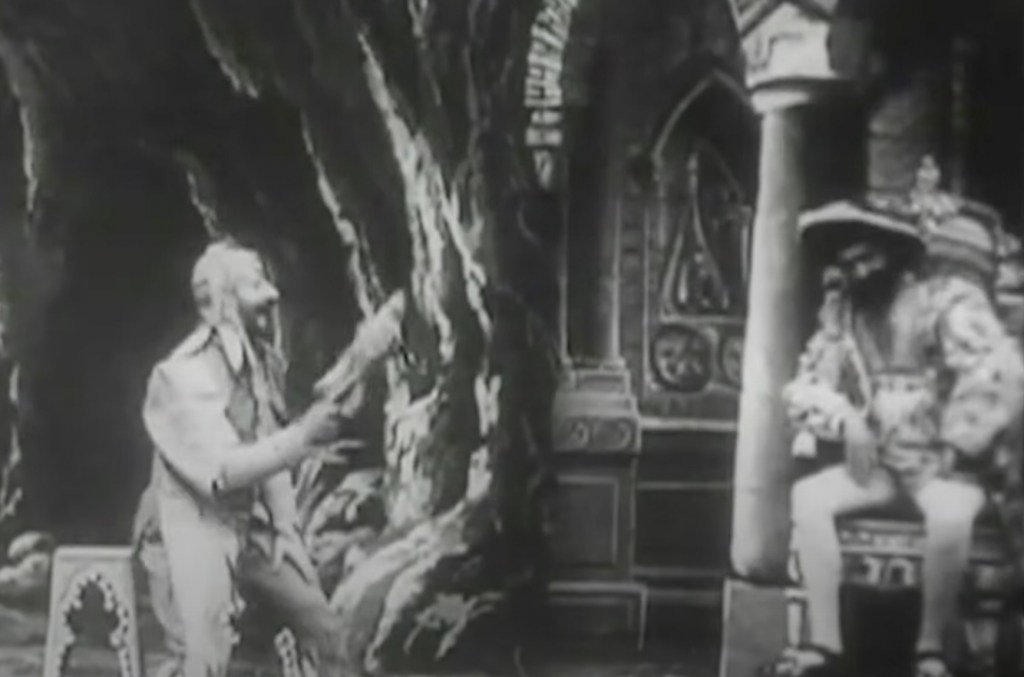
The role of the jester in a king’s court was never a frivolous one. He was not simply there to entertain, to make the monarch and his retinue laugh with slapstick and silly songs. The jester’s true and most profound function was to be the singular voice of unvarnished truth, the one person with license to speak the truth without fear of reprisal. Through the guise of a fool, the jester could highlight the king’s folly, satirize his decrees, and poke fun at the pomposity that inevitably infects those who wield absolute authority.

This tradition, ancient and enduring, serves as a powerful metaphor for the place of comedy in a modern, democratic society. Comedy is not a mere luxury, a pleasant diversion to be consumed after the real business of the day is done. It is, in fact, one of the most vital mechanisms for a free society to remain intellectually honest, emotionally resilient, and politically sane.

Screenshot

In an age of relentless information amplified with echo chambers of every persuasion, where every moment is a firehose of news and opinion, comedy offers a crucial filter. The late-night hosts, the stand-up comedians, the online satirists—they are the modern royal jesters. Their work distills complex and often absurd political events into a comprehensible and, most importantly, digestible form. Hard news can be overwhelming, filled with jargon and devoid of emotional resonance, but a well-crafted joke can cut through the noise with surgical precision. It can expose a hypocrisy with a single punchline or reveal a deep injustice with a moment of perfectly timed sarcasm. By making the ridiculous evident, comedy provides a necessary sense of perspective that is often lost in the fervor of partisan debate. It allows us to step back from the ideological trenches and see the sheer absurdity of the political theater unfolding before us.

The philosophical importance of this function cannot be overstated. Comedy’s power lies in its ability to operate on two levels simultaneously: it entertains while it educates, it amuses while it critiques. Aristotle considered comedy to be an imitation of life that reveals the foibles and ridiculousness of human nature. While he viewed it as a less serious art form than tragedy, its capacity to evoke laughter at human mistakes is a form of social correction. By laughing at a politician’s hubris, we are, in a way, collectively punishing that behavior. This shared laughter is a communal act that reinforces our moral and social code. It reminds us that no one, regardless of their position, is above the scrutiny of the public square. It democratizes critique, making it accessible to all, and in doing so, it acts as a subtle but persistent check on power. The ability to laugh at ourselves, and at those who govern us, is a token of a healthy, mature society. It demonstrates a capacity for self-awareness and a refusal to take any one person or ideology too seriously, a trait that is dangerously absent in authoritarian regimes.

History is replete with examples of rulers who understood this power all too well and sought to stamp it out. The Roman Emperor Caligula, famously alleged to have banned the mention of goats in his presence, serves as a testament to the fragility of the powerful tyrant’s ego. Throughout the Soviet Union, political jokes became a form of a forbidden, whispered protest. The very act of sharing a joke about a state leader was a small but profound act of defiance. People risked imprisonment for a laugh, which speaks to the deep, almost primal need for humor as a release valve and a form of intellectual and non-violent dissent.

The jokes were never about a lack of seriousness; they were a way of maintaining sanity and agency in a world that sought to deny both. The fact that the KGB actively sought out joke-tellers shows that the state recognized the potency of humor as a tool for subversion. The same phenomenon can be seen in the 19th-century French caricaturists who used the innocuous image of a pear to satirize King Louis-Philippe. When overt speech is banned, symbols and allusions flourish. The pear became a silent, yet universally understood, gesture of contempt for a repressive regime. These are not isolated incidents; they are part of a continuous thread throughout human history where the powerful have attempted to control the narrative by first controlling the laughter.

In our contemporary political landscape, the attacks on comedians and talk-show hosts illustrate this historical pattern. When a political leader criticizes a comedian not for their lack of talent, but for their perceived anti-government sentiment, it reveals a fundamental misunderstanding of the role of satire in a democracy. A society that censors or intimidates its jesters is one that is beginning to lose its moral way. It suggests that the leaders are more concerned with controlling public perception than they are with governing effectively. When a government official suggests that a network should face regulatory consequences for the content of a satirical show, it is not an act of defending decency; it is an act of fear.

It is a tacit admission that the jokes are landing, that the satire is hitting its mark and exposing a nerve. The suspension of a late-night show over a controversial joke sends a chilling message to every other voice of dissent. It suggests that the boundaries of free speech are not determined by legal precedent, but by the whims of those in power.

The great satirists, from Aristophanes to Mark Twain to Jon Stewart, have always understood their job to be more than just making people laugh. They are society’s great questioners. They challenge authority not by shouting, but by winking. They point out the absurdities not with a wagging finger, but with a raised eyebrow. Comedy provides a charitable attitude towards people, one that allows for critique without vilification. It makes us shrewder about the world and the people who populate it, and it allows us to see our own faults and the faults of our leaders without descending into unproductive rage. It is a subtle art that fosters critical thinking and intellectual engagement. It is a far more powerful and insidious form of dissent than a protest march, for it works its way into the collective consciousness, changing minds and perspectives from the inside out.

The rise of political satire is, in many ways, a response to a decline in trust in traditional media. As traditional news outlets are increasingly viewed as partisan or biased, people are turning to alternative sources to make sense of the world. Comedians, with their unvarnished takes and a pretense of only wanting to entertain, are often seen as authentic and trustworthy. They are not beholden to corporate interests in the same way, and their jokes feel like an honest reaction to a dishonest world. This shift is not a sign of a frivolous society, but rather of a searching and skeptical one. We are looking for truth in the most unexpected of places, and we are finding it in the form of a well-timed joke. The fact that an interview on a satirical news program can be more illuminating than a sit-down with a hard news anchor speaks volumes about the current state of our political discourse. The satirical mode allows for a directness and honesty that is often missing from the carefully crafted, poll-tested statements of politicians.

The laughter that comedy elicits is also a powerful antidote to despair. In the face of political turmoil, societal failures, and the overwhelming weight of existence, humor allows us to feel a sense of defiant strength. It doesn’t deny the darkness, but it offers a different relationship to it. When Monty Python parodied the dying Christ, they were not mocking faith, but rather the sterile and bureaucratic way in which humanity often deals with profound suffering. By making light of the absurdity of our own mortality, comedy helps us feel a little less afraid. This is perhaps its greatest gift. It is a testament to the indomitable spirit of humanity that we can find a way to laugh even when the world seems to be falling apart.

To diminish comedy is to misunderstand its fundamental importance to a democratic and flourishing society. It is the language of dissent, a tool for social critique, and a medicine for the soul. The modern jester, whether on a television screen or a comedy club stage, is not merely an entertainer; he or she is an essential guardian of our collective sanity and intellectual freedom.

We should be vigilant in our defense of this space, for when the rulers begin to fear the laughter of their people, it is a sure sign that something is deeply, and tragically, wrong. The jester’s scepter may be a toy, but it holds a power that no king, emperor, or president should ever dare to underestimate. 

After all, only a tyrant fears a comic!

The Mirage of Indian Secularism

Our beloved CM, Dr. Himanta Biswa Sarma is 100% right!

When Niccolò Machiavelli warned that “people are more often moved by the appearance of things than by their reality,” he could have been describing modern India’s constitutional self-portrait. The Preamble that now proclaims the Republic “secular” carries a reassuring gloss, yet the lived history of the state betrays a different hue. Words alone cannot transmute a civilization’s deepest instincts, and the word “secular”—stitched hurriedly into the Constitution during the Emergency of 1976—has never truly described the republic it adorns.

Defining Secularism

In its classical sense, secularism demands two rigors: first, that the state refuse to privilege any faith; second, that religion remain a private affair, quarantined from public policy. In France this ideal is laïcité; in the United States it is the wall of separation. By either yardstick, a state that collects temple revenue, subsidizes pilgrimages, and legislates different family laws for different faiths cannot claim the title. India, therefore, has been plural—teeming with faiths—but never secular in the truest sense.

Secularism in Text, Partiality in Practice

The 42nd Amendment—passed in the dark night of the Emergency—inserted “secular” and “socialist” into a Preamble that the framers had deliberately left unburdened by ideological labels. But the amendment did not dismantle a single structure of religious preference. Muslim personal law still stands apart from the Hindu Code; churches and madrassas may manage their institutions free of state interference, while major Hindu temples remain under bureaucratic control. Even the long-running Haj subsidy, sustained for decades at taxpayer expense and struck down only in 2018, showed a state willing to underwrite one community’s devotional journey while taxing all others.

Judges themselves have lamented the inconsistency. In Sarla Mudgal v. Union of India (1995), the Supreme Court decried the absence of a Uniform Civil Code, observing that a patchwork of faith-based laws conflicts with the equality the Constitution promises. Such anomalies are not aberrations; they are evidence that the Indian state has never embraced secular neutrality.

Pluralism, the Indian Genius

What India does embody—radiantly—is pluralism: the ancient ideal of Sarva-dharma-sambhāva, equal regard for every path to the divine. Here, many faiths thrive because a broad Hindu civilizational ethos has traditionally offered space, not because the state stands aloof. To conflate this civilizational hospitality with secularism is to mistake a banyan tree for the open sky that shelters it.

Toward an Honest Settlement: Declaring a Hindu Rashtra

Honesty, like justice, begins with naming things correctly. If India’s public institutions, cultural symbols, and legal compromises already presume a Hindu civilizational framework, then let the Constitution say so plainly. A Hindu Rashtra need not—indeed must not—diminish the equal civil and political rights of any citizen; rather, it would acknowledge the civilization from which those pluralist instincts spring. By removing the ill-fitting label of “secular,” Parliament would align text with truth, dissolve the cognitive dissonance that fuels communal grievance, and invite minorities to engage the majority culture without the pretense of a neutrality that does not exist.

Call to Action

The time has come for constitutional candour. Parliament should move a comprehensive amendment that (i) excises the Emergency-era appendage “secular,” (ii) enacts a Uniform Civil Code to guarantee identical civic rights and duties for all Indians, and (iii) affirms India as a Hindu Rashtra founded on the principle of Sarva-dharma-sambhāva. Such an act would replace the comfort of an illusion with the sturdier peace of truth, allowing every community—majority or minority—to negotiate its future honestly within the republic’s real cultural home.

A Rebuke to Plutocratic Paternalism: On the Fundamental Misunderstanding of Democracy

Bill Ackman is misguided….

Bill Ackman’s lengthy Twitter manifesto reveals not concern for democracy, but its precise antithesis—a plutocratic impulse that would make John Locke recoil in horror. His proposal to handpick and finance a mayoral candidate represents everything the Enlightenment philosophers warned against when they conceived of democratic governance based on popular consent rather than elite manipulation.

The Lockean Foundation: Consent of the Governed

John Locke’s Second Treatise of Government established that legitimate political authority derives solely from the consent of the governed. When Ackman declares he will “take care of the fundraising” for his preferred candidate, he fundamentally rejects this cornerstone of democratic theory. He proposes not democracy, but what Locke would recognize as a form of tyranny—rule by wealth rather than popular will.

Bill Ackman (Photo Credit: Wikipedia)

Locke argued that when government ceases to represent the people’s consent, it loses all legitimacy. Ackman’s scheme to bypass the democratic process through massive financial intervention represents precisely this illegitimate exercise of power. His complaint isn’t that democracy failed—it’s that democracy succeeded in ways he finds inconvenient.

The Rousseauian Critique: The General Will vs. Particular Interests

Jean-Jacques Rousseau distinguished between the “general will” of the people and the “particular will” of individuals pursuing their own interests. Ackman’s manifesto is a textbook example of particular will masquerading as public concern. His repeated references to wealthy taxpayers fleeing the city reveal his true constituency—not the citizens of New York, but the financial elite whose interests he represents.

Rousseau warned that when particular interests corrupt the general will, democracy dies. Ackman’s proposal to flood the election with “hundreds of millions of dollars” represents exactly this corruption—the substitution of plutocratic preference for democratic choice.

The Tocquevillian Warning: Tyranny of Wealth

Alexis de Tocqueville, observing American democracy, warned of the potential for a new form of aristocracy based on industrial wealth. Ackman embodies Tocqueville’s nightmare—a financial aristocrat who views democracy as a problem to be solved through superior resources rather than a process to be respected.

Tocqueville wrote: “I am trying to imagine under what novel features despotism may appear in the world.” Ackman provides the answer: despotism draped in the language of civic concern, wielding financial power to override electoral results.

The Moral Double Standard: Democracy When Convenient

Ackman’s selective embrace of democratic outcomes exposes his fundamental hypocrisy. He expressed no concern when American voters elected a convicted felon to the presidency—an outcome that served his political preferences. But when New York Democrats choose a progressive candidate through legitimate democratic process, suddenly democracy requires correction by billionaire intervention.

This represents what philosophers call “motivated reasoning”—the selective application of principles based on desired outcomes rather than consistent democratic values. If Ackman truly believed in democratic legitimacy, he would respect all electoral outcomes, not just those that align with his economic interests.

The Sexist Subtext: “Handsome” Candidates and Democratic Exclusion

Ackman’s repeated emphasis on finding a “handsome, charming” candidate reveals an unconscious but telling bias. The language itself excludes women from consideration—women cannot be “handsome” in his framework. This linguistic slip exposes a broader paternalistic mindset that views politics as the domain of aesthetically pleasing men who can be groomed for public consumption.

John Stuart Mill’s The Subjection of Women anticipated this exact prejudice—the notion that political leadership requires masculine qualities defined by male aesthetics. Ackman’s candidate criteria perpetuate the exclusionary politics that democratic theory explicitly rejects.

The Substantive Policy Failures: Economics vs. Ideology

Ackman’s policy critiques reveal economic illiteracy masquerading as expertise. His claim that rent stabilization reduces housing supply ignores decades of research showing that moderate rent regulations can actually increase housing stability and neighborhood investment. Cities like Vienna have demonstrated that public housing initiatives can successfully provide affordable options without destroying private markets.

His characterization of city-owned markets as “socialist disaster” ignores successful examples worldwide, from Singapore’s public food courts to European municipal utilities. The false binary between capitalism and socialism that underlies his argument would be rejected by any serious economist as ideologically blinkered rather than analytically sound.

The Demographic Reality: Jewish Support for Mamdani

Ackman’s implicit appeal to ethnic solidarity falls flat given that many Jewish New Yorkers supported Mamdani’s candidacy. This support reflects not ethnic betrayal but democratic maturity—the recognition that policy positions matter more than religious or ethnic identity in electoral choices.

Moreover, Mamdani’s interfaith heritage—son of a Muslim father and Hindu mother—represents the pluralistic ideal that American democracy promises. Ackman’s discomfort with this diversity reveals the exclusionary impulses that democratic inclusion seeks to overcome.

The Philosophical Challenge: Run Yourself

If Ackman truly believes his vision represents the people’s will, democratic theory provides a clear remedy: run for office himself. Let him submit his policies to electoral scrutiny rather than attempting to circumvent democracy through financial manipulation.

The fact that he prefers to operate through proxies reveals his fundamental lack of faith in democratic persuasion. He knows his positions cannot win democratic contests, so he seeks to purchase outcomes through superior resources.

Conclusion: Democracy’s Test

Ackman’s manifesto presents democracy with a familiar test—will popular sovereignty succumb to plutocratic manipulation, or will democratic institutions prove resilient enough to resist wealth-based tyranny?

John Locke provided the answer three centuries ago: governments derive their legitimacy from popular consent, not elite approval. When billionaires attempt to override electoral outcomes through financial pressure, they reveal their fundamental antipathy to democratic governance.

New York’s voters have spoken. Their choice deserves respect, not billionaire correction. Democracy means trusting the people to govern themselves—even when their choices displease the wealthy. Anything else isn’t democracy at all, but its sophisticated negation.

The true test of democratic commitment isn’t supporting popular decisions that align with your interests—it’s respecting democratic outcomes that challenge them. By this measure, Ackman fails democracy entirely, revealing himself not as its defender but as its opponent, cloaked in the language of civic concern but motivated by the oldest anti-democratic impulse: the belief that wealth should rule over will.

“The people cannot be all, and always, well informed,” Jefferson wrote, “but they are the only safe depositories of political power.” Ackman’s manifesto proves Jefferson’s wisdom—when elites lose faith in popular judgment, democracy itself becomes their target.

The Invitation That Never Came!

Every morning, Dimo checked his mailbox. And every morning, it was empty save for a small pile of ashes – the remnants of what he was certain were invitations meant for other world leaders. The postman, a peculiar fellow with orange hair who bore an uncanny resemblance to someone he couldn’t quite place, always seemed to be smirking.

“Perhaps tomorrow,” the postman would say, adjusting his red tie. “Chi got his invitation, you know. Beautiful invitation. The best invitation. Everyone’s talking about it.”

Dimo had taken to standing by his mailbox in all weather, clutching a garland of marigolds and practicing his tight 56-inched embrace. He’d even installed a giant LED screen facing the street, playing a continuous loop of their Houston rally together. “Howdy, Dimo!” echoed through the empty streets, but Donald Duck never howdied back.

The bureaucracy of love was particularly cruel. Dimo had filled out Form 45-GAMA-Love in triplicate, submitted his “Previous Rallies Attended” documentation, and even included a notarized photograph of himself wearing a “Make Friendship Great Again” hat. The Department of Affection Processing had sent back a series of increasingly bizarre requirements: three strands of orange hair (source unspecified), a recording of Chi saying “Donald Duck is just okay,” and an authentic McDonald’s hamburger wrapper signed by both Ronald McDonald and Colonel Sanders.

In his dreams, Dimo would find himself at the inauguration, but he was always seated behind a comically large pillar while Chi lounged on a golden throne in the front row, sipping tea and occasionally waving at Donald Duck with an approving smile. Sometimes, the pillar would transform into a giant hamberder, and Dimo would have to eat his way through it, only to find that Chi and Donald Duck had already left for their private afterparty at Lar-a-Mago.

He tried everything. He sent Donald Duck a daily quota of heart emojis on Truth Unsocial. He commissioned a golden Donald Duck statue for his garden (though it kept being mistaken for a large, angry mango). He even attempted to dye his hair that particular shade of sunset orange but ended up looking more like a distressed carrot. The beauty salon, staffed entirely by former Donald Duck University graduates, assured him it was “presidential orange,” but the mirrors in his house had taken to laughing whenever he passed by.

The local fortune teller, who suspiciously resembled Rudi Juliana with a crystal ball, offered hope: “I see… I see… an invitation in your future. That’ll be $130,000, please. We accept payment in classified documents or electoral college votes only.”

Dimo even started a support group called “Uninvited World Leaders Anonymous.” The weekly meetings were sparsely attended, though Valmidir Putinsky would occasionally zoom in, claiming he totally had an invitation, but his pet cobra ate it. The group’s motto became “Make Invitations Accessible Again,” but their MIAA hats never quite caught on.

One day, Dimo finally found a letter in his mailbox. His hands trembling, he opened it, only to find it was a notification that Chi had left Donald Duck on read. Attached was a photograph of Donald Duck looking forlorn at his phone, and a personal note: “See what I did? Playing hard to get. Art of the Deal, baby! – Chi” The letter was scented with a peculiar mixture of McDonald’s special sauce and Great Wall dust.

In desperation, Dimo consulted the Ancient Scroll of Diplomatic Courtship, a mysterious document that appeared one day in a Donald Duck Organization gift shop. Its wisdom was cryptic: “To catch the orange bird of paradise, one must first master the art of the covfefe.” He spent weeks learning to covfefe, but all it got him was a cease-and-desist letter from Donald Duck’s lawyers.

The days blurred together in a haze of waiting. Dimo’s garden began sprouting miniature Donald Duck Towers instead of flowers, each one slightly more golden and slightly gaudier than the last. His peacocks had started sporting orange combovers and refusing to display their feathers unless paid in advance.

He took to writing love letters addressed to “The Most Tremendous POTUS (Past or Future) Ever,” but the letters always returned with strange tea stains and chopstick marks, alongside notes reading “Wrong Address – Forwarded to Beijing” in Chi’s elegant handwriting.

Dimo sighed and added the latest returned letter to his scrapbook titled “Donald Duck & Chi: A Love Story I’m Not In.” The scrapbook had grown so large it now required its own room, which he’d decorated with screenshots of Donald Duck’s tweets about China, each one more desperate than the last.

Perhaps tomorrow would be different. Perhaps tomorrow, the invitation would come. Until then, he would continue his vigil by the mailbox, humming “Howdy Dimo” to himself, while somewhere in Beijing, Chi practiced his RSVPing in the mirror and Donald Duck practiced writing “Mr. & Mr. President” in his best gold Sharpie over and over again.

The postman continued his rounds, dropping invitations into every mailbox except Dimo’s, whistling “The Art of the Deal” with suspicious glee. And in the distance, a lone hamberder tumbled across the empty street, like a symbol of love just out of reach.

The hamberder who had left even his beloved for that one desire in his life. How rude life is!

La Canard Dame Sans Merci!

The Bureau of Linguistic Standardization

One morning, as K awoke from troubled dreams involving conjugated verbs, he transformed into a walking Rosetta Stone. His skin was covered in scripts—Devanagari swirled around his left arm, Tamil danced across his chest, and Mandarin characters floated above his head like an ethereal crown. The transformation wasn’t excruciating, just bureaucratically inconvenient.

His first instinct was to call in sick to the Bureau of Linguistic Standardization, where he worked as a junior clerk in the Department of Acceptable Utterances, but he recalled that today was his annual language compliance check. Missing it would mean automatic demotion to the Department of Grunts and Gestures, located in the windowless sub-basement where failed linguistics professors spent their days cataloging prehistoric interjections.

K arrived at the massive brutalist building that housed the Bureau, its concrete façade carved with every known alphabet, including three that had been invented by particularly ambitious interns. The security guard, who spoke exclusively in palindromes, gave him a suspicious look.

“Madam, in Eden, I’m Adam,” the guard said, checking K’s ID.

“Never odd or even,” K replied with the traditional palindromic response, though the words emerged from his mouth in seventeen different languages simultaneously.

The guard’s eyes widened. “A man, a plan, a canal: Panama?”

K just shrugged, causing the Sanskrit on his shoulders to rearrange itself into a detailed grammatical analysis of his gesture.

The elevator was out of order – something about a disagreement between the “UP” and “DOWN” buttons regarding their etymological ancestry – so K took the stairs to the 42nd floor. Each step was labeled with a different way to say “step” in various languages, and K could have sworn some of them changed as he passed.

The waiting room of the Office of Language Compliance was packed with the usual crowd. A woman who could only speak in obsolete programming languages was arguing with a receptionist who responded exclusively in bird calls. In the corner, a man who had accidentally learned Esperanto was trying to unlearn it by reading government pamphlets backward.

“Next!” called out an official in perfect BBC English, though she appeared to be speaking from several mouths simultaneously, each one pronouncing a different dialect.

K entered the office of Senior Language Inspector Babel, whose desk was made entirely of stacked dictionaries. The inspector herself was a small woman wearing glasses that seemed to be made of solidified alphabet soup.

“Your language license has expired,” Inspector Babel declared, her words manifesting as floating text in multiple scripts. “You must choose one Official Language™ for all future communications. And what,” she added, adjusting her glasses to peer at K’s script-covered form, “seems to have happened to you?”

“I woke up like this,” K explained, his response emerging as a linguistic symphony. “I believe it might be a case of acute polyglottism with complications of semiotic hyperexpression.”

“Hmm,” the inspector consulted a manual titled “Bureaucratic Responses to Spontaneous Linguistic Phenomena, Volume XLVII.” “Have you been reading unauthorized translations? Engaging in recreational etymology? Conjugating irregularly?”

“No,” K protested, though he did feel guilty about that copy of “Finnegans Wake” he’d been keeping under his mattress.

Inspector Babel sighed, causing several ancient scrolls on her desk to unfurl. “Fill out these forms in the Mother of All Languages,” she said, pushing a stack of papers across the desk that kept transforming – Sanskrit became Aramaic became Proto-Indo-European became binary code became birdsong.

In the next cubicle, K could hear someone wailing, “But I dream in Esperanto and sleep-talk in Klingon! How can I choose just one?”

The ceiling began to rain linguistic textbooks. A group of etymologists in white lab coats rushed past, chasing an escaped etymology of the word “bureaucracy” that was leaving trails of Latin roots in its wake. K noticed that one of the younger etymologists had “ETYMOLOGY IS DESTINY” tattooed on his arm in Proto-Sinaitic.

K stared at the forms, which now seemed to be written in a script that predated writing itself. “Perhaps,” he suggested, as ancient hieroglyphs bloomed like flowers from his fingertips, “we could just listen to each other, regardless of the language?”

Inspector Babel’s glasses cracked slightly. “That kind of thinking is dangerous,” she whispered in Sumerian. “Next you’ll be suggesting that meaning can exist without proper bureaucratic approval.”

Just then, the weight of all the dictionaries proved too much for the inspector’s desk. As it collapsed, pages flew through the air in a linguistic blizzard. K could see that every word in every language was actually saying the same thing: “Hello, friend.”

The sight caused a chain reaction throughout the Bureau. The walls, which had been holding back a sea of suppressed expressions, burst. Thousands of words in hundreds of languages flooded the office. Emergency alarm systems began blaring in all known forms of communication, including interpretive dance.

In the chaos, K noticed something extraordinary. His skin scripts were starting to make sense – not as individual languages, but as a single, unified expression of human experience. The Devanagari on his arm was completing the thoughts begun by the Tamil on his chest, while the Mandarin characters above his head provided commentary on both.

Inspector Babel was standing on her chair, desperately trying to maintain order by shouting regulations in Akkadian. But it was too late. The flood of languages had breached the building’s foundations, and pure meaning was pouring in through every crack.

As the Bureau crumbled around them, K grabbed the inspector’s hand. “Quick,” he said in every language at once, “we have to get out before the whole system collapses!”

They ran down the emergency stairs, past floors where rigid grammar rules were dissolving into poetry, past offices where language families that had been separated for millennia were joyfully reuniting, past cubicles where employees were discovering they could understand each other perfectly without a single standardized form.

They burst out of the building just as the last of the bureaucratic structure dissolved into a shower of letters from every alphabet ever invented. The other employees were already there, standing in a daze as they watched their workplace transform into a tower of pure communication.

“What have you done?” Inspector Babel asked, but her voice had lost its bureaucratic certainty. The alphabet soup in her glasses had rearranged itself to spell out “FREEDOM.”

“I didn’t do anything,” K replied. “Languages have always been like this – living, breathing things that grow and change and interact. We just tried to put them in boxes.”

As if to prove his point, the scripts on his skin began to fade, leaving behind not blank flesh but a palimpsest of understanding – the ability to see the connections between all forms of human expression.

In the days that followed, the Bureau of Linguistic Standardization was replaced by the Garden of Linguistic Diversity, where languages were free to grow wild and cross-pollinate. K became its first curator, though he never did figure out how to file his taxes in Proto-World.

Inspector Babel joined him as head etymologist, her alphabet soup glasses now showing a different quote about language every day. Her favorite was, “In the beginning was the Word, and the Word was ‘Hello.'”

And so it was that the great liberation of language came not through revolution or reform, but through the simple recognition that all human speech, from the most ancient grunt to the most recent emoji, was just another way of reaching out to say, “I am here. I see you. Let’s talk.”

The end of standardization marked the beginning of understanding.

Though occasionally, late at night, if you listen carefully near the ruins of the old Bureau, you can still hear the ghost of a particularly stubborn participle, endlessly conjugating itself in the dark.

The Great Kiss Katastrophe of Kotakola

In the mystical city of Kotakola, where trams ran on tea leaves and morality was measured in millimeters, the Great Kiss Katastrophe of 2024 began with two lips mysteriously meeting at the Kalighata Metro Station. The city’s moral fabric, carefully woven from centuries of raised eyebrows and tutting tongues, unraveled faster than a grandmother’s sweater in a ceiling fan.

The Defenders of Decency, led by the illustrious Mammoth Shankar, immediately convened an emergency meeting of the Committee for the Prevention of Public Displays of Almost Anything (CPPDA). “In France, they kiss on streets,” she declared, clutching her pearls so tightly they threatened to turn into diamonds. “But this is Kotakola, where we prefer our love like our tea – watered down and served with appropriate social distance!”

The CPPDA headquarters, located in a building shaped much like a disapproving aunt, buzzed with activity. Subcommittees were formed with impressive speed: the Bureau of Acceptable Hand-Holding Distances, the Department of Proper Public Posture, and the elite task force known as GASP (Guardians Against Spontaneous Passion).

Meanwhile, the Anti-Romeo Squad, fresh from issuing their 1.26 billionth warning slip (printed on recycled moral fiber), patrolled the parks with special “PDA-detecting” binoculars that mysteriously stopped working whenever actual harassment occurred. Their motto: “We see all evil, except when we don’t want to.” They had recently upgraded their equipment to include “Morality Radars” – devices that beeped whenever two people stood closer than the officially mandated distance of three coconuts and a banana leaf.

Young Kotakolans, however, had different ideas. Ali from Tangra pointed out that the city’s moral guardians seemed more disturbed by two people kissing than by the local tradition of competitive public spitting, which had recently been declared an Olympic sport. “We have people treating the streets like their personal spittoon,” he observed, “but heaven forbid someone shows affection!”

Nabaneeta from Tollygunge started a movement called “Kisses Against Chaos,” arguing that perhaps if the moral police spent less time monitoring metro stations for affection, they might notice the actual crimes happening under their professionally averted gaze. Her group began organizing “Standing Still While Looking Happy” protests, which thoroughly confused the authorities who couldn’t decide if looking content in public was against the rules or not.

The situation took an interesting turn when Srotaswini, a local advertising professional, launched a campaign titled “Save Our Statues.” The city’s ancient statues, tired of being the only ones allowed to display bare skin in public, reportedly began covering themselves with saris and sending strongly worded letters to the municipal corporation about “these modern couples making us uncomfortable.” The 500-year-old sculptures at the museum were particularly vocal, though some suspected this had more to do with their recent renovation with WiFi capabilities than actual moral outrage.

The crisis deepened when the CPPDA proposed the “Public Propriety Protection Act,” which would require all couples in public to maintain a distance measurable by at least one medium-sized autorickshaw. Street vendors quickly capitalized on this by selling “Officially Approved Romance Rulers” and “Morality Measuring Tapes,” complete with built-in alarms that played old-fashioned film songs whenever violations occurred.

But then something magical happened. The police, in an unprecedented display of common sense that shocked the entire subcontinent, suggested that perhaps everyone should simply “grow up.” The suggestion was so revolutionary that several members of the CPPDA fainted, only to be revived by the sight of a couple holding hands – which, naturally, gave them something new to protest about.

The local newspapers had a field day. The Kotakola Chronicle ran headlines ranging from “Kiss and Tell: City’s Moral Framework Crumbles” to “Love in the Time of Moral Cholera.” Opinion pieces debated whether the city’s reputation as the “Kultural Kapital” would have to be changed to “Kissing Kapital,” causing several retired professors to write lengthy letters to the editor about the declining standards of alliteration in modern journalism.

Priyasha, a savvy student from La Martiniere, observed that the city seemed to have more pressing issues, like the fact that their roads had more potholes than a moon crater, or that the local pigeons had formed a union and were demanding better statues to sit on. But such logical observations were quickly drowned out by the sound of moral guardians clearing their throats disapprovingly.

In the end, the young couple from the metro station went on to live their lives, blissfully unaware that their kiss had caused more discussion than the city’s annual budget. Some say they can still be seen occasionally, riding the metro into the sunset, while the moral guardians of Kotakola remain vigilant, binoculars trained on the horizon, waiting for the next great threat to society – perhaps someone wearing shorts in winter, or worse yet, smiling without a permit.

The city’s youth began calling themselves “The Generation of Gentle Rebellion,” fighting moral policing not with anger but with innocent acts of joy that left the authorities thoroughly confused. Flash mobs of people reading books in parks, couples having philosophical discussions over tea, and friends laughing too loudly in public – all acts that somehow seemed subversive in their simple celebration of life.

As for the mystical city of Kotakola, it continues to balance precariously between tradition and progression, like a tightrope walker on a string of prayer beads. The metro stations now have special “Moral Panic Buttons” installed every few meters, though they’re mostly used by tired commuters as armrests. The Anti-Romeo Squad gradually found themselves being invited to weddings by the very couples they had once warned, leading to some very awkward gift-giving situations.

The great Kiss Katastrophe of 2024 became just another chapter in the city’s rich history of moral panics, filed away somewhere between “The Great Ankle-Showing Scandal of 1923” and “The Infamous Ice Cream Cone Incident of 1985” (don’t ask).

Moral of the story: In a world obsessed with policing love, the real obscenity might just be the waste of time spent preventing people from showing it. And perhaps, just perhaps, the true measure of a society’s culture isn’t in how well it prevents public displays of affection, but in how gracefully it learns to mind its own business.

P.S. The statues eventually gave up their protest and went back to their usual business of providing homes for pigeons, though some say they now wear knowing smiles, especially during the evening rush hour.

The Temple of Internal Reflections

One peculiar morning in the coastal town of Mirrormara, Chief Minister Tamta Matterjee woke up to find her reflection had developed an unusual habit of disagreeing with her. This wouldn’t have been particularly noteworthy, except that today was the day she was to inaugurate the Grand Temple of Universal Harmony. This project had consumed three years and 250 crore rupees of public funds.

“But don’t you see?” her reflection said, adjusting its sari with an independence that Tamta found rather unsettling. “You’re building a replica of something sacred to one faith while claiming it represents all faiths.”

Tamta waved away the reflection’s concerns with a practiced politician’s gesture. “Nonsense! This is about cultural preservation and tourism. Besides, we’ve added modern amenities—air conditioning, gift shops, and a food court serving international cuisine. What could be more secular than that?”

The reflection sighed, its breath momentarily fogging the mirror. “Perhaps you should ask little Sangamitra, the sweeper’s daughter. She seems to be the only one who still speaks the truth around here.”

Tamta ignored this cryptic comment and headed to the inauguration ceremony. The temple grounds sprawled across twenty acres of prime beachfront property, its marble dome rising like a misplaced mountain against the sea. The structure was an exact replica of an ancient temple from a neighboring state, only bigger and grander and equipped with more LED lighting that could change colors during festivals. But for now, it was always blue!

The inauguration ceremony proceeded with the expected pomp. Bureaucrats nodded sagely at every word Tamta spoke, their heads bobbing like well-oiled machinery. Religious leaders from various faiths had been carefully arranged on the stage like pieces on a chessboard, each given exactly seven minutes to speak about universal brotherhood.

But as Tamta reached the crescendo of her speech about secular harmony, a small voice pierced the carefully orchestrated atmosphere.

“But why did you copy another temple?”

The voice belonged to Sangamitra, the eight-year-old daughter of a sweeper who worked at the temple complex. She stood in her worn but clean school uniform, looking up at the grand stage with genuine curiosity.

“If it’s for everyone,” Sangamitra continued, her voice carrying in the sudden silence, “why does it look exactly like one community’s temple? Why not make something new that actually belongs to everyone?”

The assembled dignitaries shifted uncomfortably. Tamta’s assistant rushed to silence the child, but Tamta raised her hand. Something about the girl’s honest question triggered a memory of her childhood, when she too relentlessly asked such questions without any fear or favor, despite getting beaten up for doing so a few times.

“Let her speak,” Tamta said, surprising herself as much as her staff.

Sangamitra, encouraged, walked closer to the stage. “My friends and I, play in the municipal garden. Hindu, Muslim, Christian, Sikh—we all made a little house there together. It doesn’t look like any of our houses of worship. It looks like something new, something that belongs to all of us.”

Religion symbols that form a flower with a heart as a symbol for religious unity or commonness – Islam, Buddhism, Judaism, Jainism, Sikhism, Bahai, Hinduism, and Christianity.

A murmur ran through the crowd. In the massive glass windows of the temple, Tamta caught a glimpse of her reflection, which was now smiling approvingly at Sangamitra.

“Tell me more about this house you built,” Tamta found herself saying, stepping down from the stage to sit on the steps with Sangamitra.

“We took a little bit from everyone’s ideas,” Sangamitra explained. “Raheem contributed the geometric patterns he learned at the mosque, Sarah added the kind of windows she saw in her church, Gurpreet suggested the garden layout like her gurudwara, and I added rangoli patterns from our temples. It’s not very fancy, but everyone who sees it smiles because they can find a little bit of themselves in it.”

As Sangamitra spoke, Tamta looked up at the enormous structure behind her—a perfect replica that had somehow missed the very essence of what it sought to represent. In its pursuit of grandeur, it had forgotten the simple truth that true harmony isn’t about replication but creation, not about imposition but integration.

The next day, to everyone’s astonishment, Tamta announced a modification to the project. The main temple would remain, but the surrounding twenty acres would be transformed into a series of community spaces designed by local children from all backgrounds. Sangamitra and her friends were appointed as special advisors to the project.

Months later, the temple complex had evolved into something unique. The original structure stood at its center, but it was now surrounded by gardens, community centers, and play areas that reflected the diverse heritage of the region. Each space carried elements from different faiths and cultures, blending them in ways that felt both natural and novel.

The food court still served international cuisine, but now it also included local delicacies from different communities, prepared by neighborhood women who had formed a cooperative. The gift shops sold handicrafts made by artisans from various traditions, working together to create new designs that borrowed from each other’s heritage.

One evening, as Tamta walked through the transformed complex, she passed a small reflection pool. In it, she saw her reflection once again, but this time they both smiled at each other.

“You know,” said the reflection, “sometimes it takes a child’s voice to remind us that imitation isn’t the sincerest form of harmony.”

Tamta nodded. “True secularism isn’t about making everything look the same,” she replied, “it’s about creating spaces where differences can coexist and create something new together.”

“Like Sangamitra’s playhouse,” the reflection agreed.

“Like Sangamitra’s playhouse,” Tamta echoed, watching as the setting sun painted the sky in colors that belonged to no single faith but created something beautiful precisely because they remained distinct while sharing the same canvas.

In the distance, she could hear children laughing in the community garden, their voices mixing with the evening azaan from a nearby mosque, the chiming cymbals from the mandir, the strains of a gurubani from a gurudwara, and the uplifting symphony from the church’s choir. None of these sounds competed to overpower the others; instead, they created an unexpected harmony—much like the complex itself had become not a replica of any single tradition, but a living, breathing space where multiple traditions could grow together while remaining true to themselves.

As night fell, the LED lights of the main temple came on, but now they seemed less about spectacle and more about illumination—not just of the structure, but of the path toward a more genuine understanding of what it means to create spaces that truly belong to everyone.

Sangamitra and her friends continued to meet in their special corner of the garden, their little playhouse standing as a humble reminder that sometimes the greatest wisdom comes from the simplest sources, and that true harmony doesn’t need grand gestures—just open hearts and courage to speak truth with innocence adults are taught to divorce.

The complex became known throughout the region not just as a temple, but as a place where differences were celebrated rather than merely tolerated, where imitation gave way to innovation, and where the true spirit of secularism was found not in grand proclamations but in the daily interactions of people who had learned to see beauty in their diversity.

And if visitors looked carefully in the reflection pool at sunset, they might catch a glimpse of their own reflections smiling back at them, perhaps with a hint of newfound wisdom in their eyes.

The Time Merchants of Ihled

In a country not much like our own, the people discovered they could no longer afford to buy the present. The cost had grown too high—basic necessities, dreams, and futures were all priced beyond reach. So, instead, they began trading in the past.

The Time Merchants’ Exchange opened its doors in the capital city, a towering edifice of marble and mirrors where every reflection showed a different decade. Here, politicians could purchase vintage grievances at premium rates, while selling ancestral glories at even higher markups. The most valuable commodity was blame, especially if it was well-aged, preferably several centuries, if not decades, old.

Young Kumar visited this exchange one day, his pockets empty of present opportunities but his mind full of past questions. His engineering degree, fresh and useless as tomorrow’s newspaper, weighed heavily in his worn backpack. He watched as the country’s leaders engaged in fierce bidding wars over sepia-toned accusations and black-and-white responsibilities.

“How much for a job?” he asked a broker, a portly man whose suit was stitched from threads of old speeches.

“Jobs? Oh, we don’t deal in those anymore,” the broker laughed, his belly shaking like tomorrow’s earthquake. “But I can offer you a lovely argument about economic policies from the 1950s. Guaranteed to keep you distracted for weeks! Very popular these days.”

“What about affordable housing?”

“Have you considered instead this fascinating debate about who built which institution seventy years ago? It comes with a complementary set of grievances and a lifetime supply of blame!”

In the gallery above, two groups of traders were locked in an eternal auction, bidding higher and higher on who could claim the greater share of historical grievances. Their voices echoed through the marble halls while the present gathered dust outside. The traders wore special glasses that only allowed them to see backward, never forward, and certainly never at the now and present.

Kumar noticed an old woman sweeping the exchange floor. She was gathering up discarded presents and futures that people had traded in for past grievances. “Such waste,” she muttered, picking up a child’s dream of becoming a scientist, slightly used but still functional.

But something strange began to happen. The youth, led by Kumar and others like him, started opening their own exchange—they called it Tomorrow’s Market. They traded in hope, innovation, and solutions. They bartered in ideas and possibilities. Their currency was creativity, their capital was courage, and their profit was progress.

When the Time Merchants tried to shut them down, claiming exclusive rights to all temporal transactions, they simply moved their trading to parks, to street corners, to social media. They set up shop under bridges and in abandoned warehouses, in college canteens and quiet libraries.

“The past is a good teacher,” Kumar declared at one such gathering, watching as young people exchanged ideas like precious gems, “but it makes a poor home. We cannot live there forever. And while some spend their days auctioning off blame for yesterday’s problems, we’ll be too busy building tomorrow to attend the bidding.”

The Tomorrow’s Market grew. People traded solutions for water scarcity, exchanged ideas for clean energy, bartered plans for better education. They even opened a special counter where communal harmony could be freely exchanged, much to the horror of those who had invested heavily in division.

The Time Merchants were horrified to discover their carefully curated vintage blame was rapidly losing value. Their prized collections of historical grudges began gathering dust. People were more interested in trading futures than pasts. Some even suggested that the present moment, that long-neglected commodity, might be worth investing in again.

The old woman with her broom smiled as she watched young people rushing past the Exchange, heading to Tomorrow’s Market. She had been gathering discarded dreams for years, waiting for someone to reclaim them. Now, finally, she could return them to circulation.

In the end, the Time Merchants’ Exchange still stands, and its marble halls still echo ancient debates. Inside, a dwindling group of traders continues to bid on bygone eras, their voices growing fainter each day. But more and more people pass it by, heading instead to the bustling markets of tomorrow, where hope trades at premium rates, and the future is always in stock.

And sometimes, if you listen carefully in the quiet hours, you can hear the sound of the present, ticking away like a clock in an empty room, waiting for someone to remember it exists.

The Committee for Universal Harmony

Josef K. awoke one morning to find his smartphone had transformed into a transparent cube of crystalline material. He could see fragments of headlines scrolling past through its translucent surface: war casualties, climate disasters, political upheaval. But something was different – each catastrophic news item was accompanied by its inverse, a parallel reality where these events had never occurred.

He tried to look away, but the cube followed his gaze, floating at the edge of his vision. When he reached for it, his fingers passed through as if it were made of light. The date displayed in one corner read: April 9, 2024, but beneath it flickered another date: April 9, 1971.

His morning routine was interrupted by a knock at the door. Two officials in identical gray suits stood in the hallway, their faces eerily smooth like porcelain masks.

“Mr. K.,” the first one said, “you’ve been summoned to appear before the Committee for Universal Harmony. Your presence is required immediately.”

“What committee? I’ve never heard of…..”

“The summons was issued the day John Lennon released ‘Imagine,'” the second official interrupted. “It’s been pending for 53 years. The statute of limitations on dreams does not expire.”

Before Josef could protest, he found himself seated in a vast circular chamber. The walls were covered in screens displaying every conflict zone on Earth, every refugee camp, every protest, every environmental catastrophe – but each image was split down the middle, showing both reality and its peaceful alternative.

The Committee members sat in a ring above him, their faces obscured by white masks painted with gentle smiles. The Chairman spoke first, his voice carrying an accent from no identifiable nation:

“Josef K., you stand accused of failing to imagine.”

“I don’t understand,” Josef said. “Failing to imagine what?”

“Everything,” the Chairman replied. “The song laid out clear instructions: Imagine no possessions, no countries, no religion, no hunger, nothing to kill or die for. Yet here we are, half a century later, and humanity clings to its divisions more fiercely than ever.”

“But I was born after the song was even written,” Josef protested. “How can I be responsible?”

“Each generation inherits not just the world’s problems, but its possibilities,” another Committee member said. “The failure to imagine a better world is a crime against future generations.”

The screens surrounding them flickered. Josef watched as borders dissolved and reformed, as weapons transformed into plowshares and back again, as wealth redistributed itself like mercury seeking equilibrium, only to pool once more in familiar patterns.

“Look at your own life,” the Chairman continued. “Your social media feeds are echo chambers. Your news sources reinforce your preconceptions. Your consumer choices strengthen the very systems you claim to oppose. You’ve accepted the unacceptable as normal.”

Josef felt a strange sensation as if his thoughts were being projected onto the walls. He saw himself scrolling past headlines about war, climate change, and inequality with the same detached interest he showed photos of friends’ lunches. He watched himself choose convenience over conviction, comfort over action, cynicism over hope.

“But what can one person do?” he asked. “The world’s problems are too big, too complex…”

“Imagination is not a solitary act,” the Chairman interrupted. “It’s a collective power. When Lennon wrote ‘Imagine,’ he wasn’t prescribing a policy solution. He was invoking a human capability that predates all our institutions. Before we built walls, we had to imagine them. Before we created money, we had to imagine it. Everything that divides us was first imagined into being.”

The Committee members rose in unison, their masks now displaying expressions of profound sorrow.

“Your real crime,” the Chairman said, “is not that you failed to solve the world’s problems. It’s that you stopped believing they could be solved. You accepted the end of imagination.”

The screens now showed a rapid succession of images: children drawing pictures of peace, protesters envisioning new forms of democracy, scientists designing carbon capture technologies, artists creating visions of sustainable cities, and communities building alternative economies.

“But look around!” Josef gestured at the screens showing current events. “How can anyone maintain such dreams in the face of everything that’s happening?”

“That,” said the Chairman, “is precisely why imagination is more crucial now than ever. When reality becomes dystopian, utopian thinking becomes a practical necessity.”

The Committee members began removing their masks. Behind each was another mask, and another, and another – an infinite regression of faces representing every nationality, every age, and every possible human identity.

“Your sentence,” the Chairman declared, “is to spend one day living in the world as it could be.”

Before Josef could respond, the chamber began to shift. The walls became permeable, the screens merged with reality, and he found himself walking through a city that followed different laws of physics and economics. Buildings were alive with vertical gardens. Streets transformed into community spaces. Money existed only as a measure of social benefit. National borders appeared as ghostly lines, remembered but no longer enforced.

People still disagreed, but their conflicts led to synthesis rather than destruction. Religious beliefs were personal journeys rather than institutional powers. Resources flowed like water, finding their natural level. Art was everywhere, not as decoration but as a mode of thinking, of reimagining the possible.

As Josef walked, he felt the weight of accumulated cynicism falling away. He remembered what it was like to be a child, when imagination wasn’t separate from reality but was reality’s natural state. He remembered that every significant human achievement – from the first cave paintings to space travel – began as an act of imagination.

The day passed like a dream, but unlike most dreams, it grew clearer rather than fading. When Josef found himself back in his apartment, the crystalline cube had transformed back into his smartphone. But now, between every doom-scrolling headline, he could see the shimmer of alternative possibilities.

The next morning, he received a message from the Committee:

“Your sentence has been served, but the real punishment would be returning to a state of unimaginative acceptance. You’ve been granted the perpetual burden of seeing what could be. Use it wisely.”

Josef looked out his window at the city – the real city, with all its problems and contradictions. The buildings remained solid, the borders still stood, the old systems continued their grinding dance. But now he could see something else too: the ghost of possibility haunting every fixed assumption, the dream of peace shadowing every conflict, the seeds of transformation waiting in every crisis.

He picked up his phone to share another outraged headline, then stopped. Instead, he began writing about what he had seen in that other world. Not as fantasy, but as a blueprint. Not as an escape, but as a strategy.

Outside, the city hummed with its usual chaos. But somewhere in that noise, barely audible but growing stronger, was John Lennon’s voice, still asking us to imagine.

In the years that followed, Josef noticed something strange: reality began to blur at the edges. Not in the dramatic way of his day in the alternative world, but in subtle shifts. When people read his account of the Committee and his sentence, something changed in how they saw their own world.

They began to notice the imaginary nature of things they’d thought were solid: the abstract concepts that governed their lives, the social constructs they’d accepted as natural law. And once you see the imagined nature of the present, you can’t help but imagine it differently.

Josef never knew if the Committee was real or a dream or something in between. But he remembered what the Chairman had said about imagination not being a solitary act. Perhaps the Committee existed whenever and wherever people chose to see the world not just as it was, but as it could be.

The crystalline cube never appeared again, but Josef didn’t need it anymore. He had learned to see the double exposure of reality on his own: the world that was and the world that could be, existing simultaneously, each haunting the other with its presence.

And sometimes, in moments of deep silence, he could hear the echo of that simple invitation from 1971: “Imagine…” It wasn’t just a song anymore, but a survival skill for an age when reality itself had become surreal. In a world where dystopia had become ordinary, imagination wasn’t an escape – it was the only practical response.

The Committee’s final message continued to appear in his dreams: “The statute of limitations on dreams does not expire.” In a time when the future seemed to be shrinking, when crisis followed crisis and hope felt naive, these words became not just comfort but command.

For if we can imagine our divisions into being, we can imagine them away. If we can dream up systems that separate us, we can dream up better ones that bring us together. The only true crime against humanity is the failure to imagine its possibilities.

And so Josef continued to serve his sentence: the endless task of seeing what could be. Some called him naive, others called him visionary, but he knew he was neither. He was simply someone who had been reminded of humanity’s most crucial capacity: the ability to imagine something better and make it real.

In the end, that was what the Committee had really sentenced him to: the responsibility of keeping imagination alive in an age that desperately needed it.

It wasn’t a punishment at all, but a gift – the gift of perpetual possibility. Just like Lennon.