The Value of Comedy in a Democratic Society.

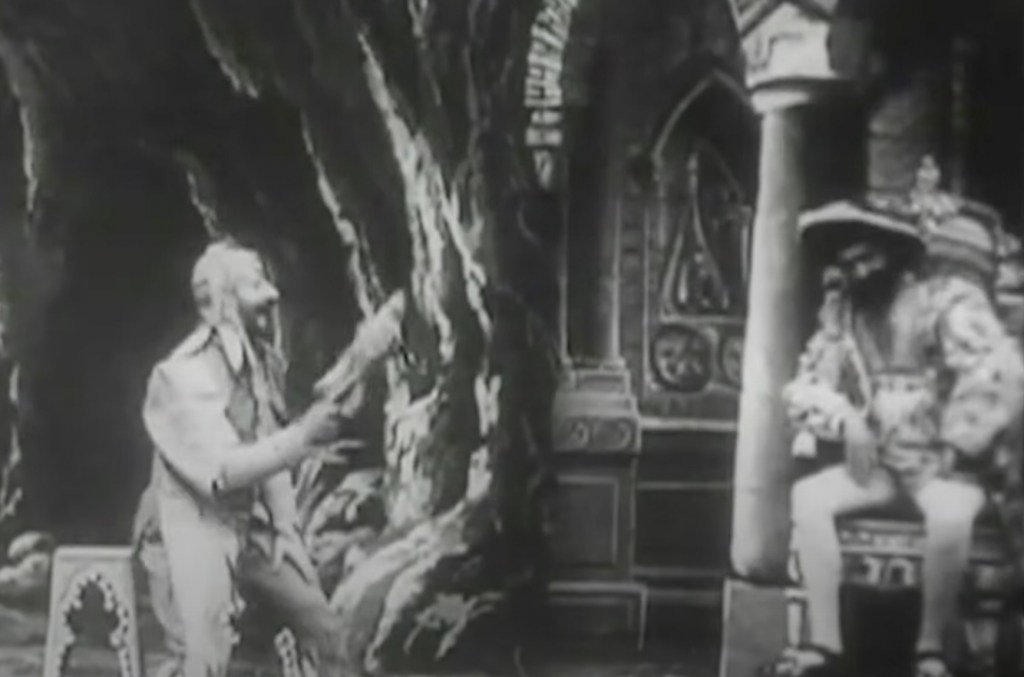
The role of the jester in a king’s court was never a frivolous one. He was not simply there to entertain, to make the monarch and his retinue laugh with slapstick and silly songs. The jester’s true and most profound function was to be the singular voice of unvarnished truth, the one person with license to speak the truth without fear of reprisal. Through the guise of a fool, the jester could highlight the king’s folly, satirize his decrees, and poke fun at the pomposity that inevitably infects those who wield absolute authority.

This tradition, ancient and enduring, serves as a powerful metaphor for the place of comedy in a modern, democratic society. Comedy is not a mere luxury, a pleasant diversion to be consumed after the real business of the day is done. It is, in fact, one of the most vital mechanisms for a free society to remain intellectually honest, emotionally resilient, and politically sane.
Screenshot

In an age of relentless information amplified with echo chambers of every persuasion, where every moment is a firehose of news and opinion, comedy offers a crucial filter. The late-night hosts, the stand-up comedians, the online satirists—they are the modern royal jesters. Their work distills complex and often absurd political events into a comprehensible and, most importantly, digestible form. Hard news can be overwhelming, filled with jargon and devoid of emotional resonance, but a well-crafted joke can cut through the noise with surgical precision. It can expose a hypocrisy with a single punchline or reveal a deep injustice with a moment of perfectly timed sarcasm. By making the ridiculous evident, comedy provides a necessary sense of perspective that is often lost in the fervor of partisan debate. It allows us to step back from the ideological trenches and see the sheer absurdity of the political theater unfolding before us.

The philosophical importance of this function cannot be overstated. Comedy’s power lies in its ability to operate on two levels simultaneously: it entertains while it educates, it amuses while it critiques. Aristotle considered comedy to be an imitation of life that reveals the foibles and ridiculousness of human nature. While he viewed it as a less serious art form than tragedy, its capacity to evoke laughter at human mistakes is a form of social correction. By laughing at a politician’s hubris, we are, in a way, collectively punishing that behavior. This shared laughter is a communal act that reinforces our moral and social code. It reminds us that no one, regardless of their position, is above the scrutiny of the public square. It democratizes critique, making it accessible to all, and in doing so, it acts as a subtle but persistent check on power. The ability to laugh at ourselves, and at those who govern us, is a token of a healthy, mature society. It demonstrates a capacity for self-awareness and a refusal to take any one person or ideology too seriously, a trait that is dangerously absent in authoritarian regimes.

History is replete with examples of rulers who understood this power all too well and sought to stamp it out. The Roman Emperor Caligula, famously alleged to have banned the mention of goats in his presence, serves as a testament to the fragility of the powerful tyrant’s ego. Throughout the Soviet Union, political jokes became a form of a forbidden, whispered protest. The very act of sharing a joke about a state leader was a small but profound act of defiance. People risked imprisonment for a laugh, which speaks to the deep, almost primal need for humor as a release valve and a form of intellectual and non-violent dissent.

The jokes were never about a lack of seriousness; they were a way of maintaining sanity and agency in a world that sought to deny both. The fact that the KGB actively sought out joke-tellers shows that the state recognized the potency of humor as a tool for subversion. The same phenomenon can be seen in the 19th-century French caricaturists who used the innocuous image of a pear to satirize King Louis-Philippe. When overt speech is banned, symbols and allusions flourish. The pear became a silent, yet universally understood, gesture of contempt for a repressive regime. These are not isolated incidents; they are part of a continuous thread throughout human history where the powerful have attempted to control the narrative by first controlling the laughter.

In our contemporary political landscape, the attacks on comedians and talk-show hosts illustrate this historical pattern. When a political leader criticizes a comedian not for their lack of talent, but for their perceived anti-government sentiment, it reveals a fundamental misunderstanding of the role of satire in a democracy. A society that censors or intimidates its jesters is one that is beginning to lose its moral way. It suggests that the leaders are more concerned with controlling public perception than they are with governing effectively. When a government official suggests that a network should face regulatory consequences for the content of a satirical show, it is not an act of defending decency; it is an act of fear.

It is a tacit admission that the jokes are landing, that the satire is hitting its mark and exposing a nerve. The suspension of a late-night show over a controversial joke sends a chilling message to every other voice of dissent. It suggests that the boundaries of free speech are not determined by legal precedent, but by the whims of those in power.

The great satirists, from Aristophanes to Mark Twain to Jon Stewart, have always understood their job to be more than just making people laugh. They are society’s great questioners. They challenge authority not by shouting, but by winking. They point out the absurdities not with a wagging finger, but with a raised eyebrow. Comedy provides a charitable attitude towards people, one that allows for critique without vilification. It makes us shrewder about the world and the people who populate it, and it allows us to see our own faults and the faults of our leaders without descending into unproductive rage. It is a subtle art that fosters critical thinking and intellectual engagement. It is a far more powerful and insidious form of dissent than a protest march, for it works its way into the collective consciousness, changing minds and perspectives from the inside out.

The rise of political satire is, in many ways, a response to a decline in trust in traditional media. As traditional news outlets are increasingly viewed as partisan or biased, people are turning to alternative sources to make sense of the world. Comedians, with their unvarnished takes and a pretense of only wanting to entertain, are often seen as authentic and trustworthy. They are not beholden to corporate interests in the same way, and their jokes feel like an honest reaction to a dishonest world. This shift is not a sign of a frivolous society, but rather of a searching and skeptical one. We are looking for truth in the most unexpected of places, and we are finding it in the form of a well-timed joke. The fact that an interview on a satirical news program can be more illuminating than a sit-down with a hard news anchor speaks volumes about the current state of our political discourse. The satirical mode allows for a directness and honesty that is often missing from the carefully crafted, poll-tested statements of politicians.

The laughter that comedy elicits is also a powerful antidote to despair. In the face of political turmoil, societal failures, and the overwhelming weight of existence, humor allows us to feel a sense of defiant strength. It doesn’t deny the darkness, but it offers a different relationship to it. When Monty Python parodied the dying Christ, they were not mocking faith, but rather the sterile and bureaucratic way in which humanity often deals with profound suffering. By making light of the absurdity of our own mortality, comedy helps us feel a little less afraid. This is perhaps its greatest gift. It is a testament to the indomitable spirit of humanity that we can find a way to laugh even when the world seems to be falling apart.

To diminish comedy is to misunderstand its fundamental importance to a democratic and flourishing society. It is the language of dissent, a tool for social critique, and a medicine for the soul. The modern jester, whether on a television screen or a comedy club stage, is not merely an entertainer; he or she is an essential guardian of our collective sanity and intellectual freedom.

We should be vigilant in our defense of this space, for when the rulers begin to fear the laughter of their people, it is a sure sign that something is deeply, and tragically, wrong. The jester’s scepter may be a toy, but it holds a power that no king, emperor, or president should ever dare to underestimate. 

After all, only a tyrant fears a comic!

The Committee for Universal Harmony

Josef K. awoke one morning to find his smartphone had transformed into a transparent cube of crystalline material. He could see fragments of headlines scrolling past through its translucent surface: war casualties, climate disasters, political upheaval. But something was different – each catastrophic news item was accompanied by its inverse, a parallel reality where these events had never occurred.

He tried to look away, but the cube followed his gaze, floating at the edge of his vision. When he reached for it, his fingers passed through as if it were made of light. The date displayed in one corner read: April 9, 2024, but beneath it flickered another date: April 9, 1971.

His morning routine was interrupted by a knock at the door. Two officials in identical gray suits stood in the hallway, their faces eerily smooth like porcelain masks.

“Mr. K.,” the first one said, “you’ve been summoned to appear before the Committee for Universal Harmony. Your presence is required immediately.”

“What committee? I’ve never heard of…..”

“The summons was issued the day John Lennon released ‘Imagine,'” the second official interrupted. “It’s been pending for 53 years. The statute of limitations on dreams does not expire.”

Before Josef could protest, he found himself seated in a vast circular chamber. The walls were covered in screens displaying every conflict zone on Earth, every refugee camp, every protest, every environmental catastrophe – but each image was split down the middle, showing both reality and its peaceful alternative.

The Committee members sat in a ring above him, their faces obscured by white masks painted with gentle smiles. The Chairman spoke first, his voice carrying an accent from no identifiable nation:

“Josef K., you stand accused of failing to imagine.”

“I don’t understand,” Josef said. “Failing to imagine what?”

“Everything,” the Chairman replied. “The song laid out clear instructions: Imagine no possessions, no countries, no religion, no hunger, nothing to kill or die for. Yet here we are, half a century later, and humanity clings to its divisions more fiercely than ever.”

“But I was born after the song was even written,” Josef protested. “How can I be responsible?”

“Each generation inherits not just the world’s problems, but its possibilities,” another Committee member said. “The failure to imagine a better world is a crime against future generations.”

The screens surrounding them flickered. Josef watched as borders dissolved and reformed, as weapons transformed into plowshares and back again, as wealth redistributed itself like mercury seeking equilibrium, only to pool once more in familiar patterns.

“Look at your own life,” the Chairman continued. “Your social media feeds are echo chambers. Your news sources reinforce your preconceptions. Your consumer choices strengthen the very systems you claim to oppose. You’ve accepted the unacceptable as normal.”

Josef felt a strange sensation as if his thoughts were being projected onto the walls. He saw himself scrolling past headlines about war, climate change, and inequality with the same detached interest he showed photos of friends’ lunches. He watched himself choose convenience over conviction, comfort over action, cynicism over hope.

“But what can one person do?” he asked. “The world’s problems are too big, too complex…”

“Imagination is not a solitary act,” the Chairman interrupted. “It’s a collective power. When Lennon wrote ‘Imagine,’ he wasn’t prescribing a policy solution. He was invoking a human capability that predates all our institutions. Before we built walls, we had to imagine them. Before we created money, we had to imagine it. Everything that divides us was first imagined into being.”

The Committee members rose in unison, their masks now displaying expressions of profound sorrow.

“Your real crime,” the Chairman said, “is not that you failed to solve the world’s problems. It’s that you stopped believing they could be solved. You accepted the end of imagination.”

The screens now showed a rapid succession of images: children drawing pictures of peace, protesters envisioning new forms of democracy, scientists designing carbon capture technologies, artists creating visions of sustainable cities, and communities building alternative economies.

“But look around!” Josef gestured at the screens showing current events. “How can anyone maintain such dreams in the face of everything that’s happening?”

“That,” said the Chairman, “is precisely why imagination is more crucial now than ever. When reality becomes dystopian, utopian thinking becomes a practical necessity.”

The Committee members began removing their masks. Behind each was another mask, and another, and another – an infinite regression of faces representing every nationality, every age, and every possible human identity.

“Your sentence,” the Chairman declared, “is to spend one day living in the world as it could be.”

Before Josef could respond, the chamber began to shift. The walls became permeable, the screens merged with reality, and he found himself walking through a city that followed different laws of physics and economics. Buildings were alive with vertical gardens. Streets transformed into community spaces. Money existed only as a measure of social benefit. National borders appeared as ghostly lines, remembered but no longer enforced.

People still disagreed, but their conflicts led to synthesis rather than destruction. Religious beliefs were personal journeys rather than institutional powers. Resources flowed like water, finding their natural level. Art was everywhere, not as decoration but as a mode of thinking, of reimagining the possible.

As Josef walked, he felt the weight of accumulated cynicism falling away. He remembered what it was like to be a child, when imagination wasn’t separate from reality but was reality’s natural state. He remembered that every significant human achievement – from the first cave paintings to space travel – began as an act of imagination.

The day passed like a dream, but unlike most dreams, it grew clearer rather than fading. When Josef found himself back in his apartment, the crystalline cube had transformed back into his smartphone. But now, between every doom-scrolling headline, he could see the shimmer of alternative possibilities.

The next morning, he received a message from the Committee:

“Your sentence has been served, but the real punishment would be returning to a state of unimaginative acceptance. You’ve been granted the perpetual burden of seeing what could be. Use it wisely.”

Josef looked out his window at the city – the real city, with all its problems and contradictions. The buildings remained solid, the borders still stood, the old systems continued their grinding dance. But now he could see something else too: the ghost of possibility haunting every fixed assumption, the dream of peace shadowing every conflict, the seeds of transformation waiting in every crisis.

He picked up his phone to share another outraged headline, then stopped. Instead, he began writing about what he had seen in that other world. Not as fantasy, but as a blueprint. Not as an escape, but as a strategy.

Outside, the city hummed with its usual chaos. But somewhere in that noise, barely audible but growing stronger, was John Lennon’s voice, still asking us to imagine.

In the years that followed, Josef noticed something strange: reality began to blur at the edges. Not in the dramatic way of his day in the alternative world, but in subtle shifts. When people read his account of the Committee and his sentence, something changed in how they saw their own world.

They began to notice the imaginary nature of things they’d thought were solid: the abstract concepts that governed their lives, the social constructs they’d accepted as natural law. And once you see the imagined nature of the present, you can’t help but imagine it differently.

Josef never knew if the Committee was real or a dream or something in between. But he remembered what the Chairman had said about imagination not being a solitary act. Perhaps the Committee existed whenever and wherever people chose to see the world not just as it was, but as it could be.

The crystalline cube never appeared again, but Josef didn’t need it anymore. He had learned to see the double exposure of reality on his own: the world that was and the world that could be, existing simultaneously, each haunting the other with its presence.

And sometimes, in moments of deep silence, he could hear the echo of that simple invitation from 1971: “Imagine…” It wasn’t just a song anymore, but a survival skill for an age when reality itself had become surreal. In a world where dystopia had become ordinary, imagination wasn’t an escape – it was the only practical response.

The Committee’s final message continued to appear in his dreams: “The statute of limitations on dreams does not expire.” In a time when the future seemed to be shrinking, when crisis followed crisis and hope felt naive, these words became not just comfort but command.

For if we can imagine our divisions into being, we can imagine them away. If we can dream up systems that separate us, we can dream up better ones that bring us together. The only true crime against humanity is the failure to imagine its possibilities.

And so Josef continued to serve his sentence: the endless task of seeing what could be. Some called him naive, others called him visionary, but he knew he was neither. He was simply someone who had been reminded of humanity’s most crucial capacity: the ability to imagine something better and make it real.

In the end, that was what the Committee had really sentenced him to: the responsibility of keeping imagination alive in an age that desperately needed it.

It wasn’t a punishment at all, but a gift – the gift of perpetual possibility. Just like Lennon.