
In a country not much like our own, the people discovered they could no longer afford to buy the present. The cost had grown too high—basic necessities, dreams, and futures were all priced beyond reach. So, instead, they began trading in the past.
The Time Merchants’ Exchange opened its doors in the capital city, a towering edifice of marble and mirrors where every reflection showed a different decade. Here, politicians could purchase vintage grievances at premium rates, while selling ancestral glories at even higher markups. The most valuable commodity was blame, especially if it was well-aged, preferably several centuries, if not decades, old.
Young Kumar visited this exchange one day, his pockets empty of present opportunities but his mind full of past questions. His engineering degree, fresh and useless as tomorrow’s newspaper, weighed heavily in his worn backpack. He watched as the country’s leaders engaged in fierce bidding wars over sepia-toned accusations and black-and-white responsibilities.
“How much for a job?” he asked a broker, a portly man whose suit was stitched from threads of old speeches.
“Jobs? Oh, we don’t deal in those anymore,” the broker laughed, his belly shaking like tomorrow’s earthquake. “But I can offer you a lovely argument about economic policies from the 1950s. Guaranteed to keep you distracted for weeks! Very popular these days.”
“What about affordable housing?”
“Have you considered instead this fascinating debate about who built which institution seventy years ago? It comes with a complementary set of grievances and a lifetime supply of blame!”
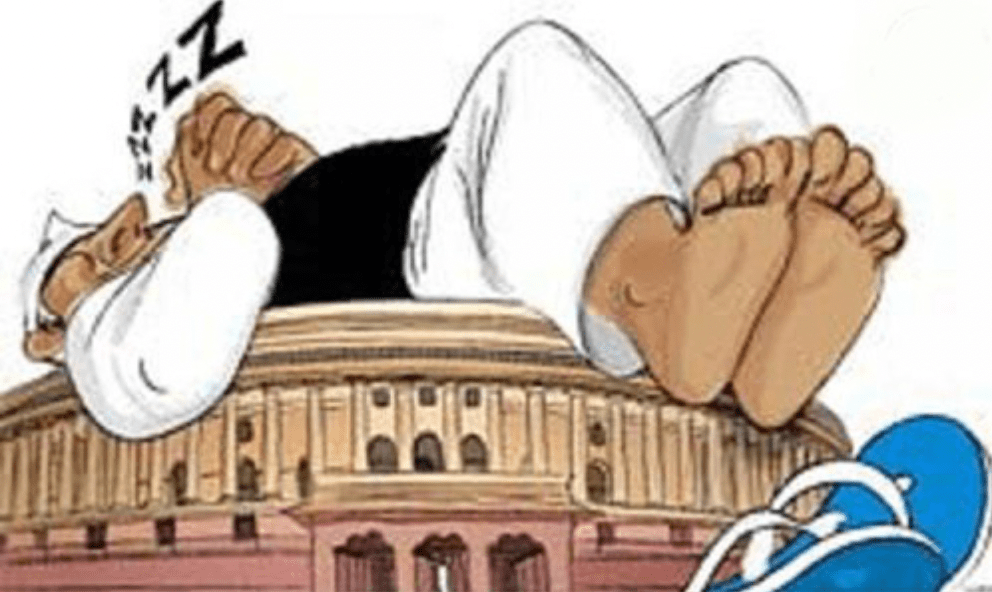
In the gallery above, two groups of traders were locked in an eternal auction, bidding higher and higher on who could claim the greater share of historical grievances. Their voices echoed through the marble halls while the present gathered dust outside. The traders wore special glasses that only allowed them to see backward, never forward, and certainly never at the now and present.
Kumar noticed an old woman sweeping the exchange floor. She was gathering up discarded presents and futures that people had traded in for past grievances. “Such waste,” she muttered, picking up a child’s dream of becoming a scientist, slightly used but still functional.
But something strange began to happen. The youth, led by Kumar and others like him, started opening their own exchange—they called it Tomorrow’s Market. They traded in hope, innovation, and solutions. They bartered in ideas and possibilities. Their currency was creativity, their capital was courage, and their profit was progress.
When the Time Merchants tried to shut them down, claiming exclusive rights to all temporal transactions, they simply moved their trading to parks, to street corners, to social media. They set up shop under bridges and in abandoned warehouses, in college canteens and quiet libraries.
“The past is a good teacher,” Kumar declared at one such gathering, watching as young people exchanged ideas like precious gems, “but it makes a poor home. We cannot live there forever. And while some spend their days auctioning off blame for yesterday’s problems, we’ll be too busy building tomorrow to attend the bidding.”
The Tomorrow’s Market grew. People traded solutions for water scarcity, exchanged ideas for clean energy, bartered plans for better education. They even opened a special counter where communal harmony could be freely exchanged, much to the horror of those who had invested heavily in division.
The Time Merchants were horrified to discover their carefully curated vintage blame was rapidly losing value. Their prized collections of historical grudges began gathering dust. People were more interested in trading futures than pasts. Some even suggested that the present moment, that long-neglected commodity, might be worth investing in again.
The old woman with her broom smiled as she watched young people rushing past the Exchange, heading to Tomorrow’s Market. She had been gathering discarded dreams for years, waiting for someone to reclaim them. Now, finally, she could return them to circulation.
In the end, the Time Merchants’ Exchange still stands, and its marble halls still echo ancient debates. Inside, a dwindling group of traders continues to bid on bygone eras, their voices growing fainter each day. But more and more people pass it by, heading instead to the bustling markets of tomorrow, where hope trades at premium rates, and the future is always in stock.
And sometimes, if you listen carefully in the quiet hours, you can hear the sound of the present, ticking away like a clock in an empty room, waiting for someone to remember it exists.
 Unbigotry